Exploring Temporal Technologies
Introduction to Time
What Is Time?
Time is one of those concepts we all understand intuitively, yet it's incredibly difficult to define. At its core, time is the progression of events from the past to the present into the future. It's the fourth dimension, alongside the three dimensions of space, that makes up the fabric of our universe, often called spacetime. Without time, nothing would ever change.
We can think of it as a fundamental system for ordering events. If one event happens before another, we say it occurred earlier in time. This sequence allows us to understand cause and effect. A seed is planted, and later, a flower grows. The planting causes the growing, and time is the dimension in which this process unfolds.
Measuring Moments
Humans have always measured time, starting with the most obvious cycles in nature. The rising and setting of the sun gave us the day. The phases of the moon gave us the month. The Earth's journey around the sun gave us the year. These astronomical events were our first clocks.
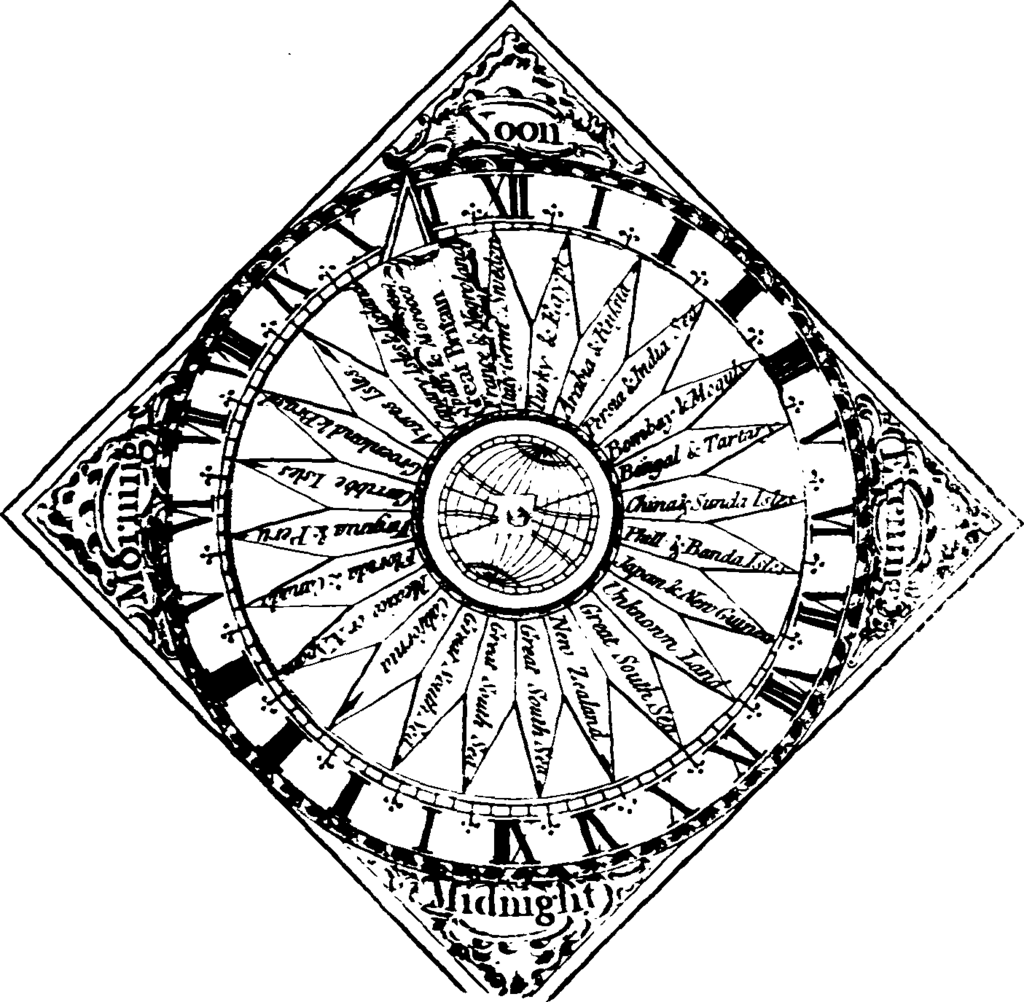
Early civilizations developed more precise tools. The ancient Egyptians used sundials to track the sun's shadow and water clocks to measure time at night. For centuries, these devices, along with hourglasses, were the best available technologies for marking the passage of hours.
The invention of the mechanical clock in the 14th century was a major leap forward, allowing for standardized timekeeping that wasn't dependent on the sun or a steady flow of water. Today, we rely on atomic clocks, which are incredibly precise. They measure time by tracking the natural, consistent vibrations of atoms. These clocks are so accurate they would only lose about one second over 300 million years.
second
noun
The base unit of time in the International System of Units (SI), defined by the electronic transition of the caesium-133 atom.
Time's Arrow
A key feature of time is its apparent direction. It always moves forward. We remember the past, but we don't remember the future. This one-way street is often called "time's arrow." But why does it only point in one direction?
In physics, this is closely linked to the concept of entropy, which is a measure of disorder or randomness in a system. The second law of thermodynamics states that the total entropy of an isolated system can only increase over time. Think about an egg. It's easy to crack an egg and make a messy scramble (increasing its disorder), but you'll never see the scrambled egg spontaneously reassemble itself into a perfect, whole egg.
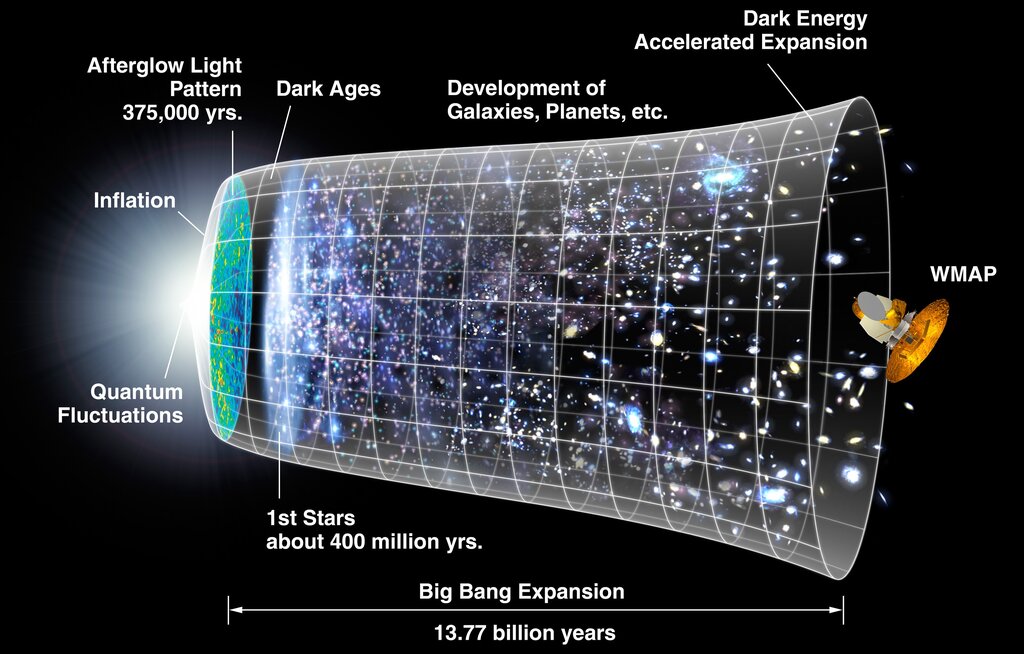
On a cosmic scale, the universe itself follows this principle. It started in a very simple, uniform state right after the Big Bang and has been expanding and becoming more complex and disordered ever since. This constant increase in entropy gives time its forward direction.
From organizing our daily schedules to understanding the history of the cosmos, time is the framework upon which our reality is built. It's the silent conductor of the symphony of the universe.
Ready to check your understanding?
What is the concept of "spacetime"?
Which of the following timekeeping devices was invented most recently?