Exploring Remote Viewing
Introduction to Remote Viewing
What Is Remote Viewing?
Remote viewing is the practice of seeking information about a distant or unseen target, using the mind instead of the physical senses. Proponents believe a person, the “viewer,” can perceive details about a person, place, or object located anywhere in space or time. This could mean describing a building on another continent or an event that happened years ago, all without leaving the room.
Think of it as a kind of mental exploration, where the mind is thought to travel and observe without the body.
The idea is highly controversial and is not accepted by the mainstream scientific community. It exists in a field of study known as parapsychology, which explores psychic phenomena.
Roots in Older Beliefs
The concept of perceiving things at a distance isn't new. For centuries, various cultures have had traditions of clairvoyance, which means “clear seeing.” Spiritualism in the 19th century was filled with mediums who claimed they could see into other realms or connect with distant people and places. Occult practices also feature similar ideas, often referred to as scrying or having “second sight.”
These earlier practices were often tied to mysticism and spirituality. They weren't typically studied in a formal, scientific way. They relied on personal belief and anecdotal stories rather than controlled experiments.
A Modern Term for an Old Idea
The term “remote viewing” itself is much more recent. It was coined in the 1970s by two researchers, Russell Targ and Harold Puthoff, at the Stanford Research Institute (SRI). They were investigating psychic abilities and wanted a neutral, scientific-sounding term to describe what they were studying. This helped separate their research from the spiritual and occult connotations of words like “clairvoyance.”
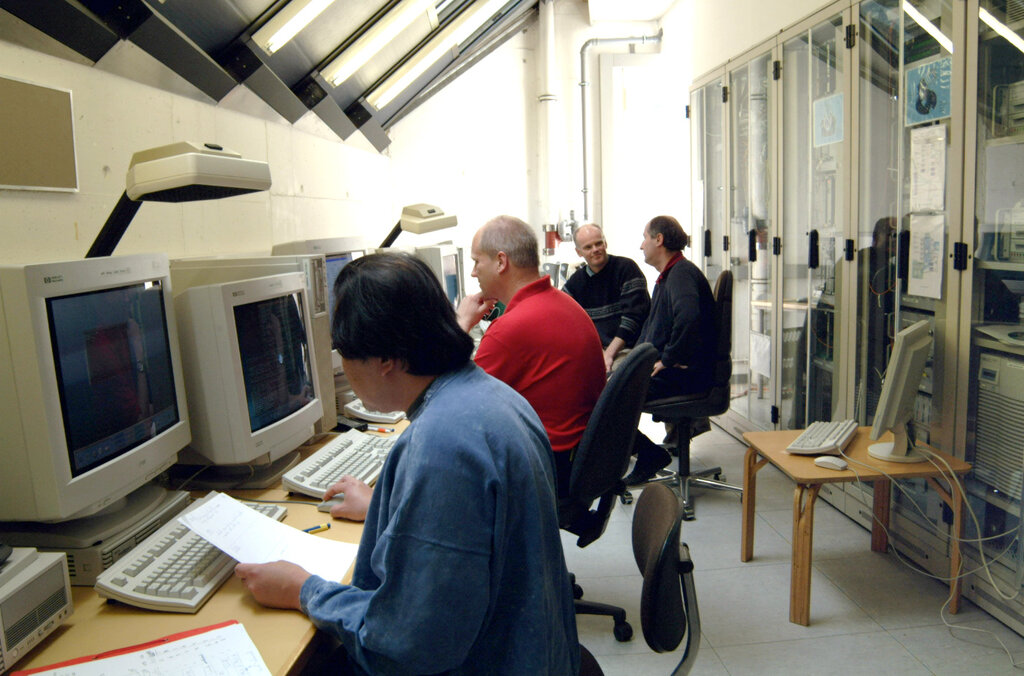
Targ and Puthoff's goal was to apply a more rigorous, experimental approach to these phenomena. They developed specific protocols where a viewer would attempt to describe a target location that was randomly selected and unknown to them.
The View From Science
Despite these efforts to study it scientifically, remote viewing has never gained acceptance in the broader scientific world. The primary reason is a lack of reliable, repeatable evidence. For a claim to be considered scientifically valid, it must produce consistent results under controlled conditions, and different researchers must be able to replicate those results.
Critics point out that the successful results reported in some remote viewing experiments are often statistically insignificant or could be explained by other factors. These might include sensory leakage, where the viewer accidentally gets subtle clues, or vague descriptions that can be interpreted to match almost any target. Because of these issues, most scientists classify remote viewing as a pseudoscience, a belief that is presented as scientific but lacks supporting evidence.
The core of the skepticism lies here: if remote viewing were a real, measurable ability, its effects should be consistently observable in well-designed experiments. So far, they haven't been.
To wrap up, let's review what we've covered.
What is the primary reason mainstream science does not accept remote viewing?
How did the approach to "remote viewing" in the 1970s differ from earlier practices like clairvoyance or scrying?