Exploring Polymarket Predictions
Introduction to Prediction Markets
Betting on the Future
Imagine a stock market, but instead of trading shares of a company, you trade on the outcome of future events. Will it rain tomorrow? Who will win the next presidential election? Will a specific movie win an Oscar? That's the core idea behind a prediction market.
A prediction market is a platform that aggregates information and forecasts future outcomes through market mechanisms.
These aren't just for fun. Prediction markets are designed to harness the collective knowledge of a group of people. The theory, often called the "wisdom of the crowd," is that a diverse group of individuals, each with their own information and perspective, can make remarkably accurate forecasts when their opinions are pooled together.
The Mechanics of a Market
So how does it actually work? Let's take a simple question: "Will the Federal Reserve cut interest rates by the end of the year?" In a prediction market, this question creates two types of shares you can buy:
- YES shares
- NO shares
These shares trade for prices between $0.00 and $1.00. The price of a share at any given moment reflects the market's consensus on the probability of that outcome. If a YES share costs $0.70, it means the market collectively believes there's a 70% chance the Fed will cut rates. The price of the NO share would then be $0.30, representing a 30% chance.
The price of a share is a direct reflection of probability. A price of 💲0.65 means the market sees a 65% chance of that event happening.
When the event's outcome is known, the market resolves. If the Fed does cut rates, all YES shares become worth $1.00 each, and all NO shares become worthless ($0.00). If they don't, the opposite happens. Your profit or loss is the difference between what you paid for your shares and their final value.
| Outcome | You Bought | Price Paid | Final Value | Profit/Loss per Share |
|---|---|---|---|---|
| Fed cuts rates | 10 YES shares | $0.70 | $1.00 | +$0.30 |
| Fed cuts rates | 10 NO shares | $0.30 | $0.00 | -$0.30 |
| Fed doesn't cut rates | 10 YES shares | $0.70 | $0.00 | -$0.70 |
| Fed doesn't cut rates | 10 NO shares | $0.30 | $1.00 | +$0.70 |
The Power of Prediction
Why are these markets often more accurate than polls or individual experts? It comes down to incentives. Participants are betting their own money, which motivates them to be thoughtful and well-informed. This is often called having "skin in the game."
Unlike traditional polls that rely on sampled surveys, prediction market prices are driven by transactions with real money, incentivizing participants to reveal their true beliefs.
This financial incentive encourages people with specialized knowledge to participate. An economist might have a strong opinion on interest rates, while a political insider might have unique insight into an election. The market aggregates all this dispersed information into a single, constantly updating probability.
The applications are vast, covering everything from politics and finance to sports, technology, and even scientific developments.
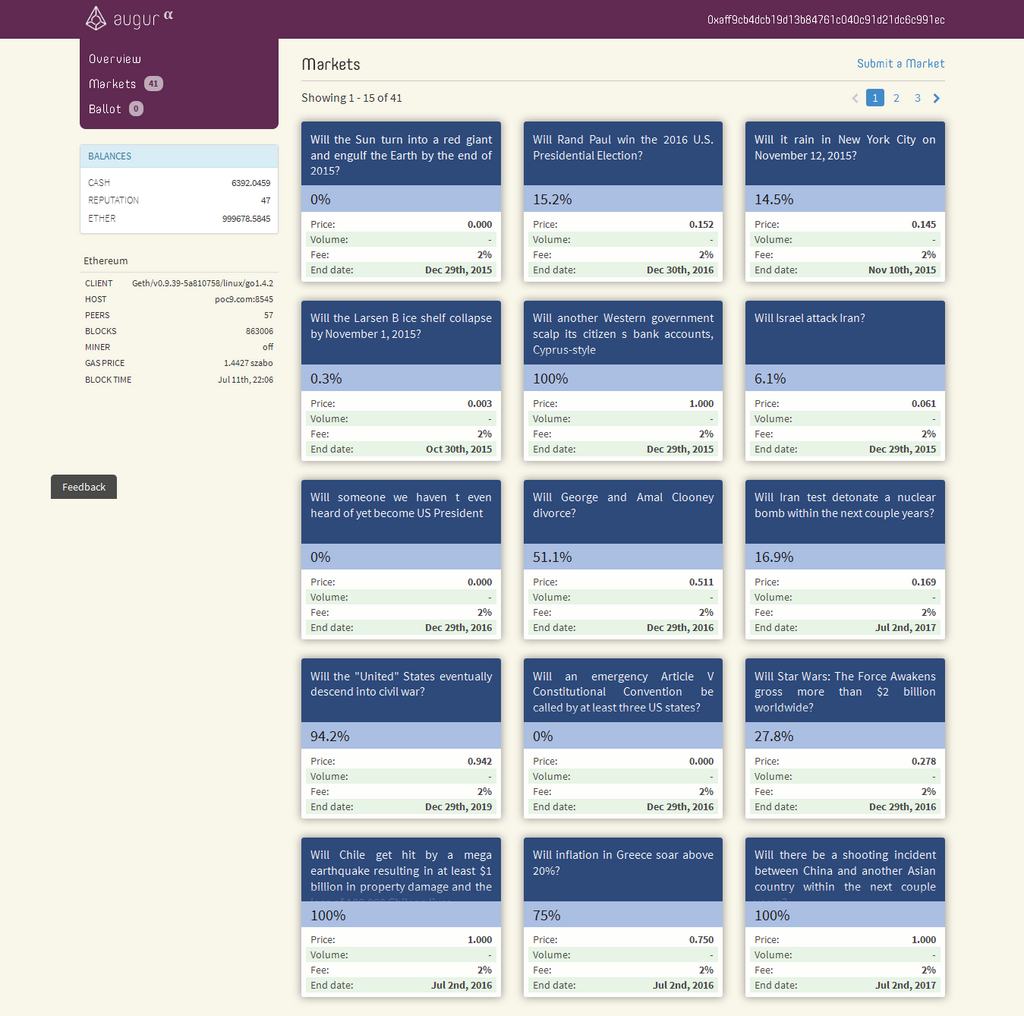
By transforming diverse opinions into clear probabilities, prediction markets provide a powerful tool for forecasting the future.