Exploring Planetary Systems
Introduction to Planetary Systems
Stars and Their Entourage
At the heart of every planetary system is a star. Think of it as a cosmic campfire. Everything else in the system is drawn to its warmth and gravity, circling it like moths around a flame. This collection of objects, all gravitationally bound to a star, is what we call a planetary system.
Solar System : a collection of planets and other objects that orbit a star
Our own home, the Solar System, is just one of countless such systems in the universe. While they can vary wildly, they all share the same basic structure: a central star holding a family of celestial bodies in orbit.
The Neighborhood's Residents
Planetary systems are bustling with different kinds of objects. Let's meet the main players.
| Component | Description |
|---|---|
| Planets | The heavyweights. Large, spherical bodies that orbit the star and have cleared their orbital path of other debris. |
| Moons | Natural satellites that orbit planets, not the star directly. Earth has one, while Jupiter has dozens. |
| Asteroids | Rocky and metallic objects, smaller than planets. Most in our system live in the asteroid belt between Mars and Jupiter. |
| Comets | Icy bodies of frozen gases, rock, and dust. As they near the star, they heat up and stream tails of gas and dust. |
| Dust & Gas | A thin haze of tiny particles and gases, often leftover material from the system's formation, fills the space between objects. |
Planets are the most famous residents. They come in different sizes and types, from small, rocky worlds like Earth to massive gas giants like Jupiter.
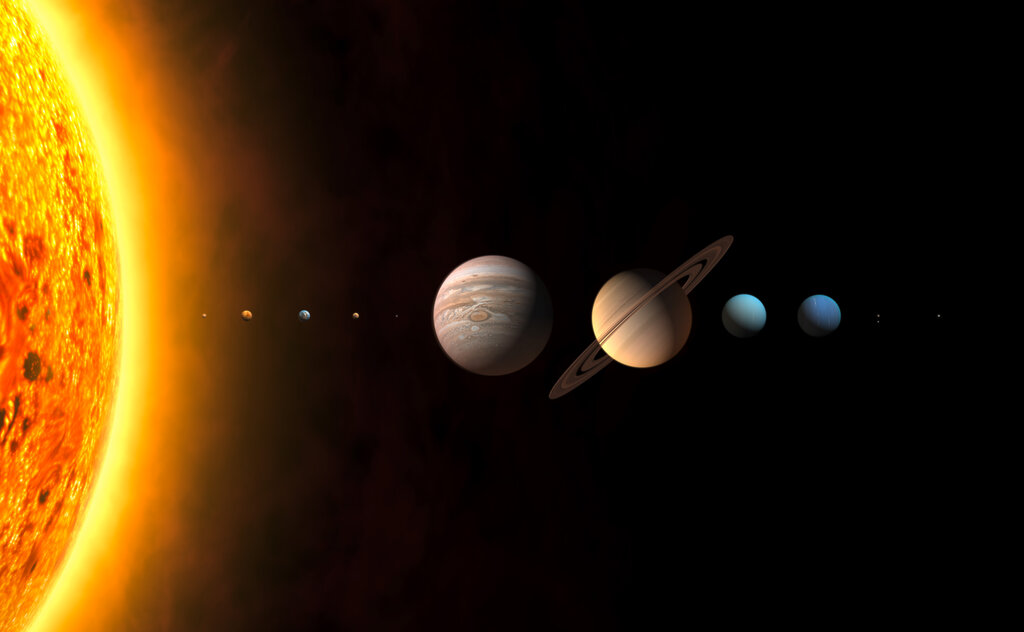
Moons, asteroids, and comets are just as much a part of the system. They are the smaller, but still significant, pieces of the cosmic puzzle. Moons orbit planets, creating mini-systems of their own. Asteroids and comets are remnants from the early days, offering clues about how the system formed.
Beyond Our Backyard
For a long time, our Solar System was the only one we knew. But now we know that stars with planets are the rule, not the exception. These planets outside our system are called exoplanets, and they orbit other stars.
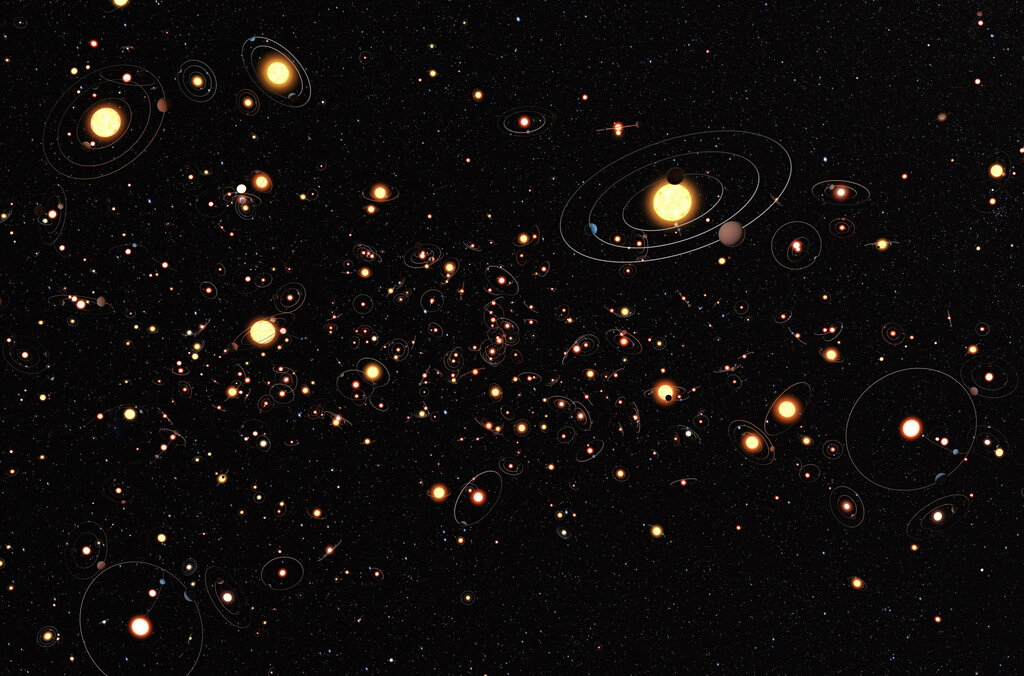
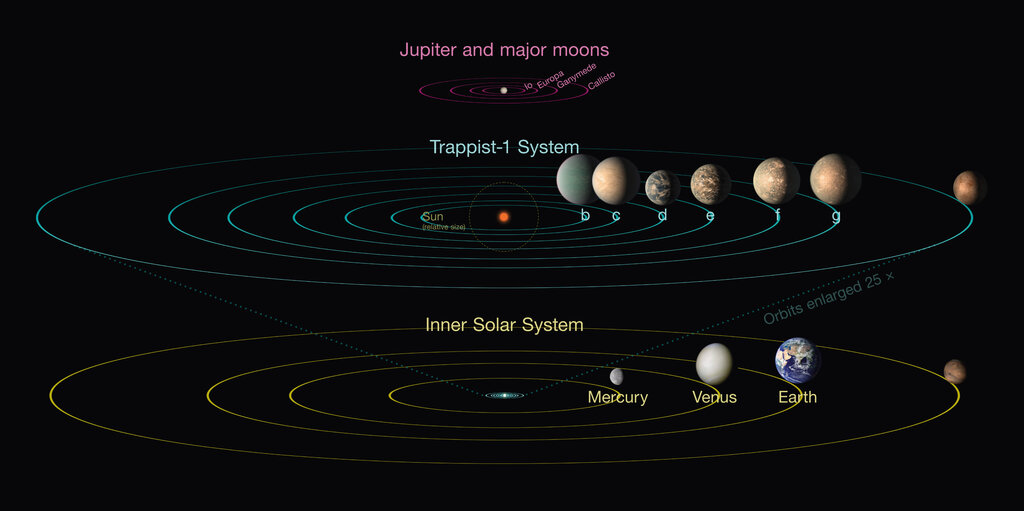
Studying these distant systems has revealed an incredible diversity. Some have planets called "hot Jupiters" that orbit extremely close to their star, completing a year in just a few Earth days. Others have multiple planets packed into orbits smaller than Mercury's. The TRAPPIST-1 system, for example, has seven Earth-sized planets orbiting a small, cool star.
Why does this matter? By studying other planetary systems, we learn more about how planets form and evolve. It helps us understand the conditions that might support life and gives us context for our own place in the cosmos. Each new system is another piece of the puzzle, showing us the endless possibilities the universe holds.
Ready to check your understanding?
What is the defining characteristic of a planetary system?
Planets orbiting stars other than our own Sun are called exoplanets.
Every star tells a story, and its planetary system is the cast of characters. By learning their roles, we begin to read the great narrative of the universe.