Exploring Personality Psychology
Introduction to Personality Psychology
What Makes You, You?
Why is one friend the life of the party while another prefers a quiet evening with a book? Why do some people thrive on change, while others crave routine? These questions get at the heart of personality—the unique and relatively stable patterns of thinking, feeling, and behaving that make each of us who we are.
Personality
noun
The characteristic sets of behaviors, cognitions, and emotional patterns that evolve from biological and environmental factors.
Studying personality isn't just an academic exercise. It helps us understand why people act the way they do in different situations. It can offer clues about who might be a good fit for a certain job, how a team will work together, or even how someone might cope with stress. By understanding these patterns, we can better predict behavior and appreciate the incredible diversity of human experience.
A Quick Look Back
Humans have been trying to categorize personalities for thousands of years. The ancient Greeks, for example, believed that four bodily fluids, or “humors,” determined a person's temperament. While we've moved far beyond these early ideas, they show our long-standing fascination with what makes people tick.
The formal study of personality psychology really began to take shape in the late 19th and early 20th centuries. Thinkers like Sigmund Freud and Carl Jung started developing complex theories to explain the inner workings of the human mind. They pioneered the idea that our experiences, especially in childhood, shape who we become.
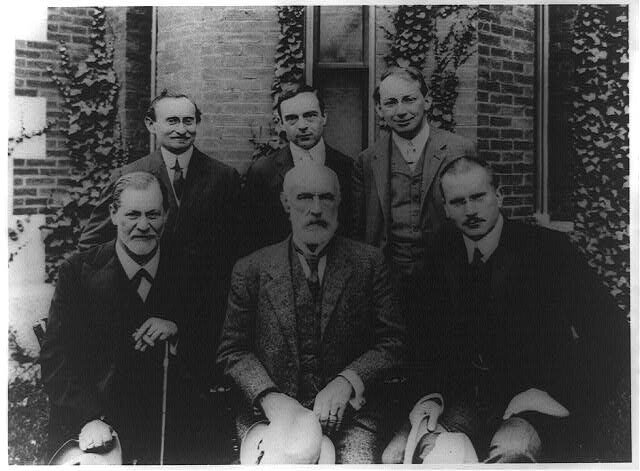
Their work, though controversial and often revised, laid the groundwork for modern personality psychology. It sparked a century of research, leading to many different ways of thinking about where personality comes from and how it works.
Different Lenses on Personality
Today, there isn't one single theory of personality that everyone agrees on. Instead, psychologists look at it from several different angles, or approaches. Each approach offers a unique perspective on what shapes our individual differences.
| Approach | Core Idea |
|---|---|
| Psychodynamic | Our personality is shaped by unconscious conflicts and early childhood experiences. |
| Humanistic | We are driven by a need for personal growth and self-fulfillment. |
| Trait | Personality can be understood by identifying and measuring stable, fundamental characteristics. |
| Social-Cognitive | Personality emerges from the interplay between our thoughts, our environment, and our own behavior. |
Think of these approaches as different tools in a toolbox. One might be better for explaining a specific behavior than another, but all of them contribute to a fuller picture of the complex thing we call personality. In later sections, we'll open up this toolbox and examine each one more closely.
Now, let's review what we've learned about the foundations of personality psychology.
According to the text, what is the best definition of 'personality'?
True or False: The text suggests there is one single, universally accepted theory of personality in modern psychology.