Exploring Outer Space
Introduction to the Universe
Our Cosmic Home
The universe is everything. It includes all of space, time, matter, and energy. From the smallest particles to the largest structures, it's all part of the same cosmic tapestry. Thinking about its size can be overwhelming. There are more stars in the universe than grains of sand on all the beaches on Earth.
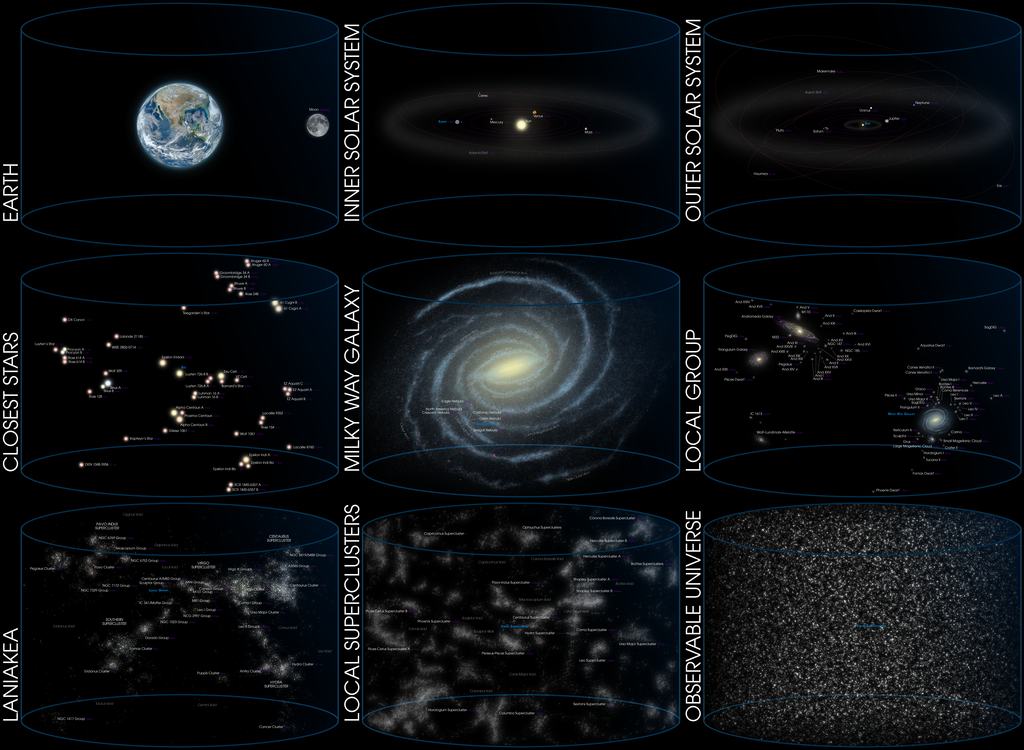
This vastness isn't empty. It's filled with countless structures, all held together by gravity. Understanding these structures is the first step to understanding our place in the cosmos.
Building Blocks of the Cosmos
The universe isn't a random soup of stuff. It's organized into a clear hierarchy. At the largest scale, we see galaxies.
galaxy
noun
A massive, gravitationally bound system of stars, stellar remnants, interstellar gas, dust, and dark matter.
A galaxy is a sprawling city of stars. Some are elegant spirals, like our own Milky Way. Others are massive, football-shaped collections of older stars. They can contain anywhere from a few million to trillions of stars, all orbiting a common center.
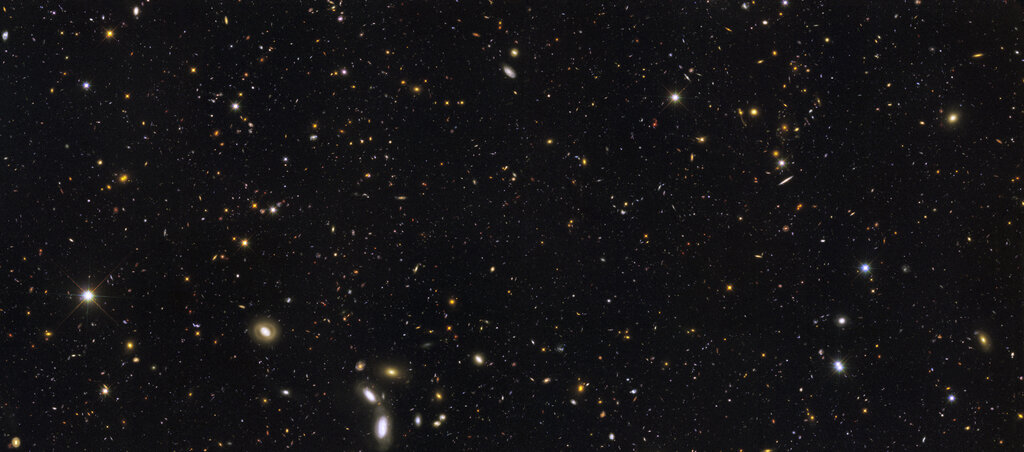
Inside these galaxies are the stars themselves. A star is a giant, glowing ball of hot gas, mostly hydrogen and helium. Nuclear fusion in its core generates immense energy, which we see as light and feel as heat.
Our Sun is a star. It's not particularly large or small, just one of billions in the Milky Way.
Orbiting many of these stars are planets. A planet is a large celestial body that orbits a star and doesn't produce its own light. They can be rocky, like Earth, or gassy, like Jupiter. Our solar system has eight planets orbiting the Sun, but we've discovered thousands more orbiting other stars.
The View from Earth
As vast as the universe is, we can't see all of it. We can only see the parts from which light has had time to reach us. This boundary defines the 'observable universe'.
The universe is about 13.8 billion years old. Because light travels at a finite speed, we can't see anything farther than 13.8 billion light-years away. Light from beyond that distance simply hasn't reached us yet.
This means the edge of the observable universe isn't a physical wall. It's a horizon in time. When we look at the most distant galaxies, we are seeing them as they were billions of years ago, when the universe was much younger.
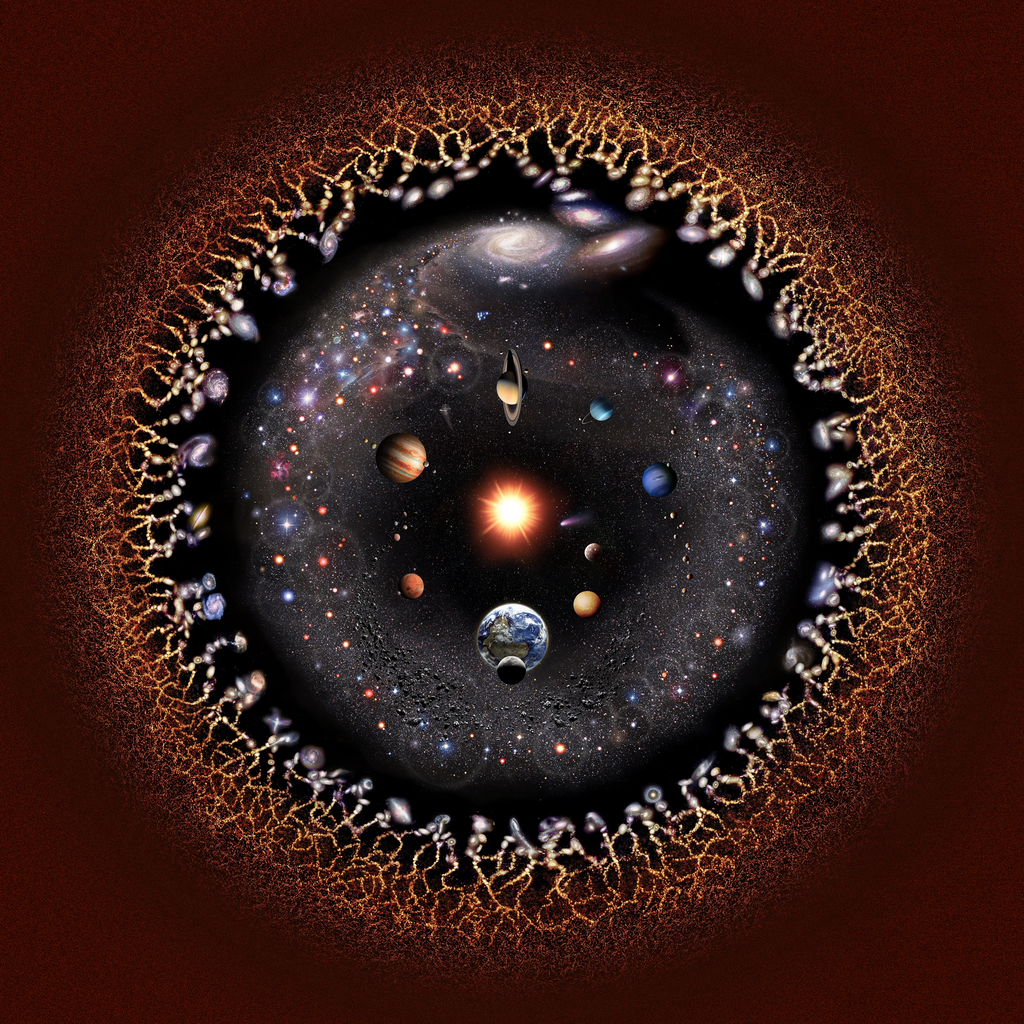
Everything we can see, from our own planet to the farthest galaxy, exists within this sphere. What lies beyond it is unknown. The universe as a whole could be infinitely large, but our view is fundamentally limited.
Ready to check your understanding of our cosmic neighborhood?
What is the most accurate description of the universe?
Which of the following correctly lists cosmic structures from largest to smallest?
This is just the beginning of our journey. By understanding the basic structure of the universe, we've set the stage for exploring its history, its contents, and its future.