Exploring Numicon Mathematics
Introduction to Numicon
Seeing Numbers
How do we learn what a number is? We can memorize the word “four” and the symbol “4,” but understanding the concept of “fourness” is something different. It’s about recognizing a group of four things, whether they’re apples, cars, or dots on a page. The Numicon system is a teaching approach that makes this abstract idea of a number into something you can see and touch.
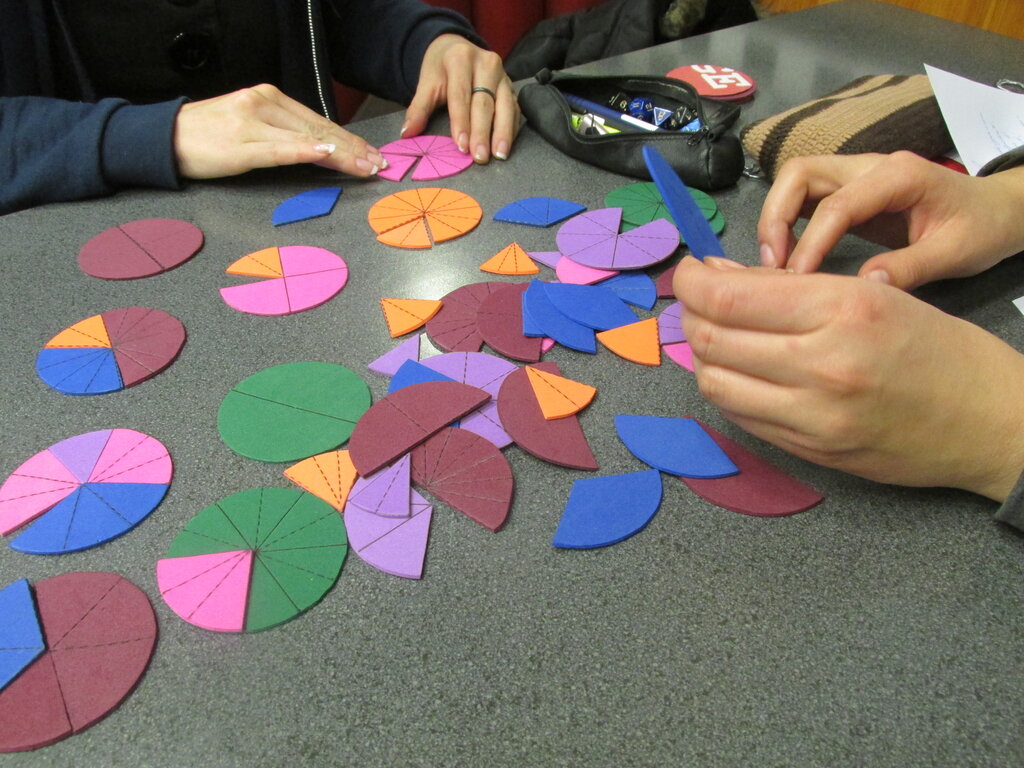
Numicon uses a set of colorful, plastic shapes with holes in them. Each shape and color corresponds to a number from one to ten. The shape for “one” is a single orange square with one hole. The shape for “two” is a blue rectangle with two holes. The key is that the holes are arranged in specific, recognizable patterns, much like the dots on a die.
Numicon is a mathematics teaching approach designed to help children understand maths.
This design isn't random. It’s built on the idea that humans are excellent pattern-finders. When children see the distinct shape for the number five, they start to build a mental image for it. They don't just count five holes; they recognize the five-shape as a whole. This visual and tactile connection helps them build a much deeper, more intuitive sense of what numbers are and how they relate to each other.
Learning Through the Senses
The core philosophy behind Numicon is that learning is stronger when it involves multiple senses. This is called a multi-sensory approach. Instead of just hearing a teacher say a number or seeing it written on a board, children can physically hold the number in their hands. They feel its weight, trace its shape, and see its color. This rich, sensory experience creates more pathways in the brain for the information to stick.
By connecting sight, touch, and abstract thought, Numicon helps build a solid foundation for mathematical understanding.
This approach is especially powerful for young learners. It allows them to explore relationships between numbers in a playful way. A child might discover that the 1-shape and the 2-shape placed together are the same size as the 3-shape. They've just performed addition ($1 + 2 = 3$) without ever seeing an equation. They can see that two 4-shapes make an 8-shape, which is an early encounter with multiplication.
This hands-on exploration encourages curiosity and mathematical communication. Kids can explain what they discovered to a friend or teacher by showing them with the shapes. They aren't just memorizing rules; they are generalizing from their own experiences, which is the heart of true mathematical thinking.
Building on Patterns
Recognizing patterns is a fundamental skill in mathematics. From simple addition sequences to complex algebraic functions, math is filled with patterns. Numicon taps into this by making number patterns physical and visible.
The shapes themselves have patterns of odd and even numbers. Odd numbers have a piece that sticks out, while even numbers are rectangular. Children can feel this difference. This helps them internalize the concept of odd and even numbers long before they learn formal definitions.
Numicon shapes help children learn about number relationships by showing how various numbers are related.
By focusing on these concrete patterns, Numicon helps children build confidence. They learn to see numbers not as scary, abstract symbols, but as friendly, predictable things they can work with. This foundation makes it much easier to move on to more abstract mathematical ideas later on. The goal isn't just to teach counting, but to foster a deeper number sense, an intuitive feel for how numbers work.
Time to check your understanding of the Numicon system.
What is the primary principle behind the Numicon system's design?
How might a child discover the concept of multiplication, such as , using Numicon shapes?
Ultimately, Numicon is a tool that helps translate abstract mathematical concepts into a language that children can naturally understand through sight and touch.