Exploring Music Theory Fundamentals
Advanced Harmonic Analysis
Beyond the Basics
You've mastered triads and seventh chords. They are the sturdy foundation of Western harmony, but the real color and complexity in music often come from reaching higher. By stacking more thirds on top of a seventh chord, we create extended chords: ninths, elevenths, and thirteenths. These chords add richness and depth, moving beyond simple consonant sounds.
Let's start with a C major seventh chord: C-E-G-B. To create a C major ninth chord, we simply add the next third on top, which is a D. The result is C-E-G-B-D. Notice how the D is a ninth above the root C. Similarly, adding an F creates an eleventh chord, and adding an A creates a thirteenth chord. These extensions are most common on dominant seventh chords, where they create a rich, complex tension that begs for resolution.
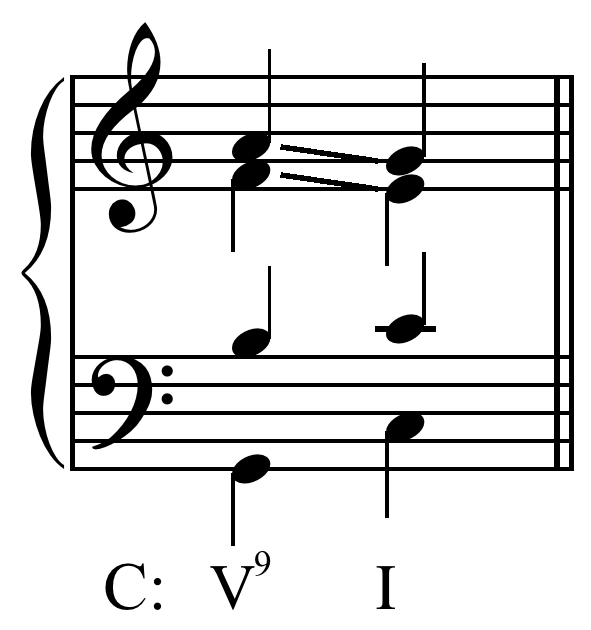
The naming convention follows the highest extension. A C major thirteenth chord (C-E-G-B-D-F-A) contains the seventh and the ninth, but we call it a thirteenth chord because A is the highest note in the stack of thirds. In practice, musicians often omit certain notes for clarity or ease of playing. The fifth is commonly dropped, and sometimes even the root is left to the bass player.
A G13 chord, for example, might be voiced on a piano as just G in the bass, with F, B, and E in the right hand. The essential tones, the root (G), third (B), seventh (F), and thirteenth (E), are all present.
Altering the Sound
While extended chords add new notes from the key, altered chords take existing notes and change them chromatically. This is most frequently done with dominant chords to increase their pull towards the tonic. Common alterations include raising or lowering the fifth and the ninth.
Consider a G7 chord, the dominant of C major: G-B-D-F. We can alter this chord in several ways:
- Flat five (♭5): G-B-D♭-F
- Sharp five (♯5): G-B-D♯-F
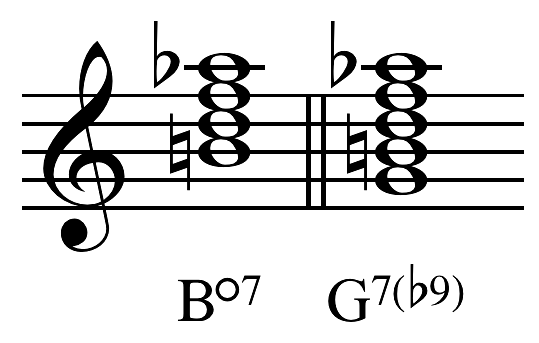
- Flat nine (♭9): G-B-D-F-A♭
- Sharp nine (♯9): G-B-D-F-A♯
You can even combine alterations, creating a G7(♭9, ♯5), for example. Each alteration adds a unique flavor of dissonance. The G7(♭9) creates a strong pull to the root of the C major tonic chord, as the A♭ is only a half step above the G. The G7(♯9) has a distinct, bluesy sound.
Color Outside the Lines
So far, we've mostly dealt with chords built from the notes of a single key. Chromaticism is the use of notes and chords that are not native to the key, or non-diatonic. Altered chords are one form of chromaticism, but there are many others.
Modulation
noun
The process of changing from one key to another within a piece of music.
One of the most powerful tools for chromaticism is modulation. While a song might be in C major, it can temporarily shift to another key, like G major or A minor, before returning. The pivot point is often a chord that is diatonic to both keys. For example, the Am chord is the vi chord in C major and the ii chord in G major, making it a perfect pivot to move between the two keys.
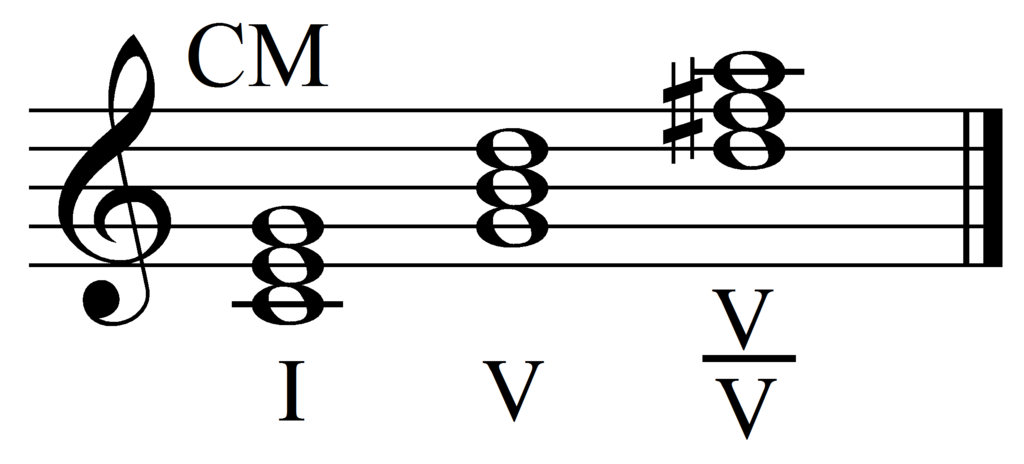
Another common technique is using secondary dominants. This involves creating a dominant chord for a chord other than the tonic. In C major, the dominant is G7, which resolves to C. But what if we wanted to strongly lead into the D minor chord (the ii chord)? We could use the dominant of D minor, which is A7. This A7 chord is a secondary dominant, written as V7/ii. It creates a powerful, temporary pull towards D minor, adding harmonic interest without fully leaving the key of C.
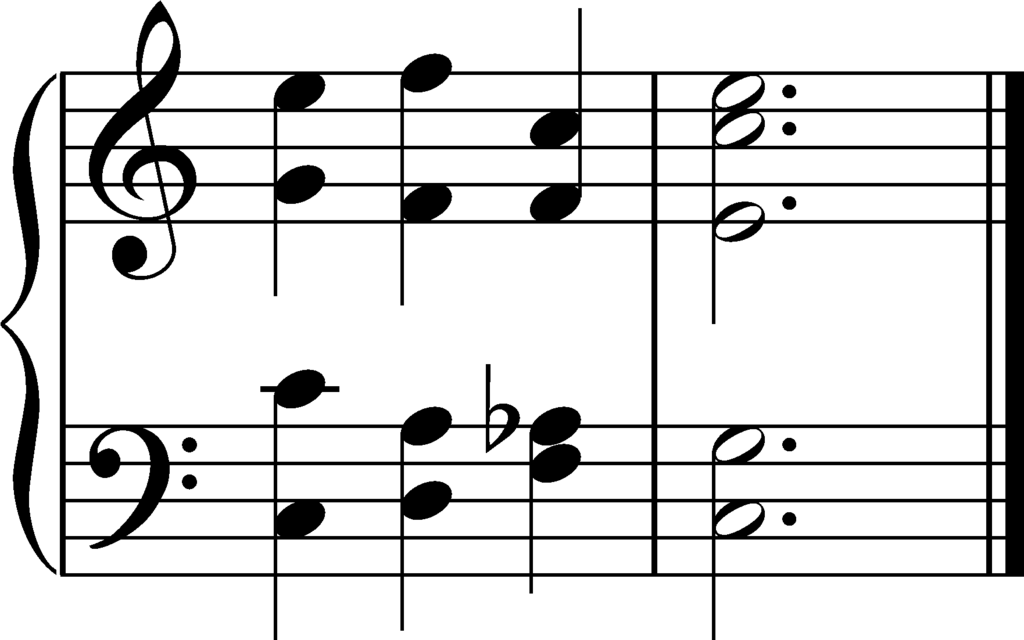
Borrowed chords, also known as modal interchange, are another way to introduce chromaticism. This involves borrowing a chord from the parallel minor or major key. In C major, you could borrow the Fm chord from C minor. The F minor chord contains an A♭, a note not found in C major, which adds a sudden, often melancholic color to the progression.
By understanding and applying these advanced harmonic concepts, you can analyze more complex music and infuse your own compositions with greater emotional depth and sophistication.
Ready to test your knowledge?
Starting with a G major seventh chord (G-B-D-F♯), what note would you add to create a G major ninth chord?
Which of the following chords is an example of an altered dominant?
These tools will help you unlock a richer and more expressive harmonic language in your music.