Exploring M.C. Escher's Art
Introduction to M.C. Escher
The Architect of the Impossible
Maurits Cornelis Escher, better known as M.C. Escher, was a Dutch graphic artist who created some of the most iconic and mind-bending images of the 20th century. Born in 1898, he initially studied architecture before switching to the decorative arts. This foundation in structure and design would become a hallmark of his later work.
His early art focused on realistic landscapes and portraits. But a pivotal trip to the Alhambra palace in Granada, Spain, changed the course of his career. He was captivated by the intricate tilework of the Moorish architecture, filled with repeating, interlocking patterns. This ancient art form sparked a lifelong fascination with the mathematical concept of tessellation.
From Landscape to Mindscape
For many years, Escher sketched the dramatic landscapes and winding streets of Italy. These works honed his technical skill, but the true evolution of his style began when he started to look inward. He moved away from drawing what he saw in the physical world and began illustrating the impossible worlds he imagined in his mind.
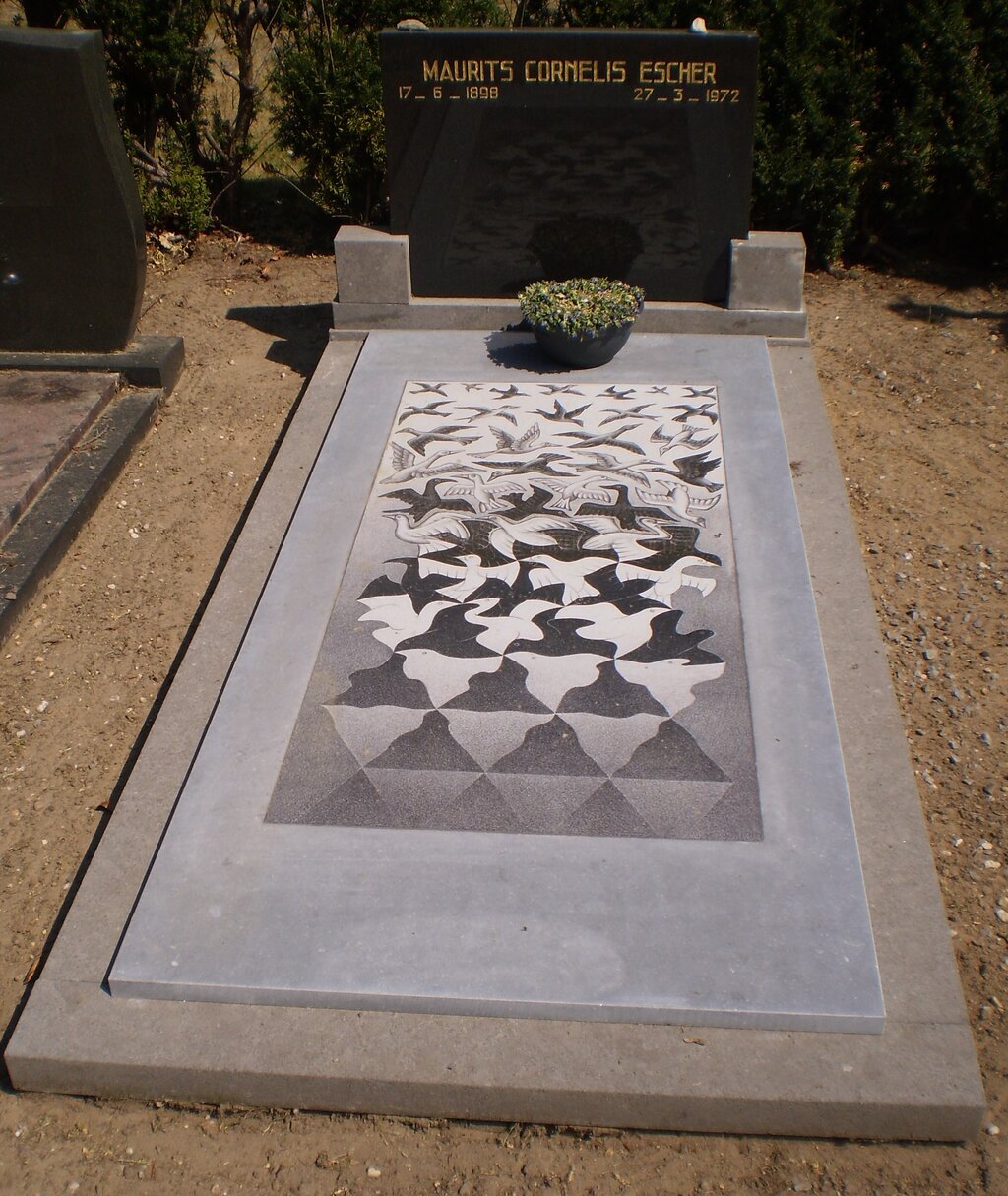
This shift led him back to the patterns he had admired at the Alhambra. He began to explore the “regular division of the plane,” creating images where shapes fit together perfectly without any gaps or overlaps. Unlike the abstract geometric tiles he had studied, Escher filled his tessellations with recognizable figures like birds, fish, and reptiles, which often transformed into one another across the page.
Major Themes
Escher's work is not easily categorized into a single art movement. He was a unique artist whose creations explored several recurring themes.
Tessellations: As his signature technique, Escher created complex repeating patterns where figures morphed and interlocked with mathematical precision.
Another major theme was the exploration of paradox and impossible structures. He drew buildings that could not exist in three-dimensional reality, with staircases that ascend and descend in a perpetual loop and waterfalls that appear to flow uphill.
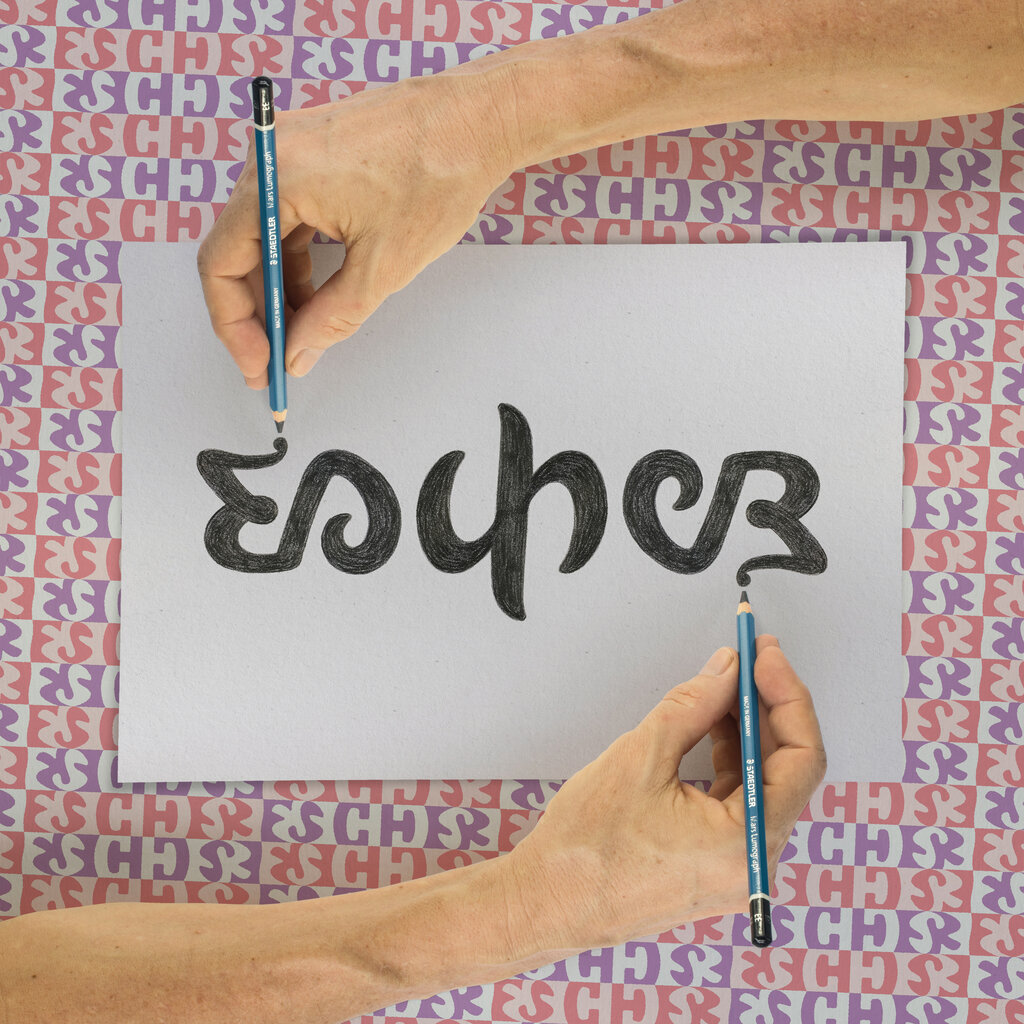
Finally, the theme of metamorphosis is central to many of his most famous pieces. In these works, one image seamlessly transforms into another. A checkerboard might dissolve into flying birds, or a line of marching soldiers could morph into the links of a chain. These visual journeys blur the lines between order and chaos, reality and illusion.
Let's test your knowledge of Escher's unique artistic journey.
What architectural landmark deeply inspired M.C. Escher's lifelong fascination with tessellations?
In the context of M.C. Escher's art, what is a tessellation?
Escher's path was one of a kind. He combined artistic skill with a deep curiosity for mathematics and logic to create a world that was entirely his own, inviting us all to question our perceptions of space and reality.