Exploring Marine Biology
Introduction to Marine Biology
The Study of Ocean Life
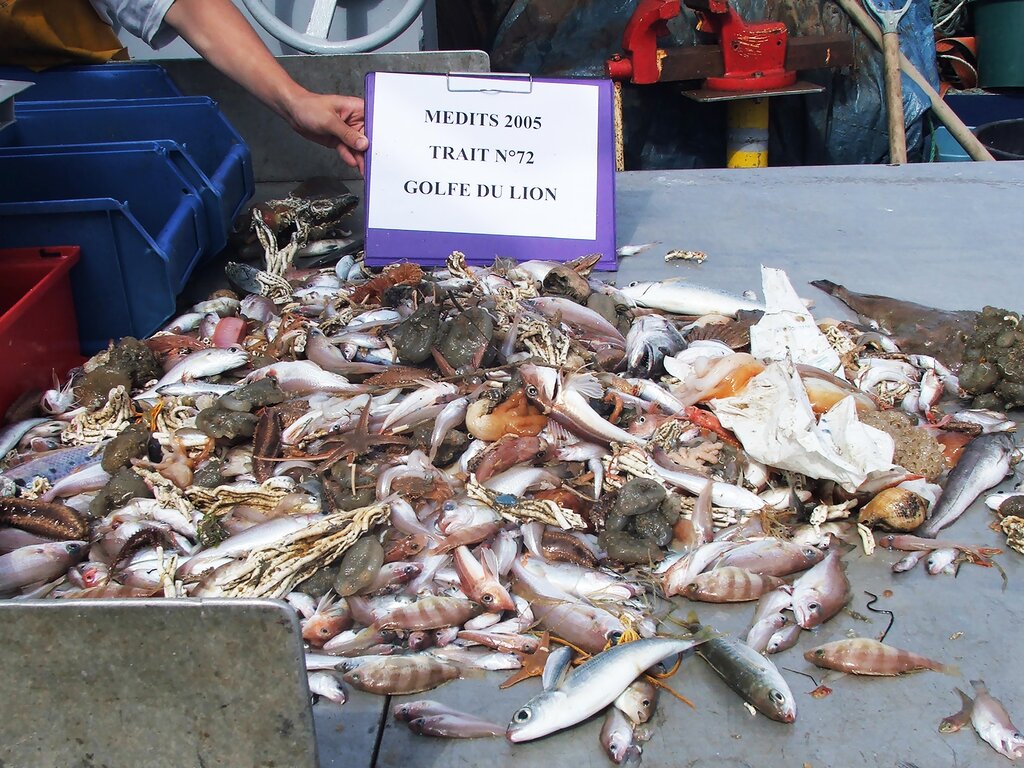
Marine biology is the study of life in the ocean. It’s a vast field that explores everything from the smallest microbes floating in the water to the largest whales roaming the seas. Marine biologists investigate how these organisms live, interact with each other, and adapt to their unique environments, which range from sunny coral reefs to the crushing darkness of the deep sea.
Think of the ocean as a massive, three-dimensional world. Marine biology delves into every corner of it, from the organisms buried in the seafloor mud to the seabirds that dive for fish. The goal is to understand the intricate web of life that the ocean supports and how it all works together.
A Brief Voyage Through Time
Humans have been curious about sea creatures for millennia. The Greek philosopher Aristotle made some of the first known scientific observations of marine life over 2,000 years ago, identifying and describing hundreds of species. However, for centuries, our knowledge was limited to what we could catch in nets or find washed ashore.
The field took a giant leap forward with the Challenger expedition from 1872 to 1876. This British-led voyage was the first global oceanographic research mission. For nearly four years, scientists aboard the HMS Challenger sailed the globe, systematically measuring temperature, currents, and water chemistry, and dredging the seafloor. They discovered over 4,000 previously unknown species and proved that life existed even in the deepest parts of the ocean, a region previously thought to be lifeless.
The Challenger expedition laid the foundation for modern oceanography and marine biology, transforming our understanding of the world's oceans.
Another revolution came in the 1940s with the invention of SCUBA (Self-Contained Underwater Breathing Apparatus). Developed by Jacques Cousteau and Émile Gagnan, this technology allowed scientists to break free from the surface and directly observe marine organisms in their natural habitats. For the first time, researchers could swim alongside fish, explore reefs, and conduct experiments underwater, leading to countless new discoveries about animal behavior and ecology.
A World of Marine Organisms
Marine life is incredibly diverse and can be broadly grouped by role in the ecosystem. At the foundation are the producers, organisms that create their own food.
The most important producers are phytoplankton. These microscopic, plant-like organisms float in sunlit surface waters and perform photosynthesis, just like plants on land. They produce about half of the oxygen we breathe.
Next are the consumers, which get energy by eating other organisms. This group includes everything from tiny zooplankton that graze on phytoplankton to invertebrates like crabs and jellyfish, and vertebrates like fish, sea turtles, and whales. They form a complex food web with many levels.
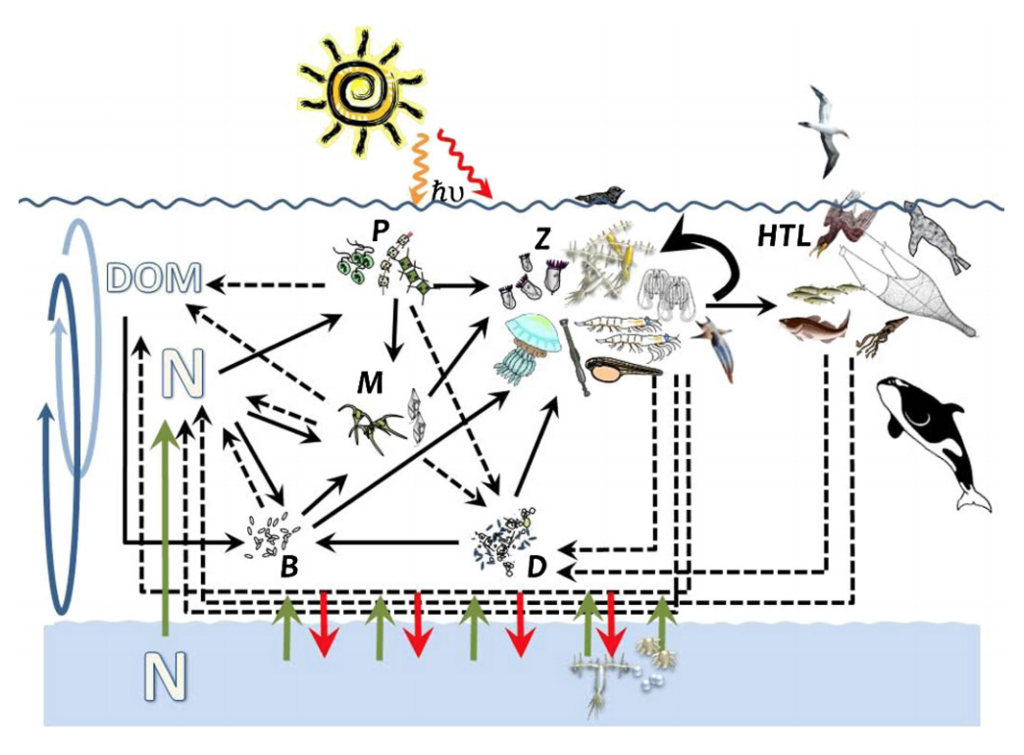
Finally, decomposers like bacteria and fungi break down dead organisms and waste products. This process is crucial because it recycles nutrients, returning them to the water so they can be used by producers again, completing the cycle of life.
Why It Matters
The oceans are not just full of fascinating creatures; they are essential to life on Earth. They regulate the global climate, absorb massive amounts of carbon dioxide, and produce a significant portion of the oxygen in our atmosphere. The health of the oceans is directly linked to the health of the entire planet.
Marine biologists play a critical role in helping us understand and protect this vital system. Their work involves a wide range of activities. Some spend their time in the field, on boats or underwater, collecting samples and observing animals. Others work in labs, analyzing DNA, studying organisms under microscopes, or running experiments in aquariums. Many use computer models to understand large-scale patterns like fish migrations or the effects of climate change.
From discovering new medicines in sea sponges to managing fisheries sustainably, the work of marine biologists helps safeguard ocean resources for the future.
This foundational knowledge of what lives in the ocean and how it functions is the first step toward understanding the bigger picture of our planet's health.