Exploring Japanese Culture
Ancient Japan
The First Inhabitants
The story of Japan begins long before emperors and samurai. For thousands of years, the islands were home to the Jōmon people, a culture that thrived from around 14,000 BCE to 300 BCE. They were hunter-gatherers, living off the land and sea. Their lives were tied to the seasons, following game, fishing in the rich coastal waters, and gathering nuts and plants.
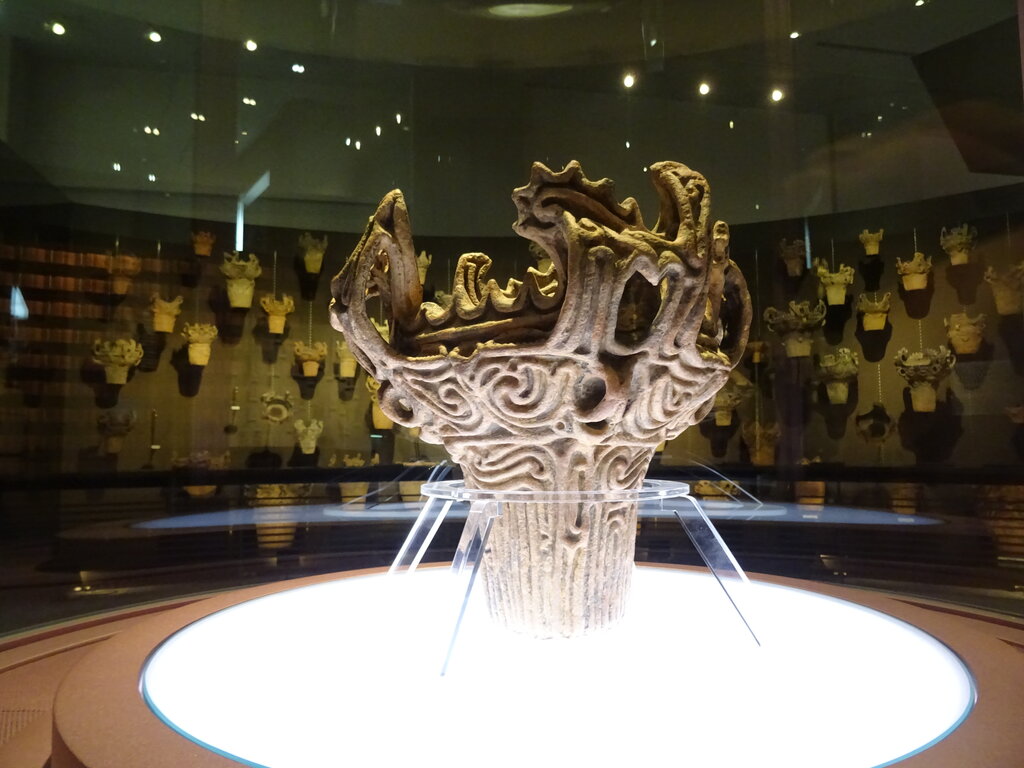
The Jōmon are most famous for their pottery, some of the oldest in the world. This wasn't just for practical use. The elaborate designs, especially the
Jōmon
noun
Meaning "cord-marked," this term refers to Japan's prehistoric period (c. 14,000–300 BCE) and the hunter-gatherer culture of that time, known for its distinctive pottery.
flame-style pots, suggest a rich spiritual and artistic life. They also created mysterious clay figurines called dogū, often depicting female forms, which may have been used in fertility or healing rituals.
A New Way of Life
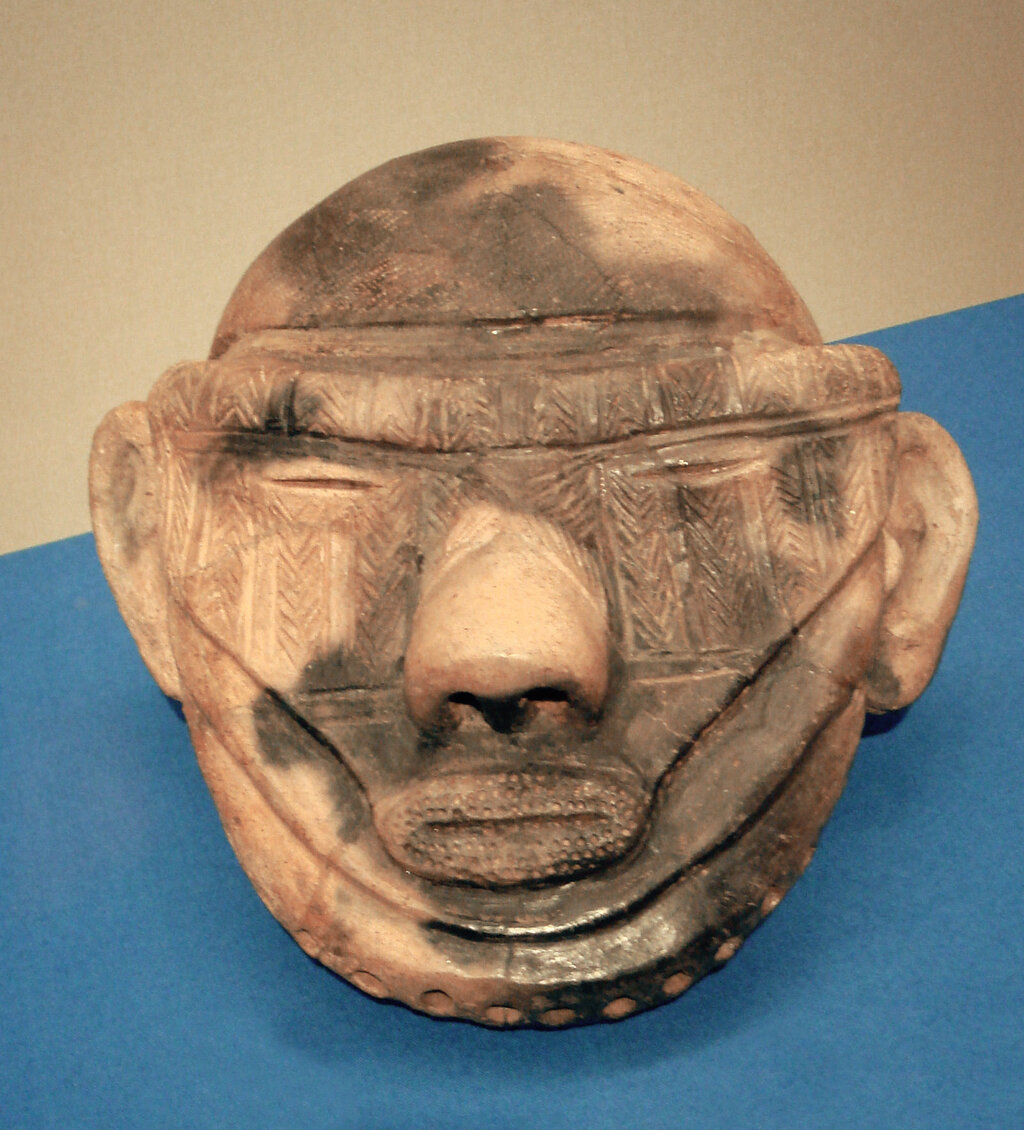
Around 300 BCE, a major shift occurred. New people arrived from the Asian mainland, likely from the Korean peninsula, bringing revolutionary ideas and technologies. This marked the beginning of the Yayoi period, which lasted until about 300 CE.
The most significant change was the introduction of wet-rice agriculture. Farming allowed for larger, more permanent settlements and a food surplus. This transformed society. Instead of small, mobile bands, communities grew into villages with distinct social classes. Powerful families and clans began to emerge.
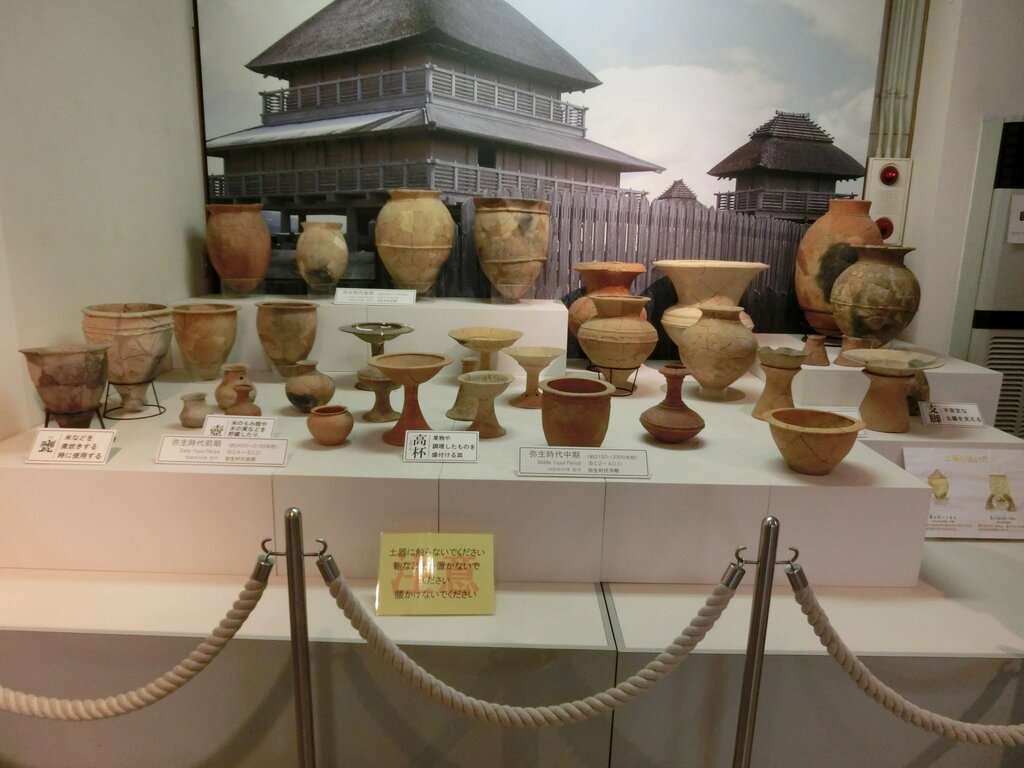
Along with farming, the Yayoi people brought metalworking. Bronze was used for ceremonial objects like bells (dōtaku), while iron was forged into stronger tools and weapons. These innovations, spurred by contact with China and Korea, laid the groundwork for a more complex and organized society.
The Rise of a Kingdom
By the 3rd century CE, Japan was a patchwork of competing clans, or uji. Out of this competition, one clan rose to prominence in the Yamato Plain, near modern-day Nara. This was the beginning of the Yamato state, the first centralized government in Japanese history.
The power of the Yamato rulers is most visibly demonstrated by their tombs, called kofun. These massive keyhole-shaped burial mounds, some larger than the pyramids of Egypt in terms of area, required enormous labor to build. They were filled with goods like armor, weapons, and pottery, indicating the wealth and authority of the leaders buried within.
The Yamato court continued to adopt ideas from the mainland. They imported the Chinese writing system, which was essential for creating a bureaucracy and recording history. This cultural borrowing would accelerate dramatically with the arrival of a new religion.
A New Faith Arrives
In the mid-6th century, a king from the Korean kingdom of Baekje sent a gift to the Yamato emperor: a statue of the Buddha and sacred scriptures. This was Japan's formal introduction to Buddhism. The new faith was a revelation, offering complex philosophy, beautiful art, and new rituals.
The introduction of Buddhism in the 6th century had a profound impact on Japanese culture and governance.
Its arrival wasn't entirely smooth. Some powerful clans, protective of the native beliefs known as Shinto, or "the way of the gods," resisted this foreign religion. Shinto is centered on the worship of kami, which are deities or spirits found in nature, ancestors, and extraordinary people. For a time, the court was divided between pro-Buddhist and pro-Shinto factions.
Ultimately, Buddhism found a powerful champion in Prince Shōtoku, who served as regent in the early 7th century. He promoted Buddhist teachings and commissioned the construction of grand temples. Rather than replacing Shinto, Buddhism began to coexist with it. Many Japanese people came to practice both, seeing no conflict between revering the local kami and following the path of the Buddha. This blending of beliefs would become a defining feature of Japanese spiritual life.
Ready to see what you remember?
What is the Jōmon culture most renowned for?
The introduction of wet-rice agriculture during the Yayoi period led directly to which major societal shift?
From ancient hunter-gatherers to a unified state with a sophisticated, blended culture, these early periods established the foundations of Japanese civilization. The stage was set for the classical age to begin.