Exploring India's Tribal Cultures
Defining 'Tribal' in India
Defining Tribal Communities
Who are India's tribal peoples? The term often used is Adivasi, which literally means 'original inhabitants'. These communities are considered to be the earliest residents of the subcontinent. However, identifying them officially is a complex task. The Constitution of India doesn't provide a strict definition. Instead, the government relies on a set of characteristics to identify these groups.
Five main criteria are typically used: indications of primitive traits, a distinctive culture, geographical isolation, shyness of contact with the wider community, and general backwardness in social and economic terms.
These criteria help form a working definition. 'Primitive traits' might refer to a reliance on older, pre-agricultural modes of living like hunting and gathering. 'Distinctive culture' points to unique languages, traditions, and social structures. 'Geographical isolation' means many communities have historically lived in remote areas like hills and forests, separate from mainstream society. This isolation often leads to a 'shyness of contact', or a general reluctance to interact with outsiders. Finally, 'backwardness' is an administrative term referring to lower levels of development in areas like literacy, health, and income compared to the national average.
Adivasi
noun
A collective name for the indigenous peoples of mainland South Asia. The term is a modern Sanskrit word that means 'original inhabitants'.
Constitutional Recognition
To safeguard the interests of these communities, the Constitution of India created a special category: Scheduled Tribes (STs). This legal recognition is crucial. Article 366 (25) of the Constitution defines Scheduled Tribes as “such tribes or tribal communities or parts of or groups within such tribes or tribal communities as are deemed under Article 342 to be Scheduled Tribes for the purposes of this Constitution.”
Essentially, Article 342 gives the President of India the authority to specify, after consulting with the state governor, which communities are considered Scheduled Tribes. This list is unique to each state and can be amended only by an Act of Parliament.
This system was established to ensure that benefits and protections reach the intended groups. Once a community is added to the list, or 'scheduled', its members become eligible for certain reservations in education, employment, and political representation.
A Diverse Population
It's a mistake to think of tribal communities as a single, uniform group. India is home to over 700 recognized Scheduled Tribes, each with its own history and culture. They make up over 8% of the country's total population. Their demographic distribution is widespread but also concentrated in certain areas.
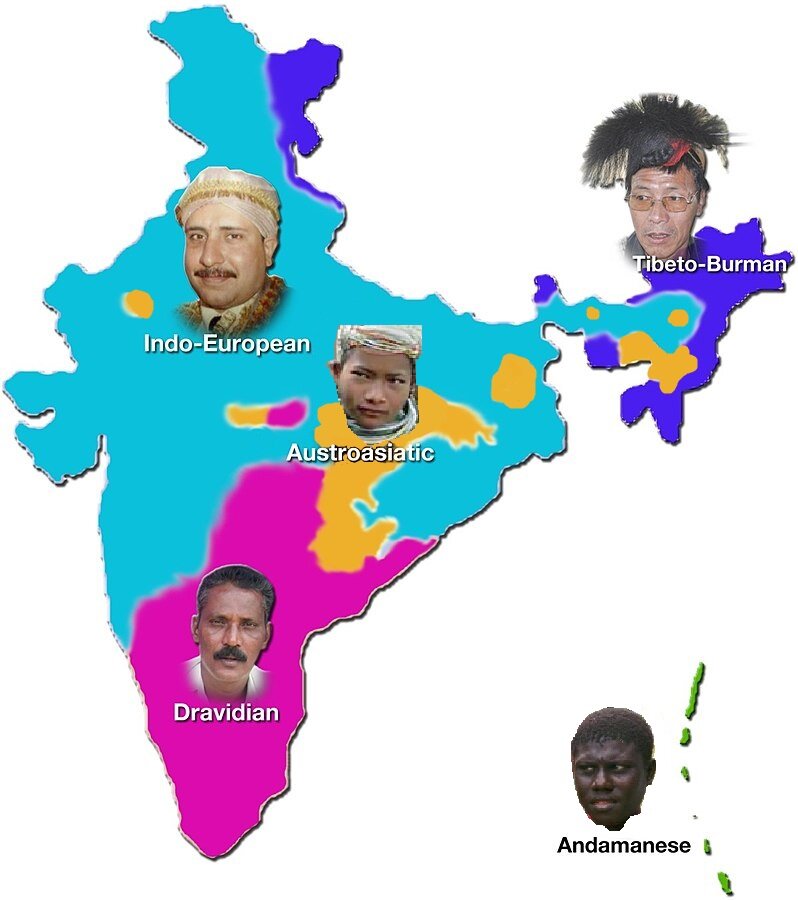
You can find significant tribal populations across the country. A large concentration exists in what is often called the 'central tribal belt', which stretches across states like Madhya Pradesh, Chhattisgarh, Jharkhand, Odisha, and parts of Maharashtra, Gujarat, and Rajasthan. Another major hub is Northeast India, which includes states like Nagaland, Mizoram, Meghalaya, and Arunachal Pradesh, where tribal communities form the majority of the population.
Some of the largest tribal groups by population include the Bhils, Gonds, Santhals, and Mundas. The Bhils are primarily found in western and central India, while the Gonds are one of the largest groups in central India. The Santhals are concentrated in the east, particularly in Jharkhand, West Bengal, and Odisha.
| Region | Key States | Major Tribal Groups |
|---|---|---|
| Central India | Madhya Pradesh, Chhattisgarh, Jharkhand | Gonds, Bhils, Oraons |
| Western India | Gujarat, Rajasthan, Maharashtra | Bhils, Warlis, Sahariyas |
| Eastern India | Odisha, West Bengal | Santhals, Mundas, Khonds |
| Northeast India | Nagaland, Mizoram, Meghalaya, Arunachal | Nagas, Mizos, Khasis, Apatanis |
| Southern India | Andhra Pradesh, Telangana, Kerala, Tamil Nadu | Todas, Koyas, Chenchus |
| Island Regions | Andaman & Nicobar, Lakshadweep | Jarawas, Onges, Sentinelese |
This immense diversity in geography, language, and social customs is a defining feature of India's tribal landscape.
What does the term Adivasi, often used to refer to India's tribal peoples, literally mean?
The Indian government uses several characteristics to identify tribal communities. Which of the following is NOT one of these official criteria?