Exploring 'How Life Works'
Introduction to Biology
What makes something alive?
Biology is the study of life. But what exactly is life? A rock isn't alive. A computer isn't alive. A plant is. So are you. What's the difference?
It turns out there isn't one simple definition. Instead, biologists look for a collection of properties that living things share. If something has all of these characteristics, we can confidently call it a living organism.
An object is considered alive if it exhibits all of the characteristics of life.
Let's walk through the key traits that separate the living from the non-living.
- Order: Living things are highly organized. Your body is made of trillions of cells, which form tissues, which form organs, which work together in systems. Even a single-celled bacterium has a complex, ordered internal structure.
- Response to Stimuli: Organisms react to their environment. A plant turns its leaves toward the sun. A person pulls their hand away from a hot surface. This ability to respond to changes is crucial for survival.
- Reproduction: Living things create more of their own kind. This can be as simple as a bacterium splitting in two or as complex as human reproduction. The ability to pass on genetic information is a fundamental part of life.
- Growth and Development: Organisms grow and change over their lifespan according to instructions coded in their genes.
- Regulation: Living systems must maintain a stable internal environment, even when the external environment changes. This process is called homeostasis.
homeostasis
noun
The ability of an organism to maintain constant internal conditions, such as temperature and pH, despite changes in its external environment.
- Energy Processing: All life requires energy to function. Organisms take in energy, like sunlight for plants or food for animals, and use it to power their activities. This transformation of energy is called metabolism.
- Evolutionary Adaptation: Over generations, populations of organisms adapt to their surroundings. Traits that improve survival and reproduction become more common over time. A camel's hump for storing fat and a cactus's spines for protection are classic examples of adaptation.
The big ideas of biology
Beyond the basic characteristics of life, biology is organized around a few major themes. These are the big ideas that connect all the different fields of study, from the smallest molecule to the entire planet. Think of them as lenses for understanding the living world.
1. Structure and Function are Related
The shape of something in biology is directly related to what it does. The long, thin structure of a nerve cell is perfect for transmitting signals over distances. The hollow, thick-walled structure of an artery is built to withstand high-pressure blood flow. This principle applies at every level, from molecules to entire organisms.
2. Information Flow
Life depends on the storage, transmission, and use of information. The most familiar example is DNA, the molecule that holds the genetic blueprint for building and operating an organism. This information is copied and passed from one generation to the next. Information is also transmitted in other ways, like the nerve signals that control your muscles or the hormones that regulate your growth.
3. Pathways of Energy and Matter
Life is an open system, constantly exchanging energy and matter with the environment. The sun is the ultimate source of energy for most life on Earth. Plants capture this energy through photosynthesis, and it then flows through the ecosystem as animals eat the plants and each other. Matter, like carbon and nitrogen, is also constantly cycled between organisms and their environment.
4. Systems and Interactions
No biological part exists in isolation. Everything is part of a larger system and interacts with other parts. The cells in your liver work together as a system to detoxify your blood. In an ecosystem, predators and prey interact in a complex food web. The properties of a system are often more than just the sum of its parts due to these complex interactions.
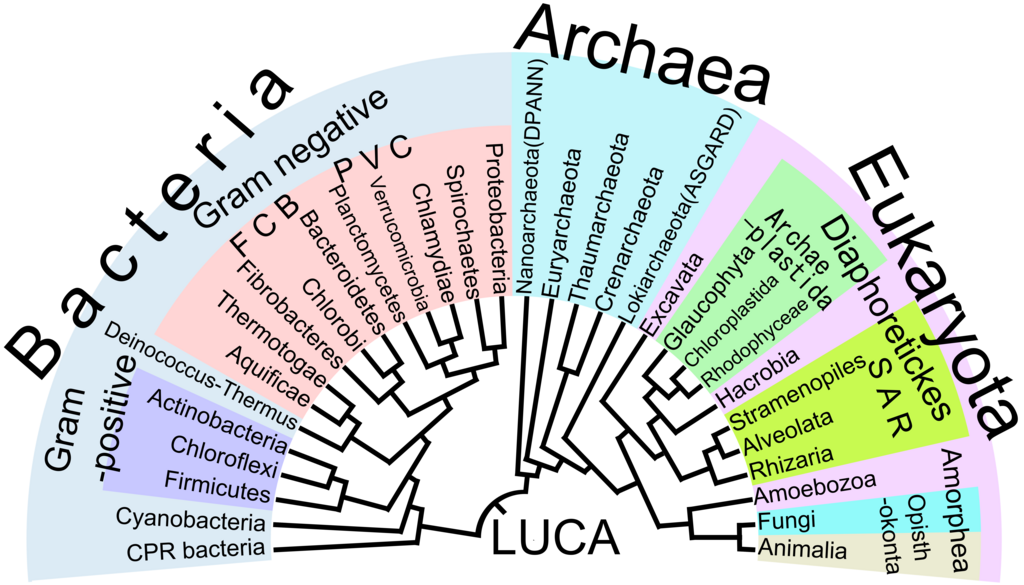
These themes provide a framework for asking questions and organizing knowledge in biology. As you learn more about life, you'll see these core ideas appear again and again.
Biology recognizes the cell as the basic unit of life, genes as the basic unit of heredity, and evolution as the engine that propels the creation and extinction of species.
Now, let's test your understanding of these foundational concepts.
Which of the following is the best example of the biological theme 'Structure and Function are Related'?
A plant turning its leaves toward a source of light is an example of which characteristic of a living organism?