Exploring Holy Minimalism
Introduction to Holy Minimalism
A Different Kind of Minimalism
In the latter half of the 20th century, a new sound began to emerge in classical music. It was quiet, spacious, and deeply felt. This wasn't the process-driven minimalism of composers like Steve Reich or Philip Glass, which often focused on interlocking rhythmic patterns. Instead, this music turned inward, blending minimalist simplicity with religious or mystical themes. It became known as holy minimalism.
Holy minimalism (also called mystic or sacred minimalism) is a strand of late-20th-century classical music that blends the austerity and repetition of minimalism with the devotional focus and modal vocabulary of sacred chant and liturgy.
Composers like Arvo Pärt, John Tavener, and Henryk Górecki began writing music that felt both ancient and modern. They stripped away complexity to create works that were emotionally direct and spiritually resonant, offering listeners a space for contemplation.
The Sound of Stillness
So, what does holy minimalism sound like? While it shares the use of repetition and simple structures with other minimalist music, its heart lies elsewhere. The sound is heavily influenced by early sacred music, such as Gregorian chant and Renaissance polyphony. You'll often hear slow tempos, simple, consonant harmonies, and a focus on creating a tranquil, meditative atmosphere.
consonance
noun
A combination of musical notes that sounds stable and pleasing, creating a sense of resolution.
Choirs and string orchestras are common, chosen for their ability to produce sustained, resonant tones that can fill a space without overwhelming it. The goal isn't to create intricate musical puzzles, but to evoke a sense of reverence and timelessness.
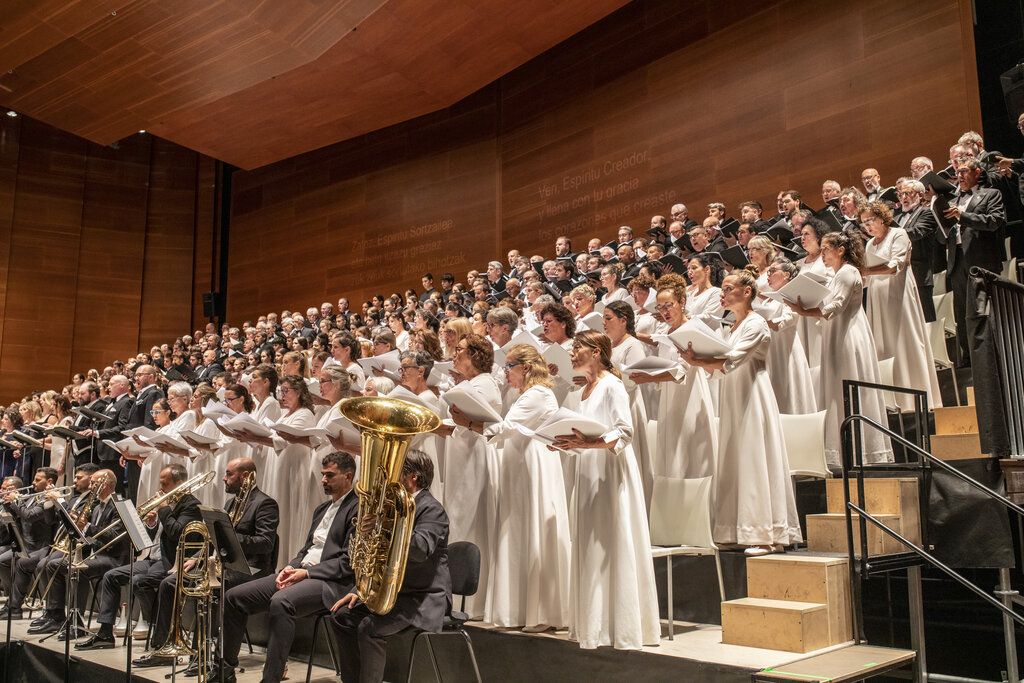
While sharing process-based clarity with American minimalism, holy minimalism is distinct in its overt spiritual intent, its choral emphasis, and its preference for transparent textures, luminous consonance, and contemplative stillness.
A Search for Meaning
The rise of holy minimalism didn't happen in a vacuum. It was partly a reaction against the dense, highly complex, and often dissonant music of the mid-20th-century avant-garde. Many composers and listeners were searching for a musical language that was more accessible and emotionally direct. They wanted music that spoke to the soul.
This movement coincided with a broader spiritual seeking in Western culture during the late Cold War period. Composers, many of whom had deep personal faith, began to integrate their spiritual beliefs directly into their work. They drew inspiration from ancient liturgical texts, Orthodox Christianity, and mystical traditions to create music that felt both personal and universal.
Arvo Pärt from Estonia, for example, developed a unique compositional style called tintinnabuli (from the Latin for "bell"), which combines a simple melodic line with a second voice that sounds notes from a single triad, like the ringing of a bell. The late Sir John Tavener of England often based his work on the theology and music of the Orthodox Church. Poland's Henryk Górecki gained worldwide fame for his Symphony No. 3, "Symphony of Sorrowful Songs," a meditative work on themes of motherhood and loss.
These composers, each in their own way, found a powerful intersection between modern compositional techniques and ancient spiritual traditions.
Ready to check your understanding? Let's review the key ideas.
What is the primary characteristic that distinguishes holy minimalism from the process-driven minimalism of composers like Steve Reich or Philip Glass?
Which of these composers is most closely associated with holy minimalism?
Through its unique blend of simplicity and spirituality, holy minimalism created a new and profound path in contemporary classical music.