Exploring Electronic Actuators
Introduction to Actuators
The Movers and Shakers
Think about your own body. When your brain decides to pick up a glass, it sends a signal through your nerves to your arm. Your muscles then convert chemical energy into motion, contracting to move your arm and hand. In the world of machines, this job is done by an actuator.
Actuator
noun
A component of a machine that is responsible for moving or controlling a mechanism or system. It converts an energy source, under the control of a signal, into mechanical motion.
Simply put, an actuator is a mover. It takes a source of energy—like electricity, hydraulic fluid pressure, or compressed air—and converts it into physical movement. This movement could be anything from rotating a gear to pushing a lever or opening a valve.
Every actuator needs two things to work: a control signal and an energy source. The signal is the 'go' command, and the energy is what provides the power to actually perform the action.
Why Actuators Are Essential
Without actuators, most modern technology would be static and unresponsive. They are the crucial link between a system's control unit (like a computer or a simple switch) and the physical world. They turn commands into actions.
Imagine a car without actuators. You couldn't adjust your power windows, your automatic transmission wouldn't shift gears, and your anti-lock brakes wouldn't be able to rapidly pulse the brake pads. Actuators make automation possible.
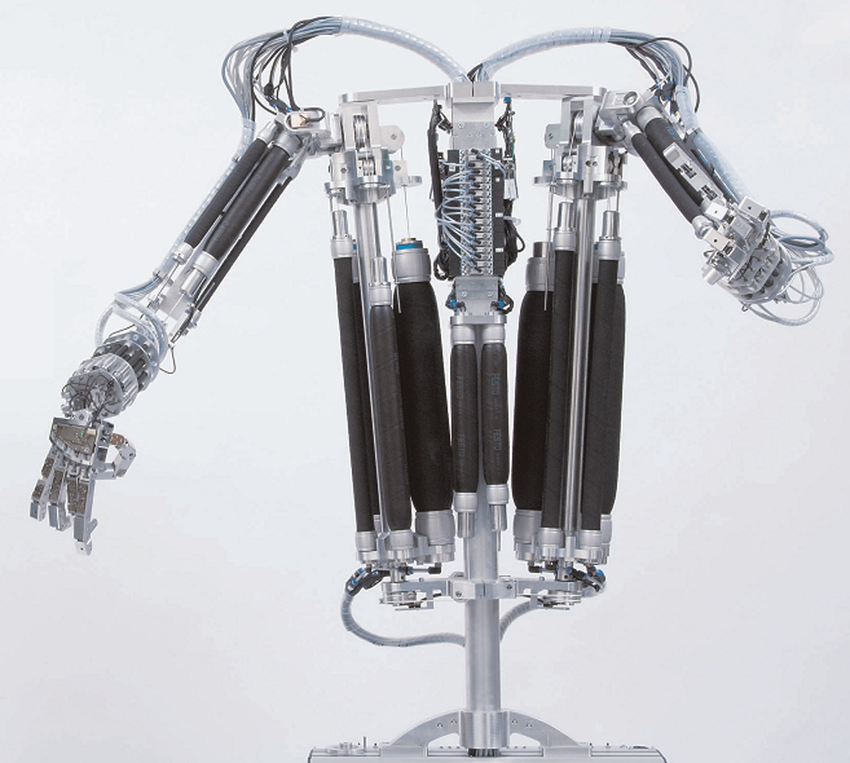
They enable machines to interact with their environment with precision and force, whether it's a delicate robotic gripper assembling a smartphone or a massive hydraulic ram lifting tons of steel.
Actuators in Action
You can find actuators in a surprising number of places, often working behind the scenes.
- Automotive: Besides the examples above, actuators control engine idle speed, adjust mirrors, and lock doors.
- Aerospace: In an airplane, actuators are critical for moving the flight control surfaces—like the flaps on the wings and the rudder on the tail—that allow the pilot to steer the aircraft.
- Robotics: Every joint in a robot's arm or leg is powered by an actuator. They allow industrial robots to weld car frames and surgical robots to perform operations with superhuman precision.
- Manufacturing: On an assembly line, pneumatic actuators might push products from one station to another, while electric actuators precisely control the motion of cutting tools.
- Home Appliances: Even your washing machine uses actuators to open and close water valves.
The actuator design varies significantly based on application requirements.
The type of energy used and the design of the actuator depend entirely on the job it needs to do. This foundational concept is the key to understanding how so many of the devices we rely on are able to function.