Exploring Dzogchen
Introduction to Dzogchen
The Great Perfection
Many spiritual paths are about a journey of transformation, of changing who you are to become something better. Dzogchen, a profound tradition from Tibetan Buddhism, takes a different approach. The name itself, Dzogchen, translates to "Great Perfection." It suggests that our fundamental nature is already complete, pure, and perfect. There's nothing to fix or create.
The path isn't about becoming a Buddha; it's about recognizing that the nature of your own mind is, and always has been, enlightened. Think of the sky. It is vast, clear, and open. Clouds, storms, and sunshine may pass through it, but they don't change the sky itself. The sky remains untouched. In this analogy, our thoughts, emotions, and perceptions are like the clouds. Dzogchen teaches us to recognize the ever-present, clear sky of our mind, rather than getting lost in the passing weather.
The core practice of Dzogchen is to simply recognize and rest in this natural state of awareness, known as rigpa.
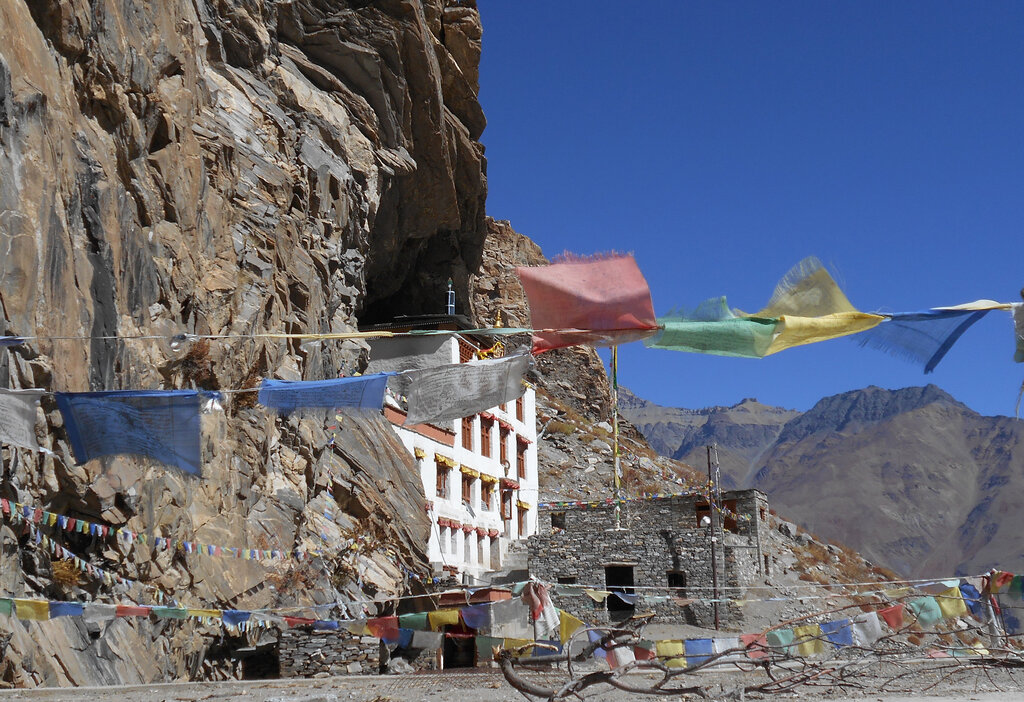
A Path of Direct Recognition
Dzogchen has deep roots, primarily within the Nyingma school, the oldest of the four main schools of Tibetan Buddhism, and also in the indigenous Bön tradition of Tibet. Its lineage is said to trace back to Garab Dorje, an early master from the ancient kingdom of Oddiyana.
Within the Nyingma tradition, the spiritual path is often mapped out in nine stages or vehicles, called yanas. Each yana represents a different approach to enlightenment, building upon the last. Dzogchen, or Atiyoga, is considered the ninth and highest yana. It's seen as the most direct path because it doesn't rely on complex rituals or gradual stages of development. Instead, it points directly to the nature of the mind.
The foundational principles of Dzogchen are often summarized as the View, Meditation, and Conduct.
| Principle | Description |
|---|---|
| View | Recognizing the innate purity and completeness of one's own mind. It's an understanding, not just an idea. |
| Meditation | Resting in that state of recognition without effort or distraction. It's about non-doing. |
| Conduct | Integrating this continuous awareness into every moment of daily life, whether walking, eating, or working. |
Living the View
A common misconception is that profound spiritual practice requires withdrawing from the world. Dzogchen teaches the opposite. The goal is not to escape life but to fully engage with it from a place of clear awareness. The challenges and joys of daily life become the very ground for practice.
When you recognize the spacious, sky-like nature of your mind, you are less likely to be swept away by the storms of anger, attachment, or anxiety. You can experience emotions fully without being controlled by them. They arise and dissolve back into the space of awareness, like waves rising from and returning to the ocean. This integration of view into conduct is the heart of living Dzogchen.
The practice isn't confined to a meditation cushion. Your life becomes the meditation.
To recap, let's go over some of the core ideas we've covered.
Now, let's test your understanding of these concepts.
The name "Dzogchen" translates to "Great Perfection." What does this core concept imply?
According to the common Dzogchen analogy, if the mind is like the sky, what are the clouds?
Dzogchen offers a powerful perspective: enlightenment is not a distant goal to be attained, but an immediate reality to be recognized in every moment.