Exploring Digital Platforms
Introduction to Digital Platforms
What Are Digital Platforms?
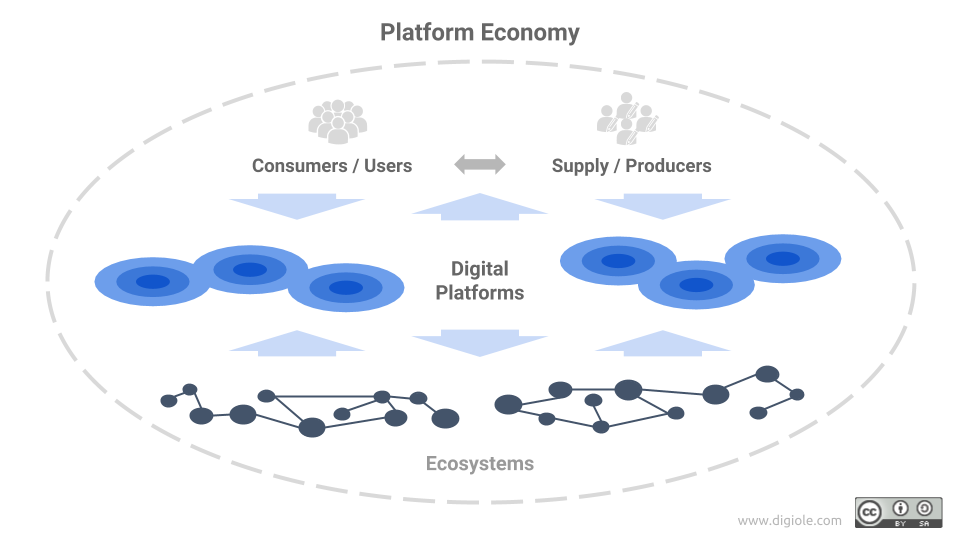
Think of a digital platform as a bustling town square, but online. It's a software-based infrastructure designed to bring different groups of people together. Instead of merchants and shoppers, you might have content creators and viewers, or drivers and riders. These platforms don't typically create the products or services themselves. Instead, they build the digital environment and rules that allow users to connect, interact, and exchange value.
A platform is not merely a website or an application; it’s an integrated ecosystem that connects users, creators, and businesses, fostering value exchange and creating a network effect.
This value exchange is key. An e-commerce site connects buyers and sellers. A social media app connects friends and advertisers. A ride-sharing app connects drivers with people who need a lift. The platform's success depends on its ability to make these connections happen smoothly and efficiently.
Types of Platforms
Digital platforms come in many shapes and sizes, each serving a different primary purpose. While many modern platforms blur the lines, they generally fall into a few broad categories:
- Social Media Platforms: These connect users to share information, personal updates, and content. Think of Instagram, X (formerly Twitter), and Facebook.
- Digital Marketplaces: These facilitate the buying and selling of goods and services. Amazon, Etsy, and eBay are classic examples, connecting millions of sellers with buyers.
- Search Engines: These platforms, like Google and DuckDuckGo, index the internet and help users find information. They connect searchers with content providers.
- Content and Media Platforms: These focus on distributing media. YouTube connects video creators with an audience, while Spotify does the same for musicians and podcasters.
Core Functions
Regardless of their type, most digital platforms perform three critical functions. First, they aggregate and analyze data. Every click, search, and purchase provides information that platforms use to personalize your experience and target advertising. This data is one of their most valuable assets.
Second, they enable transactions. This isn't just about money. A transaction can be a 'like' on a photo, a comment on a video, or the booking of a rental property. The platform provides the secure and reliable infrastructure for these exchanges to occur.
Finally, they support content and service development. Platforms provide the tools for users to create value. YouTube offers video uploading and editing tools, while Apple's App Store gives developers a way to build and distribute software. This user-generated content or service is what attracts other users, creating a powerful cycle of growth.
The governance of these platforms is a crucial aspect. Most of the platforms we use daily are centralized, meaning a single company owns the infrastructure, sets the rules, and controls the data. This allows for rapid development and a consistent user experience.
However, a growing movement toward decentralization aims to distribute control among users. Decentralized platforms, often built on blockchain technology, offer an alternative model where governance is shared, and data ownership may reside with the individual. This creates a different set of trade-offs between efficiency and user control.
Why They Matter
The economic and social significance of digital platforms is immense. Economically, they are home to some of the world's largest companies and have redefined entire industries, from retail to transportation. They enable small businesses and individual creators to reach global audiences, creating new opportunities for entrepreneurship.
Socially, platforms have fundamentally changed how we communicate, form communities, and consume information. They connect people across geographical boundaries and provide spaces for social and political organization. This deep integration into our daily lives makes understanding their structure and function more important than ever.
Ready to test your knowledge? Let's see what you've learned about the fundamentals of digital platforms.
What is the primary role of a digital platform?
A platform that primarily connects musicians with listeners, such as Spotify, would be best classified as which type of platform?
From marketplaces to social networks, digital platforms are the frameworks that shape much of our online world, acting as the crucial link between users, creators, and businesses.