Exploring Deleuze's Philosophy
Difference In-Itself
Flipping Philosophy on Its Head
For most of Western philosophy, identity has been the star of the show. Think back to Plato and Aristotle. An object is defined by what it is. A chair is a chair because it matches the idea of a chair. A dog is a dog because it fits the category of "dog." In this view, difference is always an afterthought. Something is different only in relation to something else. A cat is different from a dog. A red chair is different from a blue chair. Difference is secondary, a mere variation on an established identity.
The philosopher Gilles Deleuze looked at this long-standing tradition and proposed a radical reversal. What if difference comes first? What if the universe isn't a collection of fixed identities that occasionally vary, but a constant, creative flux of difference from which temporary identities emerge? For Deleuze, difference isn't the opposite of identity. It's the engine that produces reality itself.
Instead of seeing difference as a lack or a negation of identity, Deleuze sees it as a positive, productive force.
Imagine a perfectly still ocean. According to traditional philosophy, the ocean's identity is its stillness. A wave would be a 'difference' from that stillness. Deleuze argues the opposite. The ocean's nature is a dynamic system of pressures, temperatures, and currents—a sea of pure difference. A wave isn't a deviation from a norm; it's a momentary expression of those underlying differences. The identities we see, like a specific wave or even the 'calm sea', are just temporary effects.
The Tyranny of the Copy
Deleuze's main target was what he called the philosophy of representation. This is the idea that our thoughts and language are meant to form accurate copies or pictures of reality. This tradition dates back to Plato's Forms—the belief in a realm of perfect, eternal ideals that everything in our world merely imitates. A chair in our world is just a flawed copy of the perfect 'Form' of a chair.
This model creates a clear hierarchy. The original (the Form, the Identity) is good and true. The copy (the thing in our world, the Difference) is always secondary and inferior. It's judged by how well it resembles the original. Deleuze argued this way of thinking is a straitjacket. It forces us to measure everything against a pre-existing standard, blinding us to the raw, creative potential of things as they are, in all their unique difference.
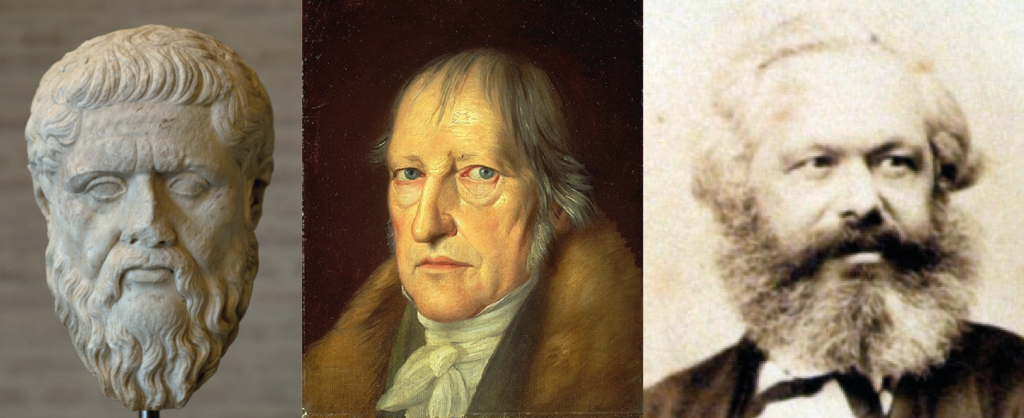
He wanted to escape this system of judgment. Instead of asking, "How well does this copy resemble the original?" he asked, "What does this thing do? What forces does it express?" This shift requires a new concept: difference in-itself.
Unconditioned Difference
Difference in-itself, or , is difference that doesn't rely on an identity to exist. It's not the difference between two things that are already defined. It's the fundamental process of differentiation that produces those things in the first place. It's 'unconditioned' because it's not conditioned by a prior sameness or identity.
To make this clearer, let's contrast the traditional view with Deleuze's.
| Traditional View (Secondary Difference) | Deleuze's View (Primary Difference) |
|---|---|
| Identity comes first. | Difference comes first. |
| Difference is a relationship between two pre-existing identities (A is not B). | Identity is a temporary effect of underlying difference. |
| Reality is composed of stable, self-identical things. | Reality is a dynamic process of becoming and differentiation. |
| Thought aims to represent or copy an external reality (resemblance). | Thought aims to create new concepts that connect with reality's processes. |
This isn't just an abstract philosophical game. It changes how we think about everything. In a world of primary identity, novelty is difficult; things are just rearrangements of what already is. In Deleuze's world of primary difference, novelty and creation are the norm. The universe is constantly producing the new.
Ready to test your grasp of these ideas?
According to Gilles Deleuze, what is the relationship between identity and difference?
Deleuze's philosophy is a direct critique of what he called the 'philosophy of representation'. Which concept best exemplifies this tradition?
Understanding this foundational shift from identity to difference is the first and most crucial step into Deleuze's challenging but rewarding philosophical world.