Exploring Deep Tech Frontiers
Introduction to Deep Tech
What Is Deep Tech?
Deep tech isn't just another buzzword. It refers to companies and innovations built on significant scientific discoveries or engineering breakthroughs. Think of it as technology that solves fundamental problems, not just convenient ones.
One feature of deep tech is its foundation in the scientific development of novel technologies, often described as "first-of-a-kind" innovations that build on cutting-edge research.
These aren't ideas you can launch from a garage in a weekend. Deep tech ventures often require years of research and development (R&D) and substantial investment before they ever reach the market. The goal isn't to create a better photo-sharing app, but to develop something fundamentally new, like a cancer-curing therapy or a completely new way to compute information.
Deep vs. Shallow Tech
To understand deep tech, it helps to contrast it with what some call "shallow tech." This isn't a negative term. Shallow tech refers to innovations that are primarily built on existing technologies and business model innovations. Most mobile apps, e-commerce sites, and software-as-a-service (SaaS) products fall into this category. They are often faster to build, require less capital, and focus on capturing a market with a clever application of current tools.
Deep tech, on the other hand, is about creating the tools themselves. It tackles foundational challenges and often has a physical component, whether it's a quantum computer, a lab-grown organ, or a new type of battery.
| Feature | Deep Tech | Shallow Tech |
|---|---|---|
| Core Innovation | Scientific / Engineering Breakthrough | Business Model / User Experience |
| R&D Timeline | Years to Decades | Months to Years |
| Capital Needs | High | Low to Medium |
| Primary Risk | Technological Feasibility | Market Adoption |
| Market Impact | Creates or disrupts entire industries | Optimizes or captures existing markets |
Key Areas of Deep Tech
Deep tech isn't a single industry but a category that spans several cutting-edge fields. Each area tackles a different set of fundamental challenges.
- Artificial Intelligence (AI): Beyond simple algorithms, deep tech AI involves creating complex systems that can learn, reason, and perceive. This includes areas like neural networks and generative models that power breakthroughs in medicine, finance, and science.
- Biotechnology: This field uses cellular and biomolecular processes to develop new technologies and products. Deep tech applications include gene editing with CRISPR, personalized medicine, and creating sustainable biomaterials.
- Quantum Computing: Instead of bits, quantum computers use qubits to perform calculations at speeds unimaginable for classical computers. They have the potential to revolutionize drug discovery, materials science, and cryptography.
- Robotics: This goes far beyond factory automation. We're talking about advanced robots with sophisticated sensors and AI that can perform complex surgery, explore other planets, or care for the elderly.
- Advanced Materials: This involves designing and creating new materials with novel properties. Examples include self-healing concrete, ultra-light and super-strong composites for aerospace, and more efficient semiconductors.
Tackling Global Challenges
The true significance of deep tech lies in its potential to solve some of the world's biggest problems. Climate change, pandemics, food scarcity, and clean energy are not challenges that can be solved with a new app.
They require fundamental breakthroughs. Advanced materials could lead to new ways of capturing carbon from the atmosphere. Biotechnology could create drought-resistant crops or new vaccines in record time. AI can help us model complex systems like the climate or discover new life-saving drugs.
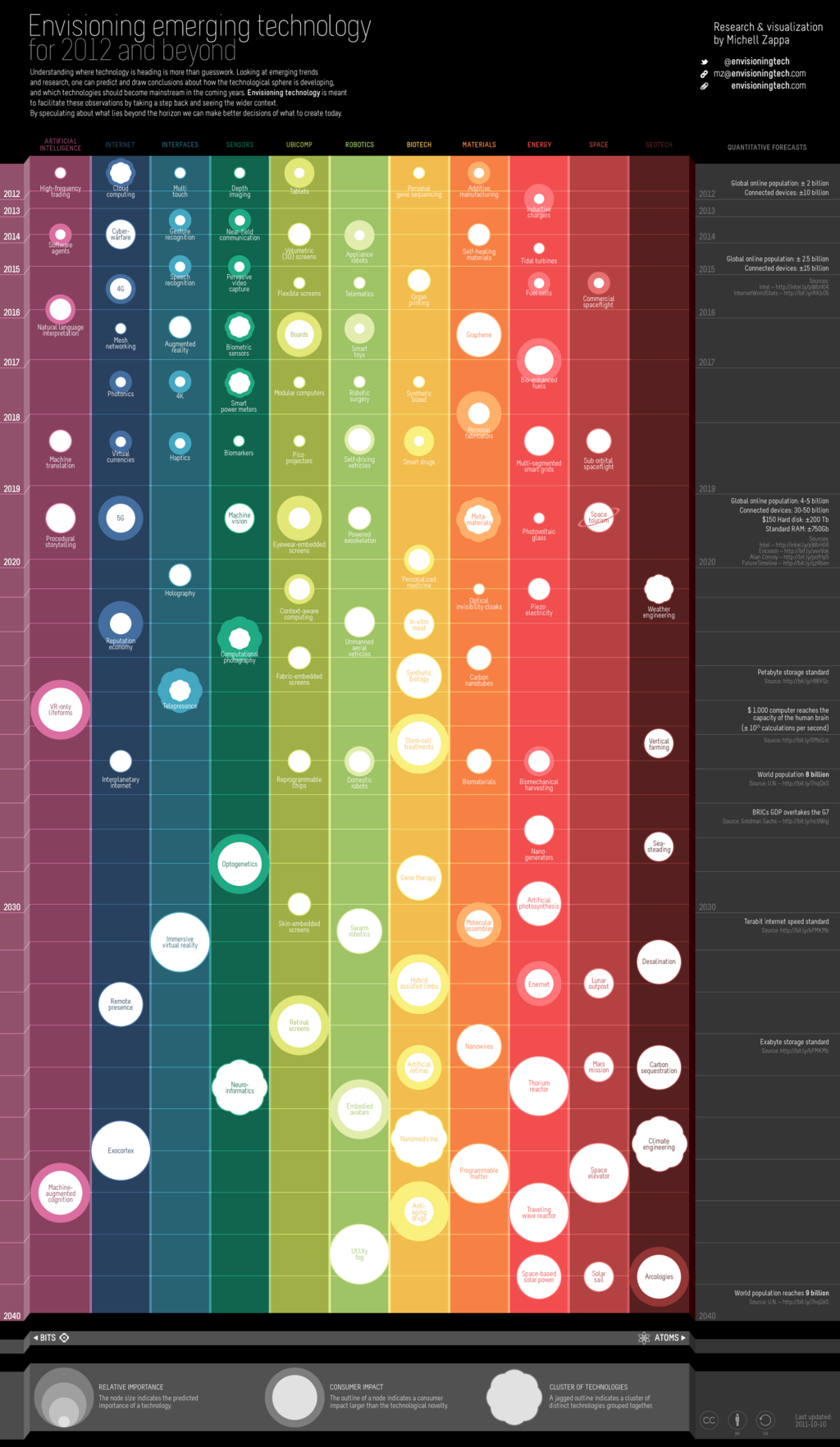
Because of this, deep tech is becoming a critical engine for economic growth and societal progress. It creates entirely new industries and requires a workforce with specialized skills. For those looking to make a significant impact, understanding these technological frontiers is the first step.
Now, let's test your understanding of these core concepts.
What is the primary characteristic that distinguishes "deep tech" from "shallow tech"?
True or False: Deep tech is considered a single, specific industry focused only on software development.
Deep tech is about harnessing major scientific and engineering innovations to address foundational problems, setting it apart from more application-focused technology.