Exploring Core Beliefs
Introduction to Core Beliefs
The Invisible Lens
We all navigate the world with a unique perspective. It’s as if each of us wears an invisible pair of glasses that colors everything we see. These glasses are our core beliefs: the fundamental, deeply ingrained assumptions we hold about ourselves, other people, and the world around us.
They aren't just casual opinions. They feel like absolute truths. These beliefs are the bedrock of our personality and operate automatically, often without us even noticing.
Core beliefs are the stories we tell ourselves about who we are and how the world works. They might be positive, like "I am capable," or negative, such as "People will always let me down."
How Beliefs Shape Reality
Because these beliefs act as a filter, they have a powerful effect on how we interpret events. They guide us to pay attention to information that confirms what we already believe and to ignore what doesn't.
Imagine two people get a new, challenging assignment at work. One person’s core belief is, “I am competent.” They see the assignment as an exciting opportunity to learn and grow. The other person’s core belief is, “I am a failure.” They see the very same assignment as a threat and a surefire way to be exposed as a fraud.
The situation is neutral. The core belief is what gives it meaning.
The Ripple Effect
This filtering process doesn’t just stop at our perception. Core beliefs set off a chain reaction that shapes our entire experience: our thoughts, feelings, and actions are all connected to them. They are the starting point for our automatic reactions to life.
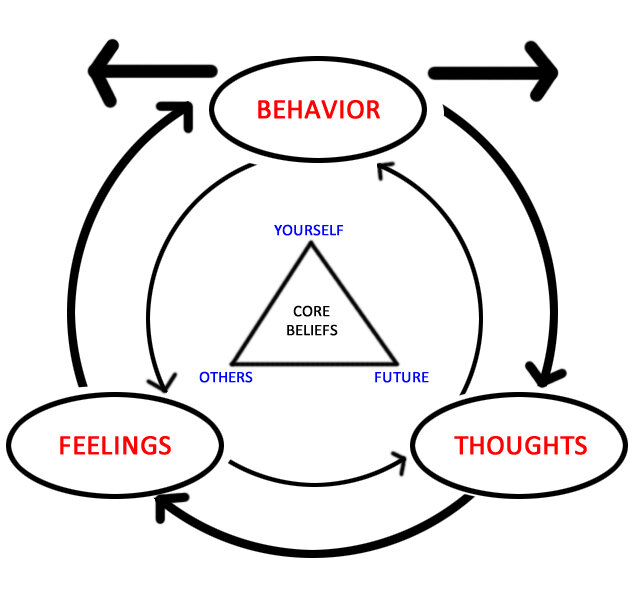
Let’s follow the ripple effect with an example. If your core belief is, "I don't belong," walking into a party might trigger an automatic thought like, "Everyone here has friends but me." This thought would likely lead to feelings of anxiety and sadness. As a result, you might stand in the corner and avoid talking to anyone, which reinforces your original belief that you don't belong.
Understanding these foundational beliefs is the first step to recognizing how they quietly steer our lives. They are the invisible rules we live by, and becoming aware of them is key to understanding ourselves.
Which of the following best describes core beliefs?
A student receives critical feedback on an essay. If their core belief is "I am a failure," how are they most likely to interpret this neutral event?