Exploring Claude AI
Introduction to Large Language Models
What Is a Large Language Model?
A large language model, or LLM, is a type of artificial intelligence designed to understand and generate human-like text. Think of it as a very advanced prediction engine. If you give it a piece of text, its main job is to predict what word comes next. By doing this over and over again on a massive scale, it learns the patterns, grammar, context, and even nuances of human language.
A large language model (LLM) is an AI model trained on massive amounts of text data that can understand and generate human-like text, recognize patterns in language, and perform a wide variety of language tasks without task-specific training.
This ability to predict the next word allows LLMs to perform a variety of tasks, from writing an email to translating languages or generating computer code. They aren't just repeating information they've seen before; they are using learned patterns to create new, original content based on the input they receive.
The Brain of an LLM
At their core, LLMs are built on a concept called a neural network, which is loosely inspired by the human brain. A neural network is made of layers of interconnected nodes, or "neurons." Each connection has a weight, a value that determines the strength of the signal passing through it. When you give the model input, like a sentence, the data passes through these layers, and the neurons activate in specific patterns to produce an output, like the next word in that sentence.
Modern LLMs use a specific type of neural network architecture called a Transformer. The key innovation of the Transformer is its ability to weigh the importance of different words in the input text. This is called an "attention mechanism." It allows the model to pay closer attention to relevant words when generating a response, even if those words are far apart in the original sentence. This gives LLMs a much better grasp of context.
How LLMs Learn
Training an LLM is a massive undertaking. It involves feeding the model an enormous amount of text data from the internet, books, articles, and other sources. This process is called unsupervised learning because the data isn't manually labeled. The model simply learns by finding patterns in the raw text.
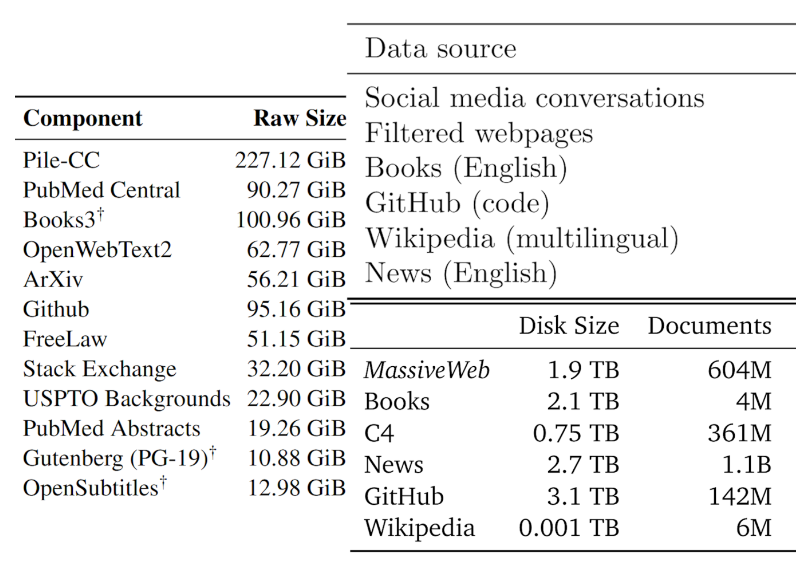
During training, the model is given a piece of text with a word missing and is asked to predict that missing word. It makes a guess, compares its guess to the actual word, and then adjusts its internal connection weights to improve its accuracy for the next time. This process is repeated billions or even trillions of times, gradually making the model better at understanding language.
What Can LLMs Do?
Because they are trained on such a wide range of text, LLMs are incredibly versatile. They are general-purpose tools that can be applied to many different tasks without needing to be retrained for each one. Some common applications include:
Content Creation: Writing articles, emails, marketing copy, and even poetry. Summarization: Condensing long documents into key points. Translation: Translating text between different languages. Code Generation: Writing computer code based on a natural language description. Chatbots: Powering conversational agents for customer service or information retrieval.
These models are constantly evolving, finding new uses in fields from education and research to software development and entertainment.
Now, let's test your knowledge on the basics of large language models.
What is the fundamental task a large language model is trained to perform?
The key innovation in the Transformer architecture that allows LLMs to understand context by weighing the importance of different words in the input is called the __________.
That covers the fundamentals of what LLMs are, how they work, and what they're used for. This foundation is key to understanding more advanced AI systems.