Exploring Chicken Breeds and Their Traits
Introduction to Chicken Classification
Organizing the Flock
With hundreds of chicken breeds around the world, how do you keep them all straight? Just like biologists classify animals into families and species, poultry enthusiasts have systems for organizing chickens. This helps breeders maintain specific traits and allows judges at shows to evaluate birds against a consistent standard.
In North America, the most widely accepted system comes from the American Poultry Association, or APA. Founded in 1873, the APA publishes the Standard of Perfection, which details the ideal characteristics for every recognized breed and variety.
Each breed of chicken is ‘qualified’ by leg color, feathers, comb and other characteristics just like other livestock and even pets.
The APA's primary method for grouping chickens is by their place of origin. This top-level category is called a Class.
Classes of Chicken
A chicken's class tells you about its general ancestry. For example, breeds in the American Class were all developed in the United States. Breeds in the Mediterranean Class, like Leghorns, originated in countries surrounding the Mediterranean Sea and are known for laying white eggs.
| Class | Common Characteristics |
|---|---|
| American | Developed in North America; yellow skin; lay brown eggs. |
| Asiatic | Originated in Asia; large bodies; feathered legs. |
| English | Developed in the United Kingdom; white skin. |
| Mediterranean | From the Mediterranean region; smaller bodies; lay white eggs. |
| Continental | From mainland Europe (e.g., France, Germany); varied traits. |
| All Other Standard Breeds | A catch-all for breeds that don't fit elsewhere (e.g., from Cuba). |
Breed and Variety
Class is only the beginning. Within each class, chickens are further divided into Breeds, and then into Varieties.
- Class: The broadest category, based on geographic origin.
- Breed: A group within a class that shares a specific body shape and size.
- Variety: A subdivision of a breed, based on feather color, pattern, or comb type.
Think of it like cars. "German cars" could be a class. Within that class, a Volkswagen Beetle would be a specific breed or model. A red Beetle versus a blue Beetle would be different varieties.
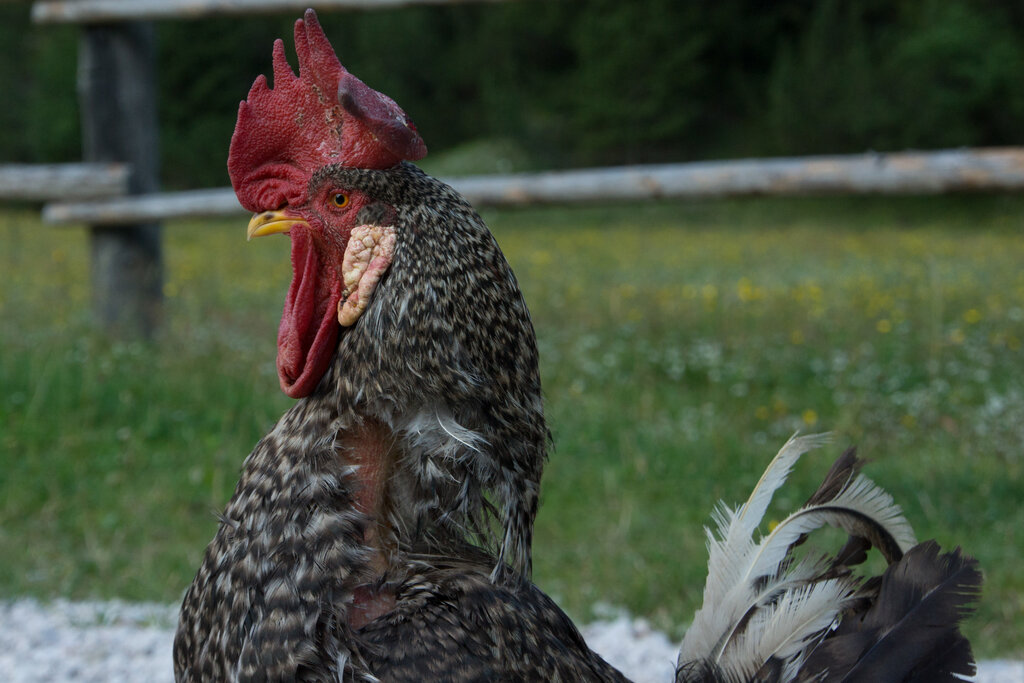
So, a Barred Plymouth Rock chicken belongs to the American Class. Its breed is Plymouth Rock, which defines its body shape and dual-purpose nature (good for both eggs and meat). Its variety is "Barred," which describes its distinctive black-and-white striped feather pattern.
Understanding this hierarchy is the first step to navigating the diverse world of poultry.
According to the American Poultry Association (APA), what is the primary factor used to group chickens into a "Class"?
In the name "Barred Plymouth Rock," the term "Plymouth Rock" refers to the chicken's what?