Exploring Ceramics
Introduction to Ceramics
What Are Ceramics?
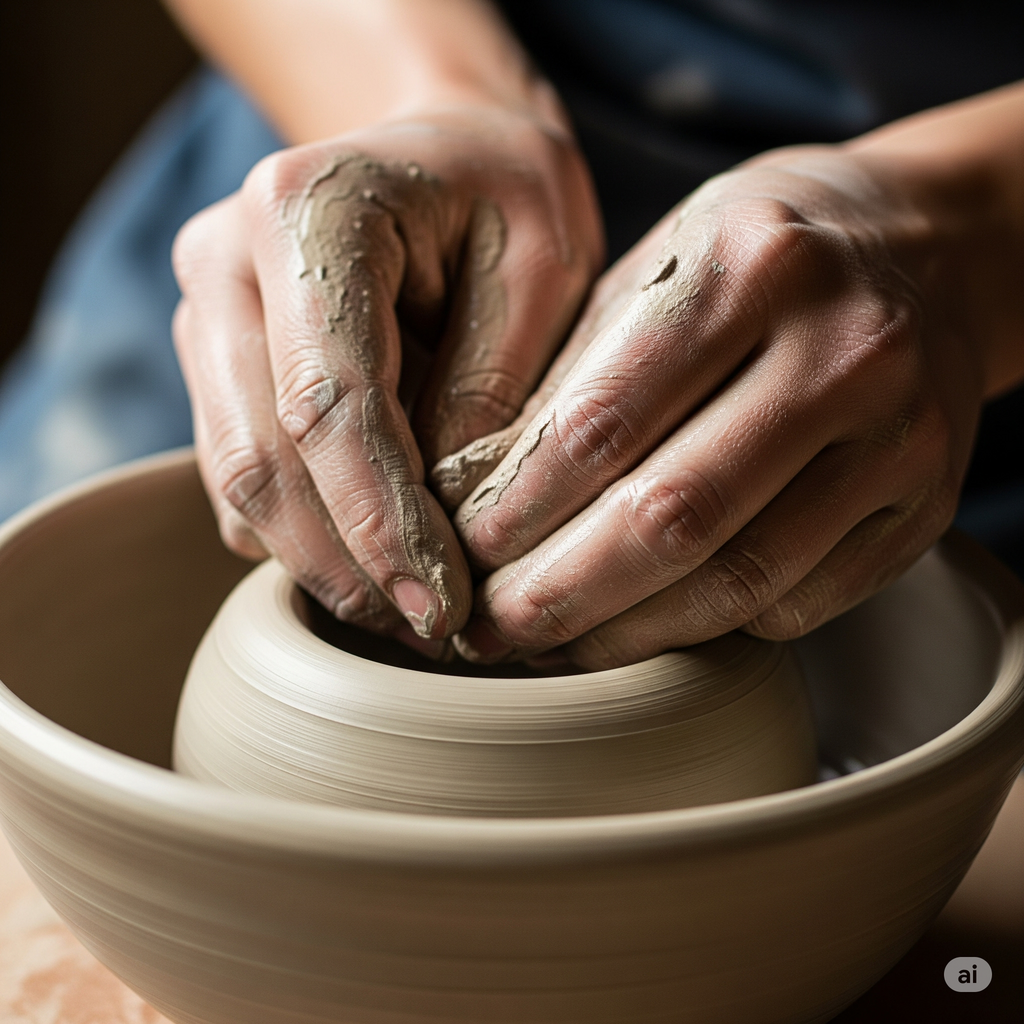
Every ceramic piece begins the same way: with clay—water and earth blended to plasticity—then shaped, dried, and permanently transformed by heat.
When you hear the word “ceramic,” you probably think of pottery, tiles, or maybe a coffee mug. You're not wrong. These are all ceramics, but the family is much larger than that.
At its core, a ceramic is a solid material made from inorganic, non-metallic compounds. The magic happens when these materials are shaped and then hardened by firing at very high temperatures. This process, called sintering, fuses the particles together, creating a hard, durable material. Think of it like baking a cake, but at temperatures hot enough to melt rock.
Hard, Brittle, and Heat-Resistant
Ceramics have a unique set of properties that make them incredibly useful. They are generally very hard, which means they resist scratches and wear. The same ceramic glaze that gives your favorite mug its color also protects it from being scratched by a spoon.
However, this hardness comes with a trade-off: brittleness. While a ceramic plate can withstand years of use, it will shatter if you drop it. Unlike metal, which might bend or dent, ceramics tend to fracture without warning.
They are also excellent insulators against heat and electricity. This is why the Space Shuttle used ceramic tiles to protect it from the extreme heat of re-entry, and why the insulators on power lines are often made of porcelain, a type of ceramic. They also hold up well against chemical attacks, which is why they're used to store and transport corrosive materials.
Key properties: Hardness, brittleness, high-temperature stability, and chemical resistance.
Traditional vs. Advanced
The world of ceramics can be split into two main categories: traditional and advanced.
Traditional ceramics are what we most commonly encounter. They are primarily made from natural raw materials like clay, silica, and feldspar. Think pottery, bricks, tiles, and glass. These have been part of human life for millennia.
Advanced ceramics, also known as technical or engineering ceramics, are a different beast. They are made from highly pure, synthetic compounds like silicon carbide (), alumina (), and zirconia (). Their properties are carefully controlled to meet demanding requirements in fields like aerospace, medicine, and electronics.
| Feature | Traditional Ceramics | Advanced Ceramics |
|---|---|---|
| Raw Materials | Natural (clay, sand) | Synthetic (pure compounds) |
| Purity | Lower | Very high |
| Common Use | Pottery, bricks, tiles | Electronics, engine parts, armor |
| Properties | Good | Exceptional & specialized |
A Journey Through Time
The story of ceramics is the story of human civilization. One of the earliest human technologies, pottery emerged as people learned to control fire. The ability to create waterproof containers from simple clay revolutionized food storage and preparation.
Archaeologists have found ceramic figurines dating back over 25,000 years. These early artifacts show our ancestors' desire to create lasting objects from the earth beneath their feet.
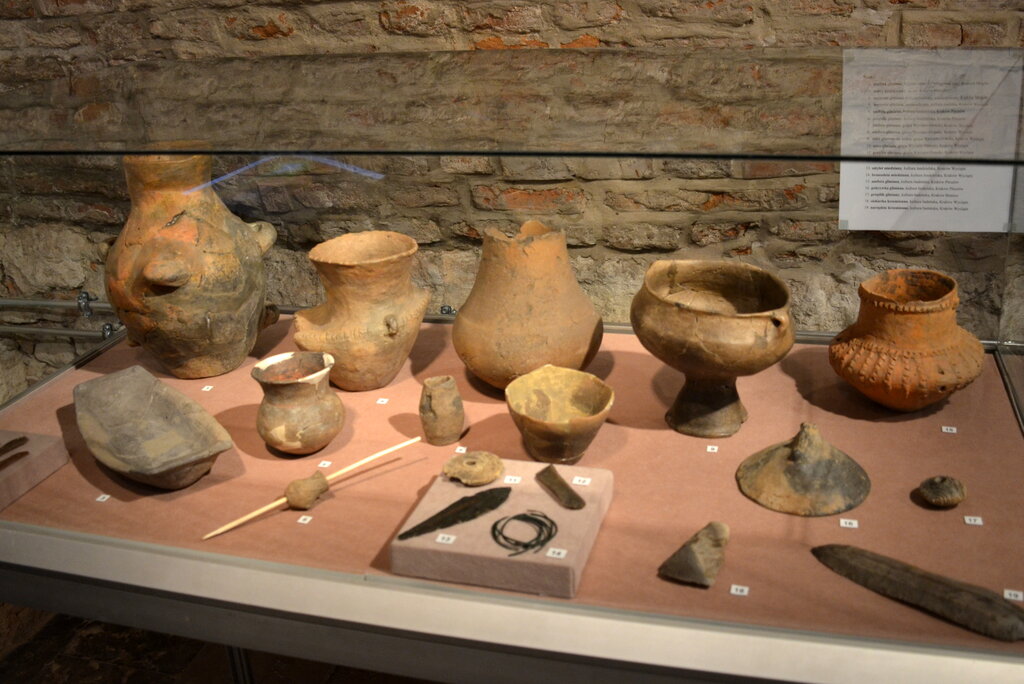
For thousands of years, ceramics technology evolved slowly. Potters developed new glazes and firing techniques. Societies built cities from bricks and adorned temples with tiles. But the fundamental material, clay, remained the same.
The 20th century triggered a revolution. Scientists began creating new ceramic materials in labs, engineering them for specific, high-performance tasks. This opened the door to applications our ancestors could never have imagined, from computer chips to artificial hip joints. What started with a simple clay pot has evolved into a key material for our most advanced technologies.
Ready to check your understanding?
What is the high-temperature process that fuses a ceramic's particles together, hardening it into a durable material?
Ceramics are generally hard materials, but this hardness makes them very flexible and resistant to shattering when dropped.
From ancient pottery to modern electronics, ceramics are a fundamental part of our world, defined by their transformation through fire.