Exploring Astral Projection
Introduction to Astral Projection
Leaving the Body Behind
At its core, astral projection is the idea of an intentional out-of-body experience, or OBE. Practitioners believe their consciousness, or spirit, can separate from their physical body and travel elsewhere. This
Astral projection may sound a little out there, but it’s simply an intentional out-of-body experience that allows a person’s consciousness to travel through time, space, and other dimensions — entirely through the mind’s eye.
This traveling consciousness is often called the 'astral body.' It’s thought to be a subtle, non-physical version of yourself, capable of exploring a realm known as the astral plane. To understand this, we need to get familiar with a few key terms.
Astral Body
noun
A subtle, non-physical body of light believed to house a person's consciousness, capable of separating from the physical body during an out-of-body experience.
Think of your physical body as a car. The astral body is the driver who can get out and walk around. But according to these beliefs, there are a couple of other important components.
First is the 'etheric body,' sometimes described as a duplicate of the physical body, but made of a finer, energetic substance. It acts as a sort of template or life-force blueprint for your physical form.
Then there's the 'silver cord.' This is imagined as a luminous, infinitely elastic thread that connects your astral body to your physical body during projection. It functions like a tether, ensuring your consciousness can always find its way back home.
An Ancient Practice
The idea of consciousness leaving the body isn't new. It appears in various forms across many ancient cultures and spiritual traditions. It’s not a modern invention but a concept with deep historical roots.
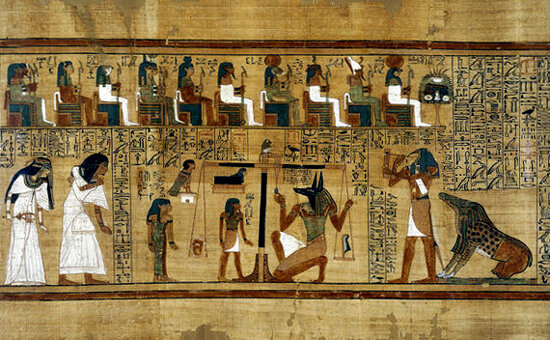
Ancient Egyptians, for example, believed the soul was composed of several parts. Two of these, the ba (personality) and the ka (life force), were believed to be able to travel outside the physical body, particularly after death.
Hindu texts like the Upanishads describe the subtle bodies (koshas) that surround the physical self, hinting at layers of consciousness beyond the physical. In Tibetan Buddhism, a practice known as phowa involves the transference of consciousness at the time of death, while certain advanced yogic traditions speak of siddhis, or spiritual powers, that include the ability to travel outside the body.
These traditions, though distinct, share a common thread: the belief that our existence is not limited to our physical form.
Now that you have a basic understanding of astral projection, let's test your knowledge.
What is the primary concept behind astral projection?
According to astral projection beliefs, what is the function of the 'silver cord'?
Understanding these foundational concepts is the first step in exploring the vast and fascinating world of astral projection.