Exploring Artificial Intelligence
Introduction to Artificial Intelligence
What Is Artificial Intelligence?
At its heart, artificial intelligence (AI) is about making machines smart. It's a field of computer science dedicated to creating systems that can perform tasks that typically require human intelligence. Think about how we learn from experience, solve puzzles, understand conversations, or recognize a friend in a crowd. The goal of AI is to enable computers to do similar things.
Artificial intelligence (AI) is a broad field of computer science and engineering that focuses on developing computers capable of performing activities that normally require human intelligence, such as learning, problem-solving, decision-making, and natural language processing.
The main objectives of AI are to build systems that can:
- Learn: Absorb information and improve over time.
- Reason: Use logic to draw conclusions and make decisions.
- Perceive: Understand the world through senses, like sight and sound.
- Interact: Communicate and collaborate with humans and other systems.
Essentially, AI aims to create tools that can not only follow instructions but also think and adapt on their own.
The Branches of AI
Artificial intelligence isn't a single technology; it's a vast field with many specialized branches. Each branch focuses on a different aspect of intelligence. Let's look at three major ones.
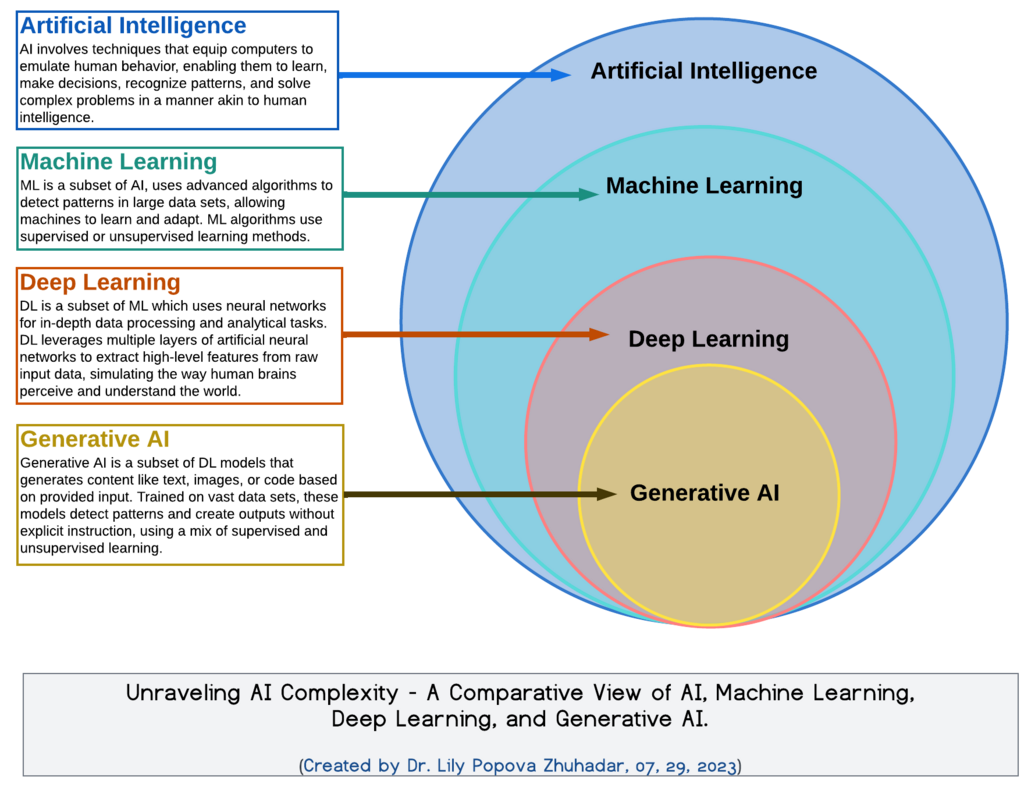
Machine Learning (ML) is a core part of modern AI. Instead of writing step-by-step instructions for a task, developers use ML to train a computer by showing it massive amounts of data. The system learns patterns from the data and uses them to make predictions or decisions about new, unseen data. It's like learning by example, but on a massive scale.
For example, an ML model can learn to identify spam emails by analyzing thousands of examples of spam and legitimate messages.
Natural Language Processing (NLP) focuses on the interaction between computers and human language. This branch of AI gives machines the ability to read, understand, and generate text and speech. Whenever you use a voice assistant, a translation app, or see text suggestions as you type, you're interacting with NLP.
NLP helps a computer understand that "book a flight" and "I need to fly" are requests for the same action, even though the words are different.
Computer Vision aims to give machines the ability to "see." It involves processing and interpreting visual information from the world, such as images and videos. This field allows computers to identify objects, recognize faces, and understand scenes much like a human does. It's the technology behind self-driving cars navigating roads and photo apps that automatically tag your friends.
These fields often work together. For instance, a smart device might use computer vision to see a product, NLP to understand your spoken question about it, and machine learning to predict your preferences based on past behavior.
Why AI Matters
The significance of AI in modern technology is hard to overstate. It's a driving force behind innovation, changing how we work, communicate, and live. AI excels at tasks that are complex, repetitive, or involve enormous amounts of data that would be impossible for humans to process efficiently.
By automating routine processes, AI frees up people to focus on more creative and strategic work. It helps us find patterns in complex data, leading to breakthroughs in fields from medicine to climate science. In everyday life, AI powers the recommendation engines that suggest movies and music, the navigation apps that find the fastest routes, and the search engines that connect us to information.
Ultimately, AI is a powerful tool that amplifies human capabilities, helping us solve some of the world's most challenging problems.
What is the fundamental goal of artificial intelligence?
A voice assistant like Siri or Alexa understands your spoken commands primarily through which branch of AI?
That's a brief look at the fundamentals of AI. It's a field built on the goal of creating intelligent systems, with specialized branches like machine learning and NLP tackling different aspects of that goal.