Exploring Artificial General Intelligence
Introduction to AI
What Is Artificial Intelligence?
Artificial intelligence, or AI, is a field of computer science focused on creating machines that can perform tasks that typically require human intelligence. This includes abilities like learning from experience, solving problems, understanding language, and recognizing patterns.
Think of it this way: AI gives a computer the ability to think and learn, moving beyond simple pre-programmed instructions.
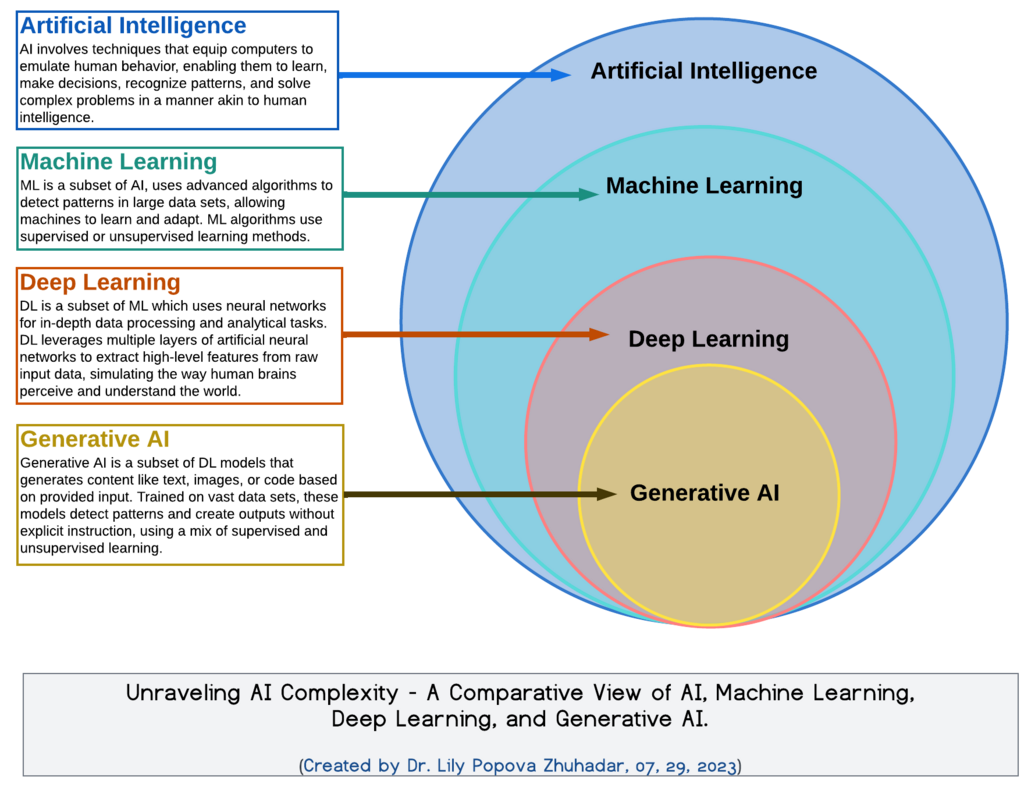
You've likely heard terms like machine learning and deep learning mentioned alongside AI. They are important subsets of the field. Machine learning allows systems to learn from data without being explicitly programmed, while deep learning is a more advanced type of machine learning that uses complex structures called neural networks. Generative AI, which creates new content, is a further specialization.
A Brief History
The idea of intelligent machines has been around for centuries, but the formal field of AI research began in the mid-20th century. A key moment was the Dartmouth Workshop in 1956, where the term "artificial intelligence" was coined and the field was established as a distinct area of study.
Early research was filled with optimism. Pioneers believed that a machine as intelligent as a human being was only a few decades away. However, progress was slower than expected due to limitations in computing power and data availability. This led to periods known as "AI winters," when funding and interest in the field decreased.
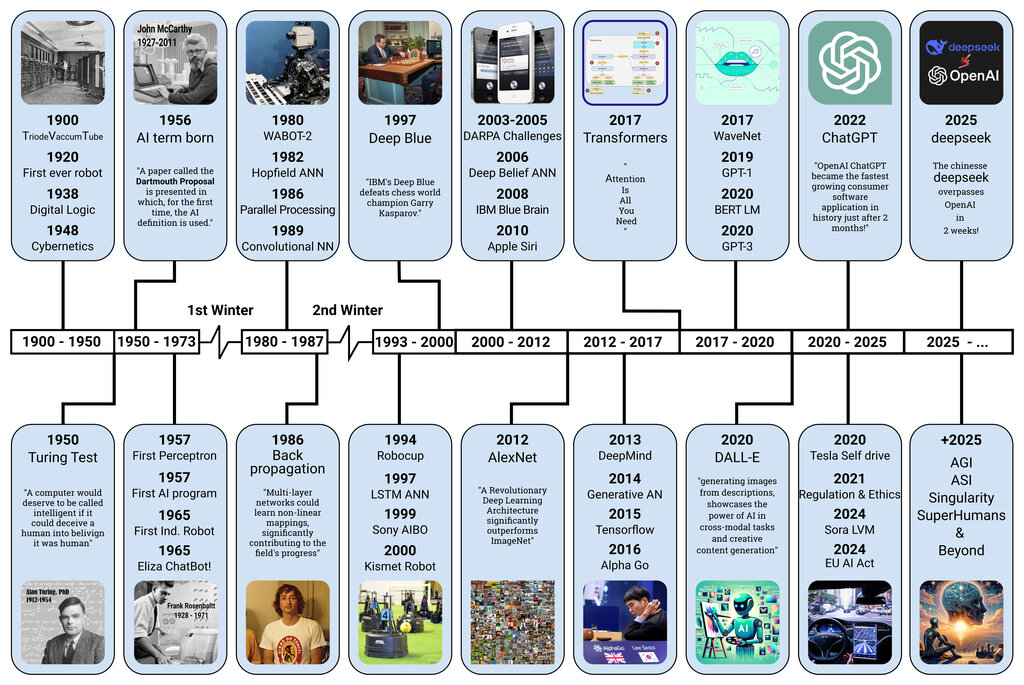
Things began to change in the late 1990s and early 2000s. The rise of the internet generated massive amounts of data, and significant increases in computing power made it possible to train more complex models. Breakthroughs in machine learning, particularly deep learning, have since propelled AI into the mainstream, leading to the powerful tools we see today.
Two Main Types of AI
When people talk about AI, they are usually referring to one of two broad categories: narrow AI or general AI. Understanding the difference is key to understanding where the technology is today and where it might be headed.
Narrow AI
noun
Also known as Weak AI, this type of artificial intelligence is designed and trained for a particular task. It operates within a limited, pre-defined range.
Virtually all AI in use today is narrow AI. It excels at the specific job it's built for. Think of voice assistants like Siri or Alexa, recommendation engines on streaming services, or the AI that helps doctors detect diseases in medical scans. These systems are incredibly powerful in their specific domains but can't operate outside of them. Your chess-playing AI can't write a poem, and your navigation app can't diagnose a fever.
General AI
noun
Also known as Strong AI or Artificial General Intelligence (AGI), this is a theoretical form of AI that would possess the ability to understand, learn, and apply its intelligence to solve any problem, much like a human being.
AGI doesn't exist yet. It remains the long-term goal for many researchers in the field. Creating a machine with the flexible, adaptable, and common-sense reasoning of a human is an enormous challenge. For now, all the AI you interact with is specialized for specific tasks.
Which statement best describes the relationship between Artificial Intelligence (AI), Machine Learning (ML), and Deep Learning?
What significant event occurred at the 1956 Dartmouth Workshop?
These core concepts provide a foundation for understanding the world of artificial intelligence and its potential evolution toward more advanced forms.