Exploring AI Tools
Introduction to Artificial Intelligence
What Is Artificial Intelligence?
At its core, artificial intelligence (AI) is the science of making machines that can think and learn like humans. It's a broad field in computer science focused on creating systems that can perform tasks that typically require human intelligence. This includes things like understanding language, recognizing patterns, solving problems, and making decisions.
Think of it this way: if traditional programming is like giving a computer a set of explicit instructions to follow, AI is like giving it the ability to write its own instructions based on experience and data.
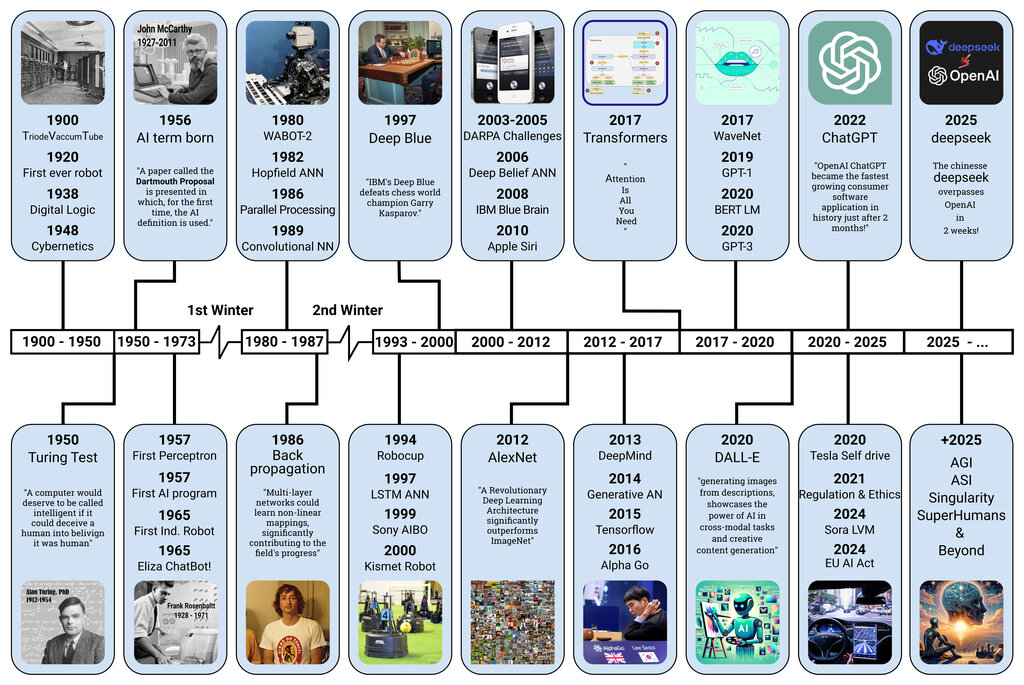
The idea of intelligent machines has been around for centuries, but the formal field of AI research began in the 1950s. Early researchers were optimistic, believing that a machine as intelligent as a human being would exist in a few decades. Progress was slower than expected, with periods of reduced funding known as "AI winters."
However, recent breakthroughs in computing power and the availability of massive amounts of data have led to a resurgence. Today, AI is one of the most exciting and rapidly evolving fields in technology.
Two Kinds of AI
When people talk about AI, they are usually referring to one of two broad categories: Narrow AI or General AI.
Artificial Narrow Intelligence
noun
Often called "Weak AI," this is AI that is designed and trained for a specific task. It operates within a limited, pre-defined range and can't perform beyond its field.
Virtually all the AI we use today is Narrow AI. The spam filter in your email, the recommendation engine on a streaming service, and the software that recognizes your face to unlock your phone are all examples. They are incredibly powerful at their specific jobs, but they can't step outside those boundaries. The email spam filter can't start recommending movies to you.
Artificial General Intelligence
noun
Known as "Strong AI," this is a theoretical form of AI where a machine would have intelligence equal to a human's. It would possess consciousness and the ability to learn, understand, and apply its intelligence to solve any problem.
AGI is the kind of AI you see in movies, like HAL 9000 from 2001: A Space Odyssey or the androids in Westworld. It remains a goal for many researchers, but creating a true AGI is an immensely complex challenge that we have not yet solved.
The Building Blocks of AI
AI isn't a single technology. It's an umbrella term that covers several specialized subfields. Understanding these core components helps clarify what AI can do.
Three of the most important subfields are Machine Learning, Natural Language Processing, and Computer Vision.
Machine Learning (ML) is the engine that powers most modern AI. Instead of being explicitly programmed, an ML system learns patterns directly from data. It's a process of training an algorithm by feeding it vast amounts of information, allowing it to make predictions or decisions without being told exactly how. For example, a bank might use ML to analyze past transactions to learn how to spot fraudulent activity.
Natural Language Processing (NLP) focuses on the interaction between computers and human language. This subfield gives machines the ability to read, understand, and generate human language. Every time you use a translation app, talk to a chatbot, or see your word processor correct your grammar, you're interacting with NLP.
Computer Vision is the subfield dedicated to helping computers "see" and interpret the visual world. It works by training models on millions of images to recognize objects, people, and patterns. Self-driving cars use computer vision to identify pedestrians and traffic signs, while social media platforms use it to suggest tagging friends in photos.
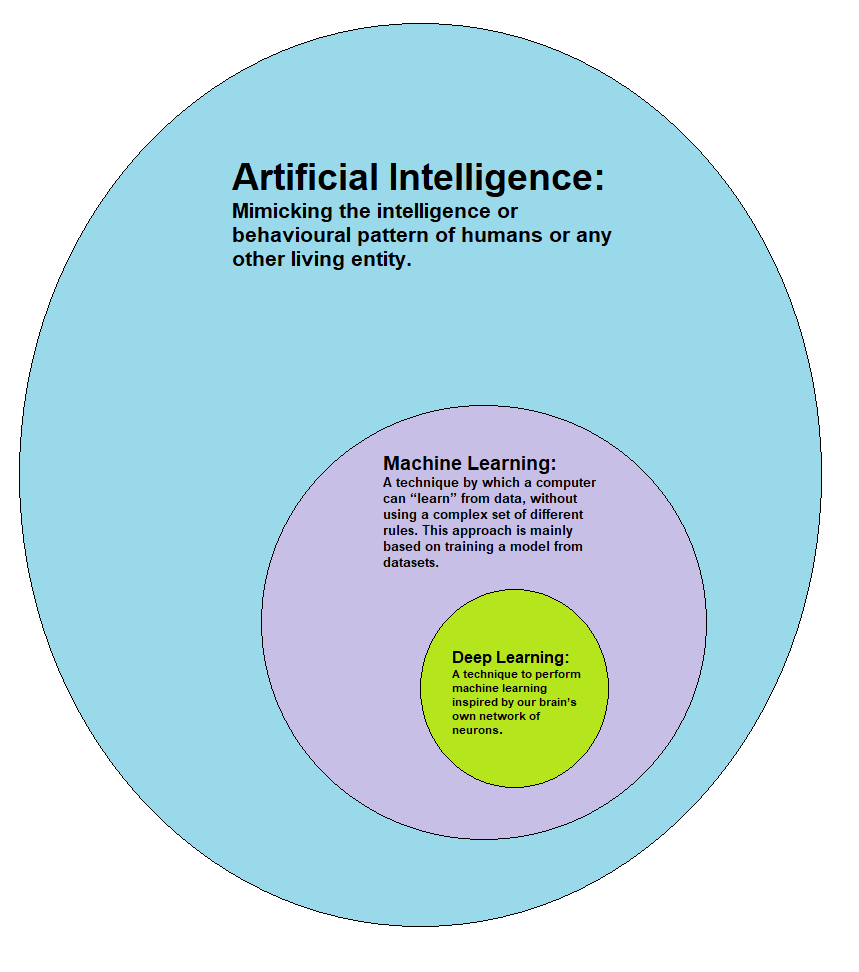
These subfields often work together. A sophisticated AI system might use computer vision to see an object, machine learning to understand what it is, and natural language processing to describe it to you.
Ready to check your understanding?
What is the primary goal of artificial intelligence?
The recommendation engine that suggests movies for you on a streaming service is an example of which type of AI?
Understanding these foundational concepts is the first step in seeing how AI works and how it's changing the world around us.