Exploring AI Platforms
Introduction to AI Platforms
What Are AI Platforms?
Think of an AI platform as a fully equipped workshop for building artificial intelligence. Instead of providing just one tool, like a hammer or a screwdriver, it offers an entire workbench complete with everything you need from start to finish. These platforms are comprehensive environments designed to help developers and data scientists create, deploy, and manage AI models more efficiently.
The main purpose is to streamline the complex process of building AI. Before these platforms, creating an AI model required patching together many different tools and technologies. It was slow and complicated. Platforms integrate all the necessary components into one place, making the entire workflow smoother and more accessible.
Core Features
AI platforms bundle several key capabilities together. They manage the entire lifecycle of an AI model, from the initial idea to its real-world application. This integrated approach is what makes them so powerful.
Let's break down what happens at each stage.
- Data Preparation Tools: Raw data is often messy. These tools help clean, label, and format data so an AI model can understand it.
- Model Building Frameworks: This is where the core logic is created. Platforms provide access to popular frameworks and libraries, allowing developers to design and construct different types of models.
- Training and Optimization: Once a model is built, it needs to be trained on data. This is computationally intensive. Platforms provide the hardware and utilities to train models efficiently and fine-tune them for better performance.
- Deployment Mechanisms: A trained model isn't useful until it's part of a real application. Deployment tools help launch the model so it can start making predictions on new, live data.
- Scalability Options: As an application grows, the AI needs to handle more requests. Platforms are built to scale, ensuring the model can perform well under increasing demand.
- Pre-built Models and Templates: Many platforms offer ready-to-use models for common tasks, like image recognition or language translation. This saves developers from having to build everything from scratch.
Platforms in Action
The applications of AI platforms span nearly every industry. In healthcare, they help analyze medical images to detect diseases earlier. Financial institutions use them to spot fraudulent transactions in real time. In the world of language, these platforms power everything from chatbots to services that can translate between languages instantly. They're also the foundation for autonomous systems, like self-driving cars, which need to process vast amounts of sensor data to navigate the world safely.
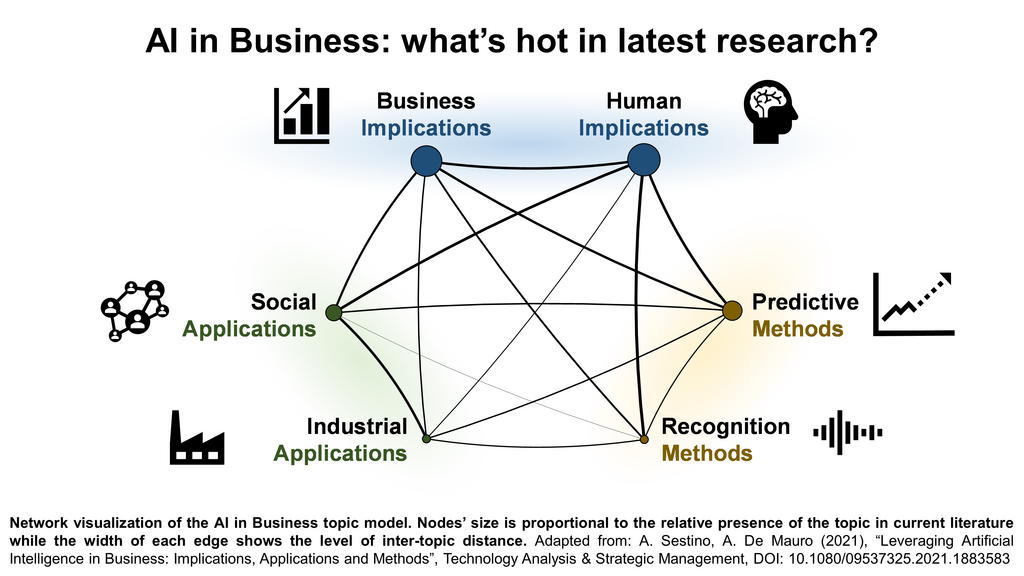
By providing a centralized toolkit, platforms accelerate innovation and allow organizations to apply AI to solve their unique challenges.
Challenges and What's Next
Despite their benefits, using AI platforms comes with challenges. The computational power required for training large models can be expensive. Data privacy is a major concern, as platforms handle sensitive information. There's also a shortage of people with the specialized skills to use these tools effectively.
Perhaps the most significant challenge is ensuring fairness and avoiding bias. If the data used to train a model is biased, the model's predictions will be too. Addressing this is a critical area of ongoing work.
As artificial intelligence transforms a wide range of sectors and drives innovation, it also introduces complex challenges concerning ethics, transparency, bias, and fairness.
Looking ahead, the future of AI platforms is focused on making AI more accessible and responsible. We're seeing a rise in low-code and no-code solutions, which allow people with less technical expertise to build AI applications. There's also a push to integrate ethical AI tools directly into platforms to help developers identify and mitigate bias. New techniques like federated learning, which trains models without centralizing sensitive data, are gaining traction. Some are even looking toward quantum machine learning, which could solve problems that are currently impossible for even the most powerful supercomputers.
Time to check what you've learned.
What is the primary purpose of an AI platform?
In the AI model lifecycle, the process of launching a trained model so it can be used in a real application is known as ________.
The goal is to create platforms that are not only more powerful but also safer, fairer, and easier for everyone to use.