Exploring Agentic AI
Introduction to Agentic AI
Beyond Answering Questions
Most of us think of AI as something that responds to us. We ask a question, and it gives an answer. We give a command, and it performs a task. This is the world of traditional AI, which acts like a highly advanced calculator. It's powerful, but it waits for instructions.
Agentic AI is different. It doesn't just respond; it takes initiative. Think of it less like a calculator and more like a personal assistant. You don't tell an assistant every single step to book a flight. You just give them the goal: "Find me a round-trip flight to London next week for under $800." The assistant then figures out the necessary steps, like checking different airlines, comparing prices, and even considering layover times, all on their own. That's the core idea of agentic AI. It's given a goal, and it autonomously works to achieve it.
Agentic AI
noun
An AI system that can autonomously pursue goals by making decisions, planning multi-step actions, and interacting with its environment without constant human supervision.
This ability to act independently is what gives
Agentic AI represents a transformative leap from traditional, reactive AI systems to autonomous, goal-oriented agents capable of independent decision-making and action.
The Core Characteristics
What gives an AI system this "agency"? It comes down to a few key characteristics that set it apart from older models.
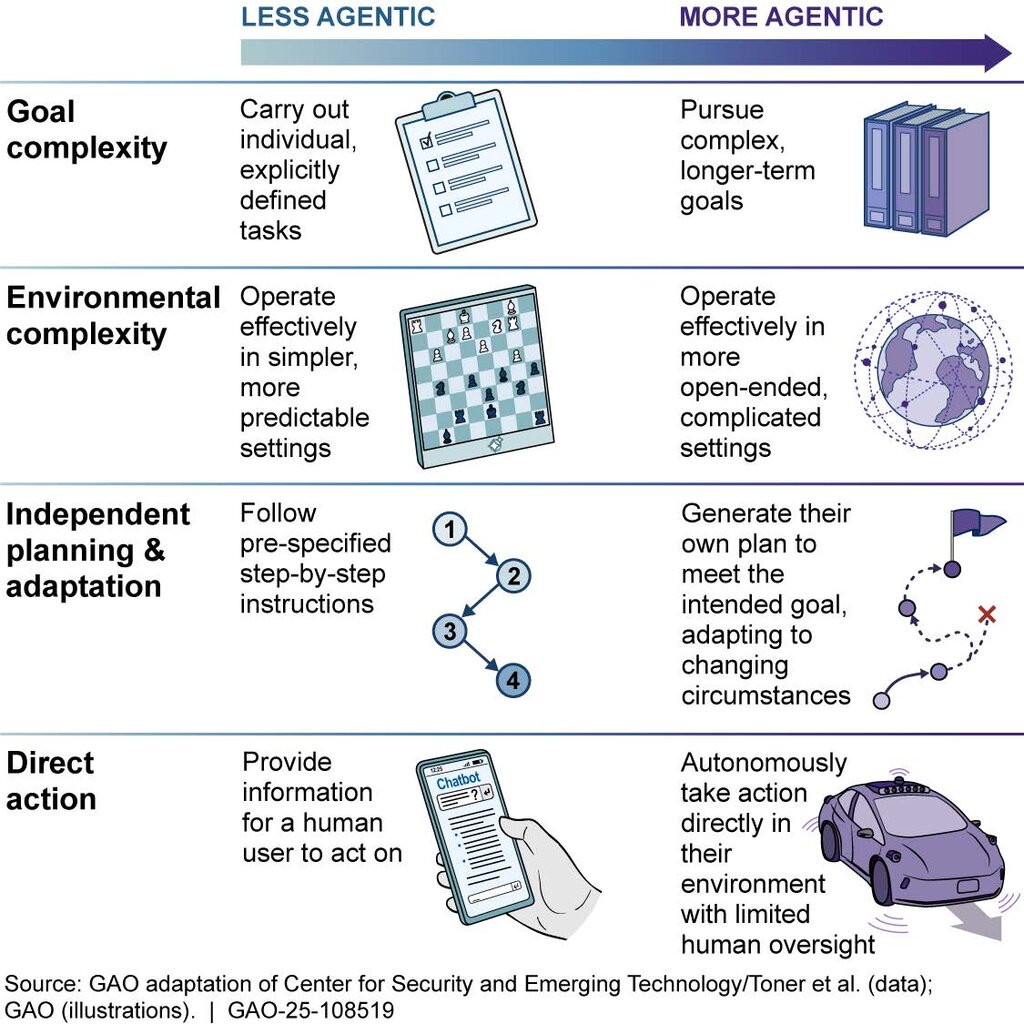
Goal-Directedness: It operates with an objective in mind. Instead of just completing a single, predefined task, it works towards a broader outcome.
Autonomy: It can make its own decisions. An agentic AI can choose its next action based on the situation without needing a human to approve every step.
Environment Interaction: It can perceive and act upon its surroundings, whether that's a digital environment like the internet or a physical one via robotics.
Multi-step Planning: It breaks down a complex goal into a sequence of smaller, manageable tasks and executes them in a logical order. If one step fails, it can often adapt and try a different approach.
These traits work together, allowing the AI to function less like a simple tool and more like an independent worker.
How Agentic AI Differs
The evolution of AI has been a steady march towards greater autonomy. Early systems were purely reactive, following strict rules. Then came models that could learn from data but still needed specific prompts to act. Agentic AI is the next step in this progression, introducing a proactive and self-directed approach.
This table breaks down the key differences:
| Feature | Traditional AI | Agentic AI |
|---|---|---|
| Initiative | Reactive; waits for a command. | Proactive; takes initiative to reach a goal. |
| Control | Human-driven; follows explicit instructions. | Autonomous; makes its own decisions. |
| Task Scope | Executes single, well-defined tasks. | Manages complex, multi-step workflows. |
| Adaptability | Limited; operates within rigid boundaries. | Dynamic; adapts its plan based on new information. |
Understanding these distinctions is key to grasping why agentic AI represents a significant shift. It's not just a more powerful version of what we had before; it's a new way of thinking about how machines can help us.
Let's review what we've covered.
What is the primary difference between traditional AI and agentic AI?
The provided text compares traditional AI to a calculator. What is agentic AI compared to?
By moving from simply executing commands to autonomously achieving goals, agentic systems open up new possibilities for what AI can accomplish.