Exploring Agentic AI
Introduction to Agentic AI
The Next Step for AI
Most of us think of AI as something that responds to us. We type a question, and a chatbot answers. We give a command, and an image appears. This is a reactive relationship. We act, and the AI reacts.
Agentic AI is different. It's a type of artificial intelligence designed to be proactive, not just reactive. Instead of waiting for a command, an AI agent can pursue a goal on its own. It can plan, make decisions, and take actions in its environment to get things done.
Agent
noun
In AI, an agent is anything that can perceive its environment, process that information, and act upon the environment to achieve a goal.
The core idea is autonomy. An agentic AI doesn't need a human to guide every single step. You give it an objective, and it figures out the path to get there. This involves breaking down a complex goal into smaller, manageable tasks and then executing them one by one. It can adapt to new information and change its plan if it hits a roadblock, much like a person would.
Agentic AI shifts the paradigm from AI as a tool that follows instructions to AI as a partner that takes initiative.
From Reaction to Action
To understand what makes agentic AI special, it helps to compare it with the traditional AI models many of us use daily. A standard large language model (LLM) is like a brilliant, world-class encyclopedia. You can ask it to write an email or explain a complex topic, and it will give you a well-written response based on the data it was trained on. But it stops there. It won't send the email for you or schedule a follow-up meeting. It waits for your next prompt.
An agentic AI, on the other hand, is more like a personal assistant. If you tell it to "organize a team lunch for next Friday," it won't just draft an email. It might check everyone's calendars for availability, research local restaurants that fit the team's budget and dietary needs, make a reservation, and then send out a calendar invitation. It takes a high-level goal and executes the multiple steps required to achieve it.
Unlike traditional generative AI, which responds reactively to prompts, agentic AI proactively orchestrates processes, such as autonomously managing complex tasks or making real-time decisions.
This diagram shows the fundamental difference in process. Traditional AI follows a linear, one-off path from prompt to response. Agentic AI operates in a loop. It plans its actions, executes them, observes the outcome, and refines its approach based on what happened. This cycle continues until the overall goal is met.
A Quick Look Back
The concept of intelligent agents has been around for decades, dating back to the early days of AI research in the 1950s. Early agents were often simple, rule-based systems designed for specific, narrow tasks, like playing a game of chess or navigating a simple maze. They were impressive for their time but lacked the flexibility and reasoning power to handle complex, real-world problems.
The game-changer has been the recent explosion in the capabilities of large language models. These powerful models provide the 'brain' for the agent, giving it advanced reasoning, language understanding, and problem-solving skills. By combining this cognitive engine with the ability to use tools (like accessing websites, using apps, or writing code), modern AI agents can now tackle a much wider and more complex range of goals.
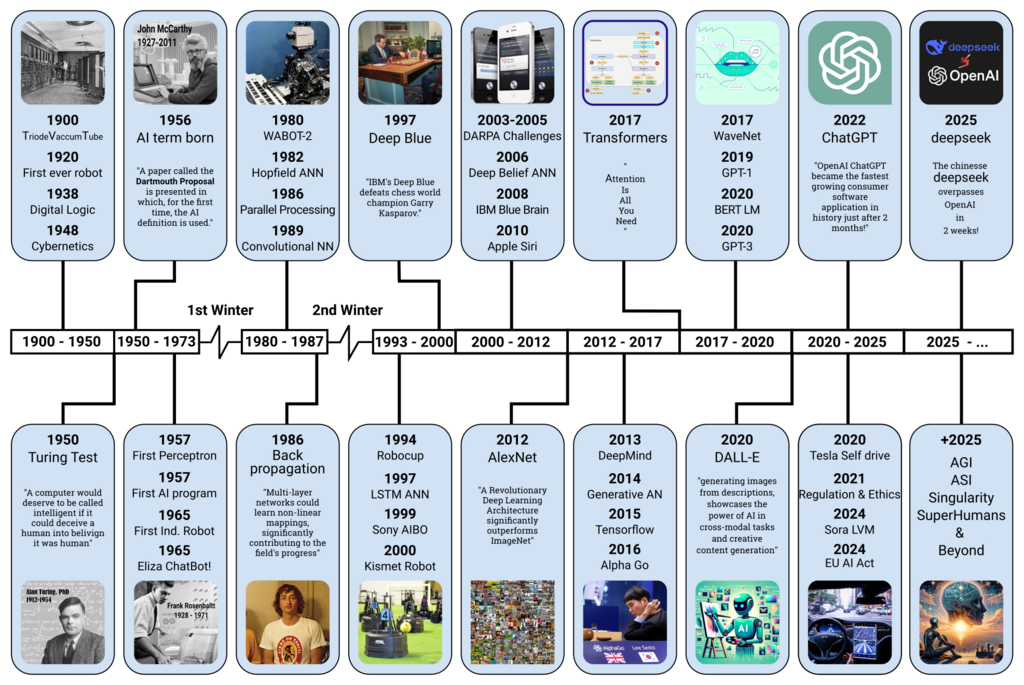
This evolution from simple rule-followers to sophisticated, LLM-powered systems marks a major leap. We're moving from programming a computer to do a task, to simply telling it what we want to achieve and letting it figure out how.
Ready to check your understanding? Let's see what you've learned.
What is the primary characteristic that distinguishes agentic AI from traditional AI?
Which analogy best describes the role of an agentic AI compared to a standard large language model (LLM)?
Agentic AI represents a shift in how we interact with technology. By understanding its core principles of autonomy and goal-oriented action, we can begin to see its potential to reshape how we work and solve problems.