Exploring Advanced AI
Introduction to Artificial Intelligence
What Is Artificial Intelligence?
Artificial intelligence is the science of making machines that can think like humans. The goal is to create systems that can learn, reason, solve problems, and understand language. Think of it less like a robot from a movie and more like a tool that can analyze vast amounts of information to find patterns or make predictions.
At its core, AI is about creating algorithms, which are just sets of rules or instructions. Early AI, known as symbolic AI, relied on programmers to write detailed, explicit rules for every possible situation. This worked for simple, defined tasks like playing chess, but it struggled with the messiness of the real world.
Modern AI has shifted from following strict rules to learning from examples. This is the key difference that makes today's AI so powerful.
A Brief History of AI
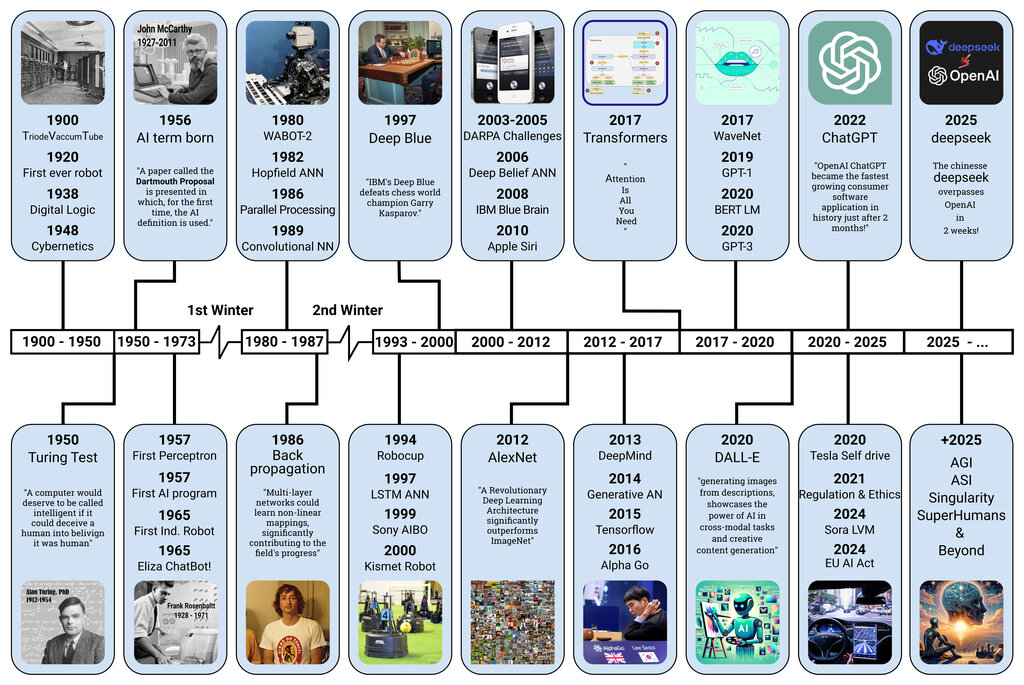
The term "artificial intelligence" was first used at a conference at Dartmouth College in 1956. Early researchers were incredibly optimistic, believing that a machine with human-like intelligence was just a few decades away. This initial excitement led to a boom in research, focusing on problem-solving and symbolic methods.
However, progress was slower than expected. The complexity of creating true intelligence led to periods of reduced funding and interest, often called "AI winters." The computers of the time weren't powerful enough, and the rule-based approach was too rigid.
The game changed with the rise of machine learning and big data. Instead of programming a computer with rules on how to identify a cat, developers could now feed it thousands of cat pictures and let it learn the patterns on its own. This shift from programming to training, combined with more powerful computers, thawed the AI winter and sparked the AI revolution we see today.
The AI Family Tree
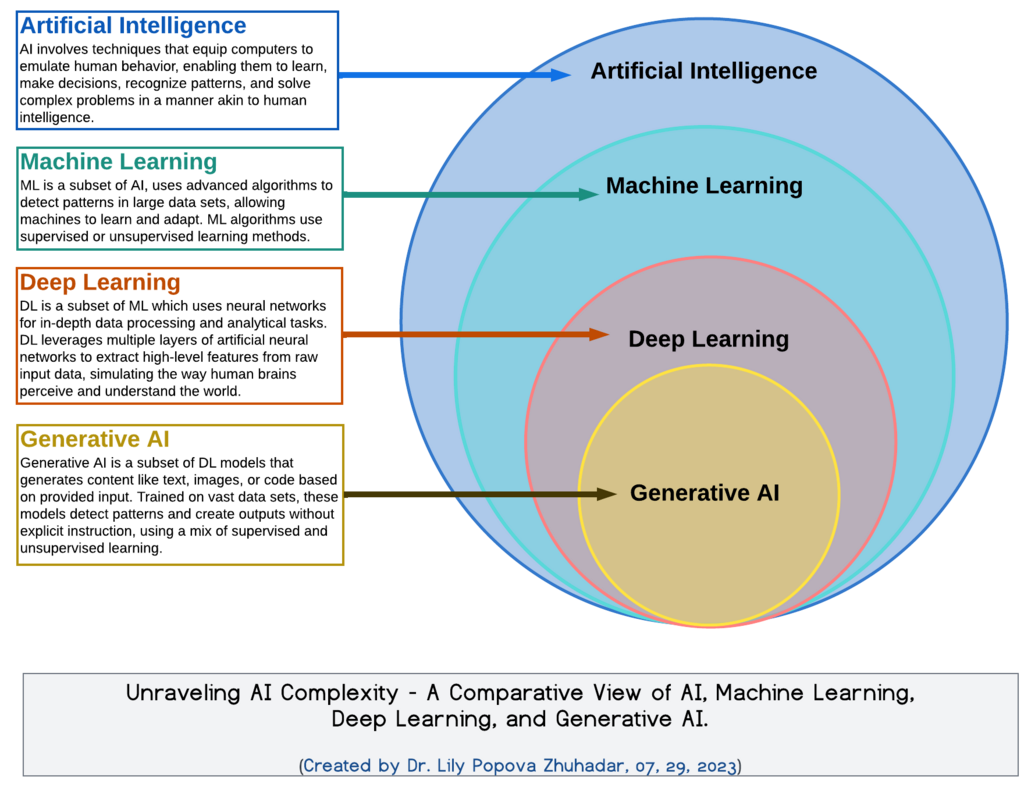
AI isn't just one thing; it's a broad field with many specialized branches. Understanding these subfields helps clarify what people mean when they talk about "AI."
-
Machine Learning (ML): This is the most common type of AI today. Machine learning is a technique where a system learns to make predictions or decisions from data, without being explicitly programmed. Your email's spam filter and the recommendation engine on a streaming service are both classic examples of ML.
-
Deep Learning: This is a more advanced subset of machine learning. It uses structures called neural networks, which are loosely inspired by the human brain. Deep learning is particularly good at finding complex patterns in large datasets, which is why it's the powerhouse behind image recognition and self-driving cars.
-
Natural Language Processing (NLP): This branch focuses on the interaction between computers and human language. NLP enables chatbots to understand your questions, translation apps to work instantly, and voice assistants to respond to commands.
-
Computer Vision: This subfield trains computers to interpret and understand the visual world. Using images and videos, computer vision systems can identify objects, people, and places, powering everything from facial recognition on your phone to quality control on a factory assembly line.
AI in the Real World
Artificial intelligence has moved from research labs into our daily lives. Its applications are everywhere, often working quietly in the background.
In healthcare, AI helps doctors diagnose diseases earlier and more accurately by analyzing medical images like X-rays and MRIs. In finance, it detects fraudulent transactions in real-time and helps manage investment portfolios. Retail companies use AI to manage their inventory and personalize shopping recommendations for customers.
Even creative fields are being transformed. AI tools can generate music, write poetry, and create stunning digital art. These applications show that AI is not just about logic and numbers; it's a versatile technology with broad potential.
Ready to check your understanding? This quiz covers the core ideas we've discussed.
What was the fundamental shift in AI development that led to the end of the so-called "AI winters"?
Which subfield of AI is most directly responsible for a system that can identify a specific person's face in a digital photograph?
This introduction lays the groundwork for understanding artificial intelligence. From its early, rule-based beginnings to the data-driven learning of today, AI continues to evolve and reshape our world.