Expert DevOps Engineering
DevOps Fundamentals
What Is DevOps?
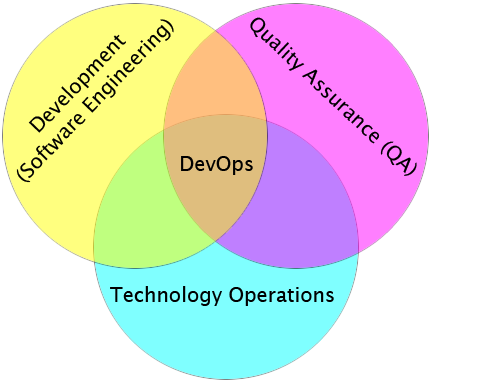
At its heart, DevOps is a culture. It's a way of thinking that brings together software development (Dev) and IT operations (Ops) to build, test, and release software faster and more reliably. It's not a specific tool or a job title, but a philosophy that breaks down the traditional walls between teams.
Think of it like a relay race. In the old way of doing things, the development team would build a piece of software and then just “throw it over the wall” to the operations team. The ops team was then responsible for making it run. If something broke, the blame game would start. Devs would say, “It worked on my machine!” while Ops would struggle to fix a system they didn't build.
This created a lot of friction and slowed everything down. DevOps emerged to solve this problem by merging these two worlds. The goal is to have a single, unified team that shares responsibility for the entire lifecycle of an application, from the first line of code to the final deployment and maintenance.
The Core Principles
Several key ideas power the DevOps approach. They're all about working smarter, not just harder.
Collaboration is the foundation. Instead of working in separate silos, developers and operations staff work together on the same goals. They communicate constantly, share feedback, and own the project's success or failure as a team.
Automation is next. DevOps teams automate as much as possible, from testing code to deploying it. Automating repetitive tasks frees up people to focus on more complex problems. It also reduces human error, leading to more consistent and reliable releases.
This leads to two crucial practices: Continuous Integration (CI) and Continuous Delivery (CD).
-
Continuous Integration (CI) means developers merge their code changes into a central repository frequently. Each time they do, an automated build and test process runs. This helps catch bugs early, before they become bigger problems.
-
Continuous Delivery (CD) is the next step. It's a practice where every code change that passes the automated tests is automatically prepared for a release to a production environment. This doesn't mean every change is released, but it means it could be released with the push of a button.
The DevOps Lifecycle
The DevOps process isn't a straight line; it's a continuous loop. This emphasizes constant improvement and feedback at every stage. The cycle ensures that teams are always planning, building, testing, and learning.
This lifecycle visualizes how a feature moves from an idea all the way to the end user, and how the data from its performance feeds back into the planning for the next idea. It's a system designed for speed, quality, and continuous learning.
Why Bother with DevOps?
Adopting DevOps isn't just about making developers and operations staff happier, though that's a nice bonus. It has real business benefits.
| Benefit | Description |
|---|---|
| Faster Time to Market | By automating and streamlining the release process, companies can deliver new features to customers more quickly. |
| Improved Quality | Continuous integration and testing catch bugs earlier, leading to a more stable and reliable product. |
| Increased Efficiency | Automation and collaboration reduce manual effort and rework, allowing teams to accomplish more. |
| Better Security | By integrating security checks into the automated pipeline, teams can build more secure software from the start. |
DevOps is not just a set of tools; it's a cultural shift.
This cultural change is often the hardest part, but it's also the most important. It requires a shift in mindset towards shared ownership, transparency, and a willingness to experiment and learn from failure.
Now, let's test your understanding of these core concepts.
What is the fundamental principle at the core of DevOps?
What is the primary goal of Continuous Integration (CI)?
Understanding these fundamentals provides the foundation for exploring the tools and specific practices that bring DevOps to life.