Expanding Your AI Horizons
Introduction to AI
What Is Artificial Intelligence?
Artificial intelligence, or AI, is about creating machines that can think, learn, and solve problems like humans do. It's a broad field in computer science with a simple goal: to build systems that can perform tasks that typically require human intelligence. This could be anything from recognizing a face in a photo to driving a car.
The broad term “artificial intelligence” refers to the simulation of human-level intelligence and thinking through the use of machines.
Think of AI not as a single technology, but as an umbrella that covers many different ideas and techniques. Some of these techniques are so common now that we don't even think of them as AI anymore. When you get a movie recommendation or your email filters out spam, you're seeing AI in action.
The Building Blocks of AI
To understand AI, it helps to know its key components. These are not separate fields but nested ideas, where each one builds upon the last. The most important concepts to grasp are machine learning, neural networks, and natural language processing.
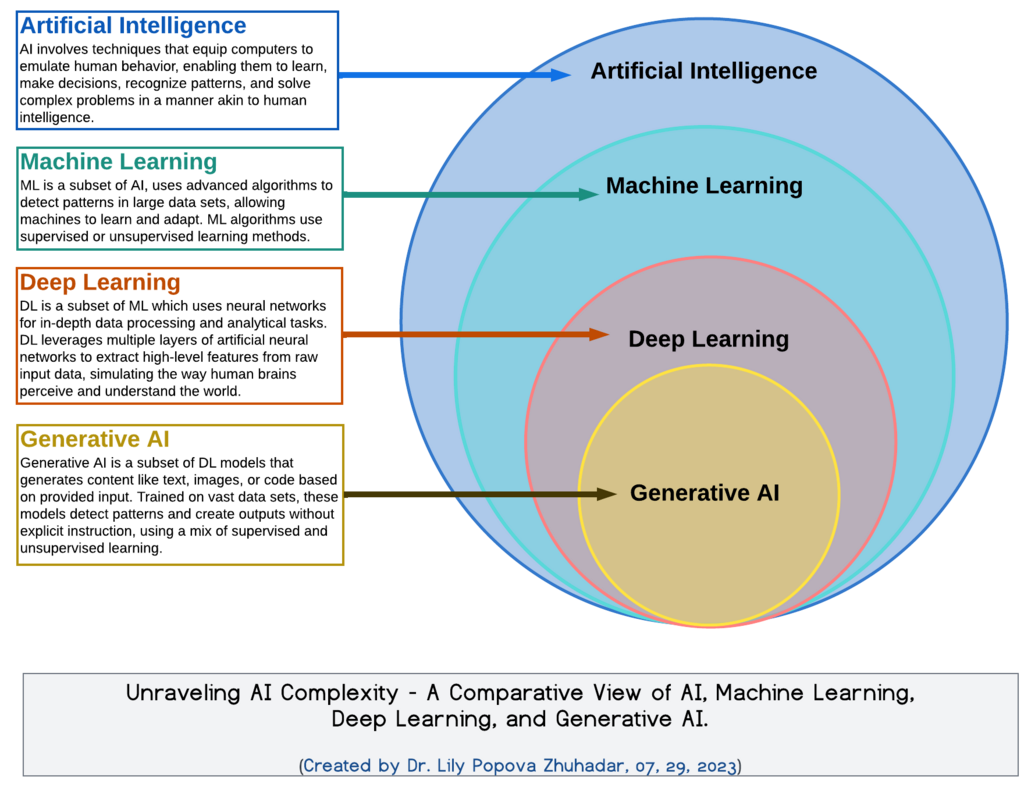
Let's break down each of these core concepts.
Machine Learning
Machine learning
noun
A subset of AI that gives computers the ability to learn from data without being explicitly programmed for every task.
Instead of writing step-by-step instructions, machine learning (ML) involves feeding a computer large amounts of data and letting it figure out the patterns on its own. It's like teaching a child to recognize a cat. You don't describe a cat's features in detail. Instead, you show them many pictures of cats until they learn to identify one themselves.
ML algorithms do the same thing. They analyze thousands of examples to build a model that can make predictions or decisions. This is the engine behind recommendation systems on streaming services and the system that identifies potential fraud on your credit card.
Neural Networks
A key part of machine learning is the concept of a neural network. These are computing systems inspired by the structure of the human brain. Just as our brains have interconnected neurons that transmit signals, artificial neural networks have layers of connected nodes, or artificial neurons.
Each node in a neural network receives input, processes it, and passes an output to the next layer of nodes. By working together, these layers can recognize complex patterns in data.
A simple network might have an input layer that receives the raw data (like the pixels of an image), one or more hidden layers that perform calculations, and an output layer that produces the final result (like a label saying "cat" or "dog"). The more layers a network has, the more complex the patterns it can learn. This is the basis for what's known as "deep learning."
This structure is what powers many advanced AI applications, from image recognition to self-driving cars.
Natural Language Processing
Another crucial area of AI is Natural Language Processing, or NLP. This field focuses on enabling computers to understand, interpret, and generate human language. It's the bridge between human communication and computer understanding.
Whenever you use a voice assistant like Siri or Alexa, translate text with Google Translate, or see a chatbot pop up on a website, you are interacting with an NLP system. These systems take unstructured human language and give it a structure that machines can work with. This allows them to perform tasks like answering questions, summarizing long documents, and even writing articles.
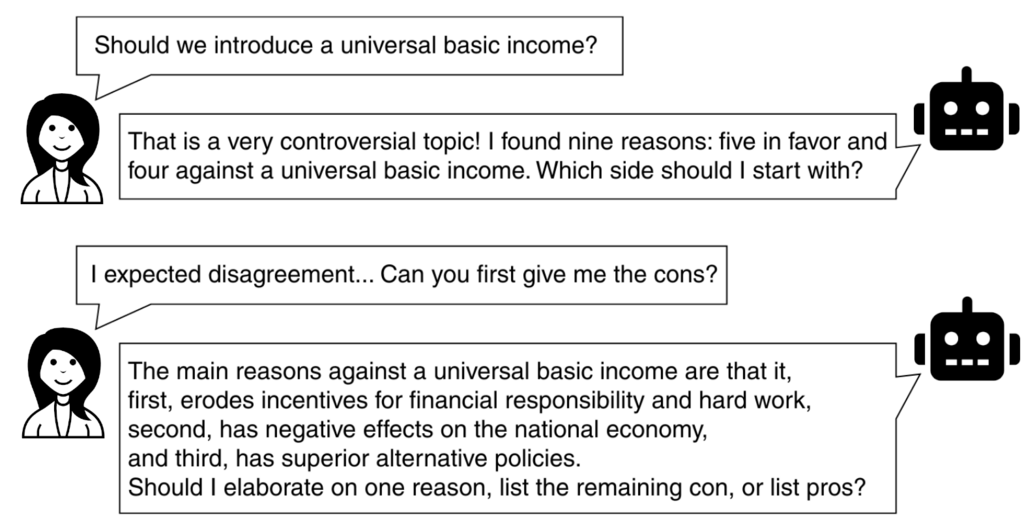
These three concepts, machine learning, neural networks, and NLP, are the foundation of modern AI. They work together to create the intelligent systems that are becoming an increasingly important part of our world.
Now, let's check your understanding of these core ideas.
What is the primary goal of Artificial Intelligence?
How do machine learning algorithms primarily learn to perform a task?
Understanding these fundamentals is the first step. By grasping what AI is and its core components, you're better equipped to see how it shapes our technology and society.