Expanding Residential Circuits for New Lighting
Circuit Assessment
Start at the Source
Before touching any wiring, your first stop is the electrical panel. In a residential setting, you need to identify the circuit you'll be working on and determine its capacity. Unlike some industrial setups with complex switchgear, home circuit breakers are straightforward. Look for a number printed directly on the breaker's switch, typically '15' or '20'. This number indicates the maximum amperage the circuit can handle.
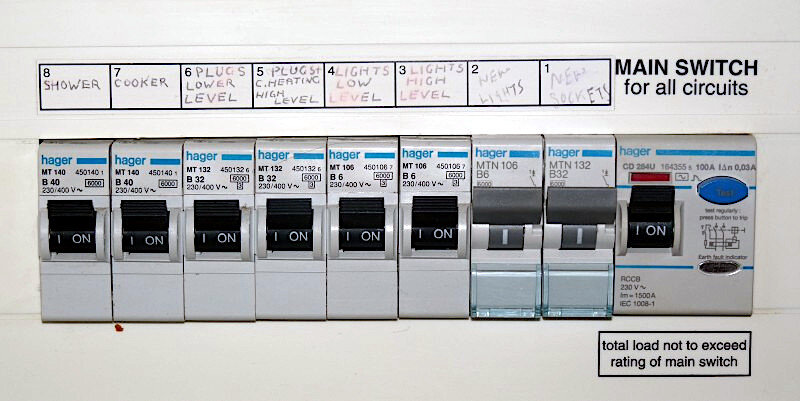
A 15-amp circuit is the most common in homes, used for general lighting and standard outlets. A 20-amp circuit is used for areas with higher-power appliances, like kitchens and laundry rooms. You can sometimes get a clue from the outlet itself. A standard outlet is rated for 15 amps. A 20-amp outlet has a T-shaped slot on the neutral side to accommodate 20-amp plugs.
From Conduit to Cable
In an industrial environment, you're used to pulling individual THHN wires through conduit. Residential wiring is different. The most common type is NM-B cable, often known by the brand name Romex. This is a bundled cable containing hot, neutral, and ground wires inside a single plastic sheath. This assembly makes installation faster but requires different handling techniques than conduit and wire.
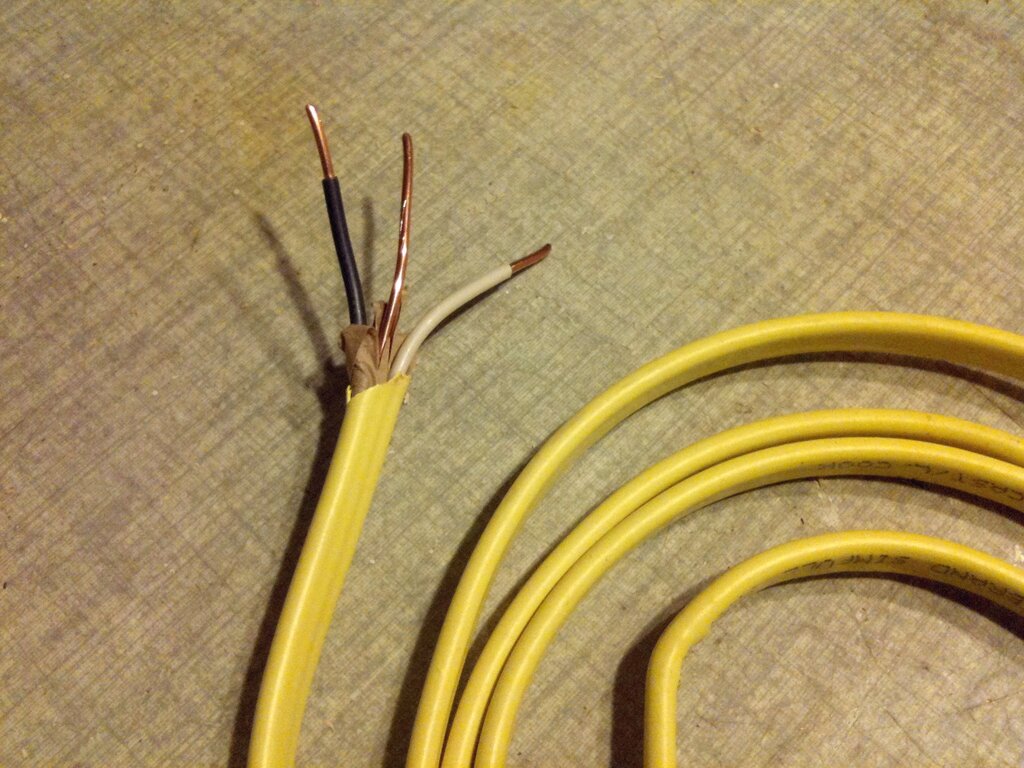
The key to identifying circuit capacity lies in the wire gauge, which you can determine from the color of the NM-B cable's outer sheath. This is a major departure from the industrial world, where wire color typically indicates its function (phase, neutral, ground), not its size. For modern NM-B cable, white sheathing indicates 14-gauge wire, used for 15-amp circuits. Yellow sheathing means 12-gauge wire, which is required for 20-amp circuits.
| Wire Gauge (AWG) | Sheath Color | Max Circuit Amperage |
|---|---|---|
| 14 AWG | White | 15 Amps |
| 12 AWG | Yellow | 20 Amps |
| 10 AWG | Orange | 30 Amps |
Inside the Box
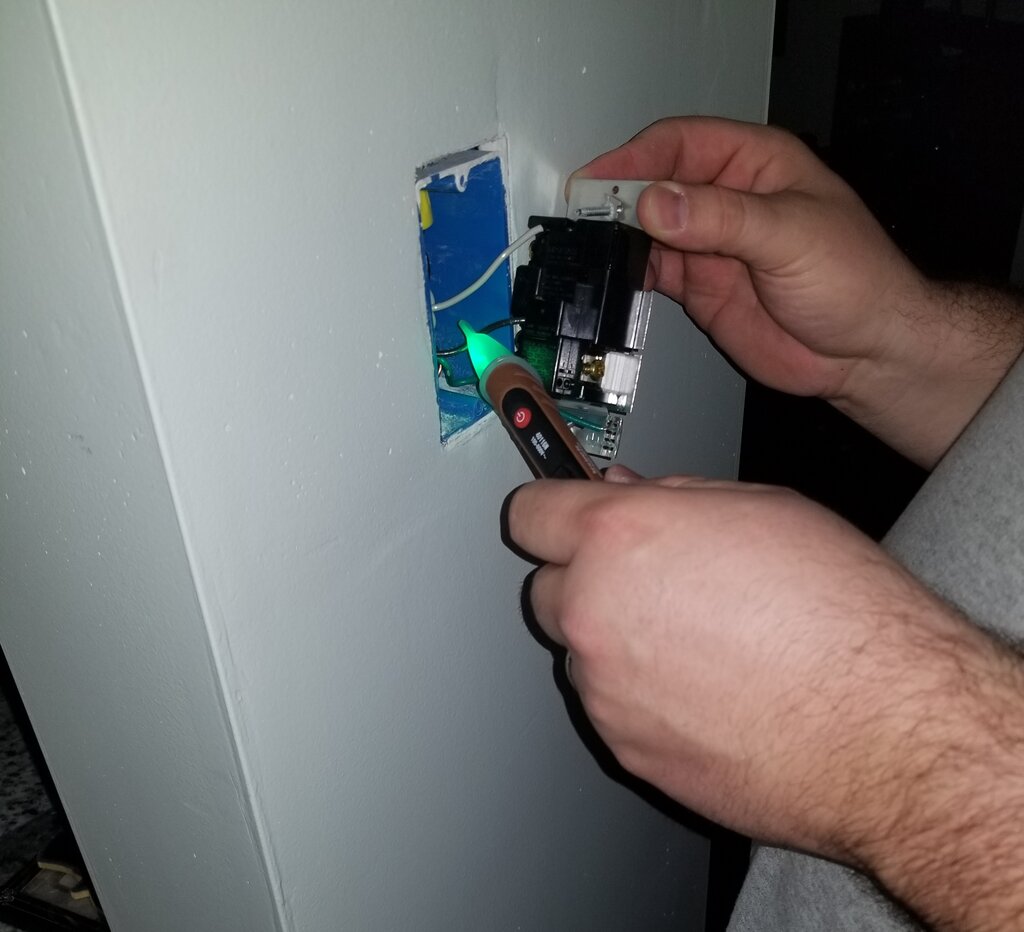
Once you've turned off the breaker and opened the outlet box, you need to identify the 'line' and 'load' wires. The line wire is the one bringing power from the breaker panel. The load wires carry power onward to other outlets or fixtures on the same circuit. The easiest way to find the line side is with a non-contact voltage tester before you turn off the power. Carefully bring the tester near each black wire in the box; the one that makes it beep is your line.
You also must verify a solid ground connection. In modern wiring, this is a bare copper wire connected to a green screw on the outlet and to the metal box. In older homes, you might find that the grounding path relies on the metal conduit itself, or worse, it might be missing entirely. Use a multimeter to check for continuity between the neutral slot and the ground hole on the outlet (with the power off) or an outlet tester to confirm ground integrity.
Always verify that the power is off with a multimeter or voltage tester before touching any wires, even after flipping the breaker.
Calculating the Load
Before adding new lights, you need to ensure the circuit can handle the extra load. The National Electrical Code (NEC) advises that a circuit should not continuously carry more than 80% of its maximum rating. First, calculate the maximum capacity of the circuit in watts.
For a 15-amp circuit, the maximum capacity is . The safe continuous load is 80% of that, which is .
Next, add up the wattage of everything currently on the circuit, plus the new lights you plan to install. If you're swapping incandescent bulbs for LEDs, the load will be significantly lower. If your total planned wattage is below the 80% threshold (1440W for a 15A circuit, or 1920W for a 20A circuit), you can safely expand the circuit. If not, you'll need to run a new dedicated circuit from the panel.
Time for a quick check on what we've covered.
Before you begin work, how do you determine the maximum amperage of a typical residential circuit breaker?
In modern residential wiring, what does a yellow outer sheath on an NM-B (Romex) cable signify?
With these checks complete, you can confidently determine whether an existing circuit is suitable for your remodeling plans.