Exoplanet Atmospheres Unveiled
Introduction to Exoplanet Atmospheres
An Atmosphere's Embrace
An atmosphere is a layer of gas that surrounds a planet. On Earth, it’s the air we breathe, the shield that protects us from harmful solar radiation, and the blanket that keeps our world at a comfortable temperature. It’s a crucial part of what makes our planet livable.
When astronomers look at exoplanets, worlds orbiting distant stars, they are deeply interested in their atmospheres. These gaseous envelopes hold clues about a planet’s size, temperature, and what it’s made of. Studying them is like reading a planet’s biography, revealing its past and hinting at its present conditions.
An exoplanet's atmosphere can tell us more about the planet than its solid surface ever could.
Atmospheric Ingredients
Planetary atmospheres are made of a mix of gases. The most common are hydrogen and helium, the lightest and most abundant elements in the universe. Gas giants like Jupiter are almost entirely composed of these two. Other important atmospheric gases include water vapor, carbon dioxide, methane, and ammonia.
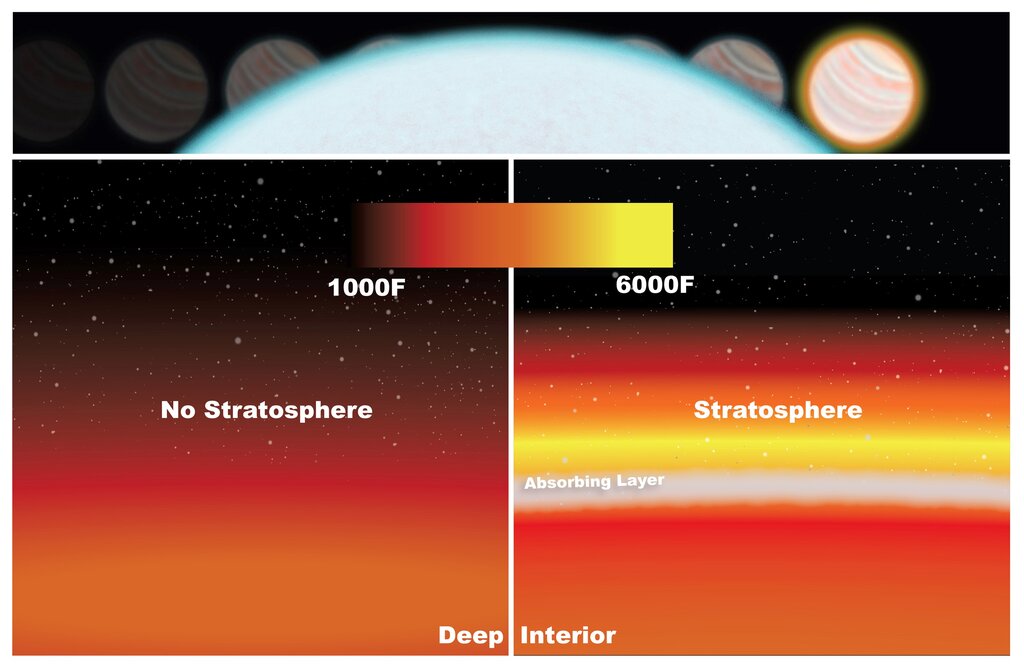
The specific blend of gases depends on the planet's formation and its relationship with its star. A planet’s atmosphere isn’t just a uniform bubble, either. It often has distinct layers, each with different temperatures and densities. On Earth, we have layers like the troposphere (where our weather happens) and the stratosphere (home to the ozone layer). Exoplanets have their own unique atmospheric structures, shaped by different conditions.
What Shapes an Atmosphere?
Several powerful forces determine whether a planet has an atmosphere and what it's like. The two biggest players are the planet itself and its star.
A planet’s mass creates gravity, which is the force that holds an atmosphere in place. A more massive planet has a stronger gravitational pull, making it better at hanging onto its gases. This is why a tiny world like Mercury has almost no atmosphere, while the giant Jupiter has a massive one.
The star’s energy is the other key factor. Intense radiation and stellar winds can heat a planet's atmosphere, causing gas particles to move so fast they escape the planet's gravity and bleed out into space. This process, called atmospheric escape, is especially dramatic for planets orbiting very close to their stars.
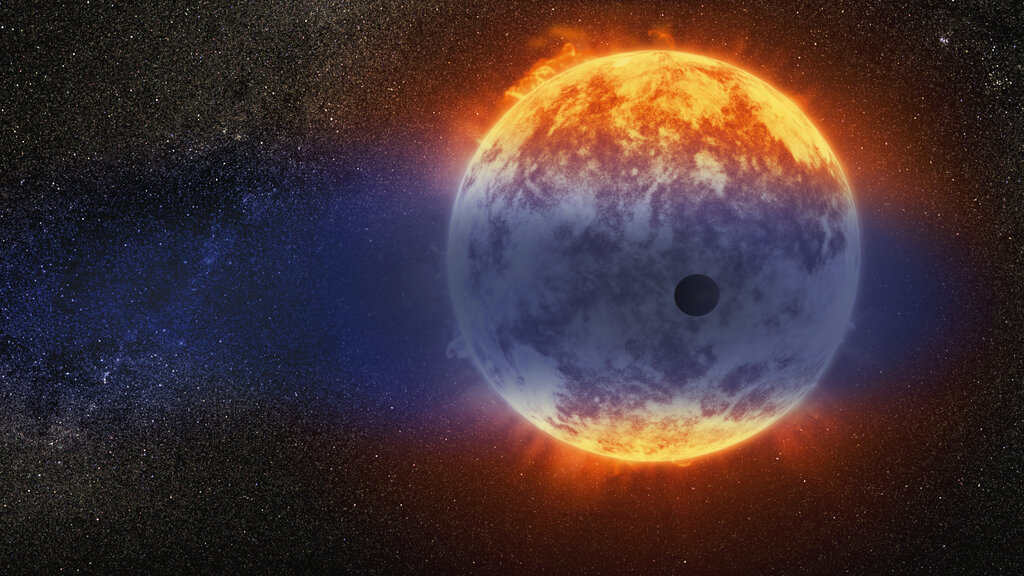
A planet's temperature, dictated by its distance from the star and its own internal heat, also plays a critical role. On hotter planets, gas molecules are more energized and can escape more easily. This is why "hot Jupiters," gas giants that orbit scorchingly close to their stars, have puffy, extended atmospheres.
Clues to Formation and Life
The composition of an atmosphere provides a window into a planet’s formation. For instance, a planet rich in icy compounds like water and methane likely formed in the colder, outer regions of its solar system, far from its star. A rocky planet with a thick atmosphere might tell a different story about its origins.
Ultimately, studying exoplanet atmospheres is central to the search for life beyond Earth. The presence of certain gases in a specific combination could be a potential sign of biological activity. Scientists look for these "biosignatures," such as oxygen, water vapor, and methane, in the hopes of finding a world that might harbor life.
By understanding the atmospheres of these distant worlds, we piece together the puzzle of how planets form and evolve. Each new discovery brings us one step closer to answering one of humanity’s oldest questions: Are we alone?
Let's check your understanding of exoplanet atmospheres.
What are the two most abundant elements in the universe, which dominate the atmospheres of gas giants like Jupiter?
The process where intense energy from a star causes gas particles to escape a planet's gravity is known as ________.
The study of these distant atmospheres is a young and exciting field. It combines astronomy, physics, and chemistry to paint a picture of worlds we can't yet visit.