Evolution of Visual Authenticity
Painting vs Early Photography
The First Crisis of Realism
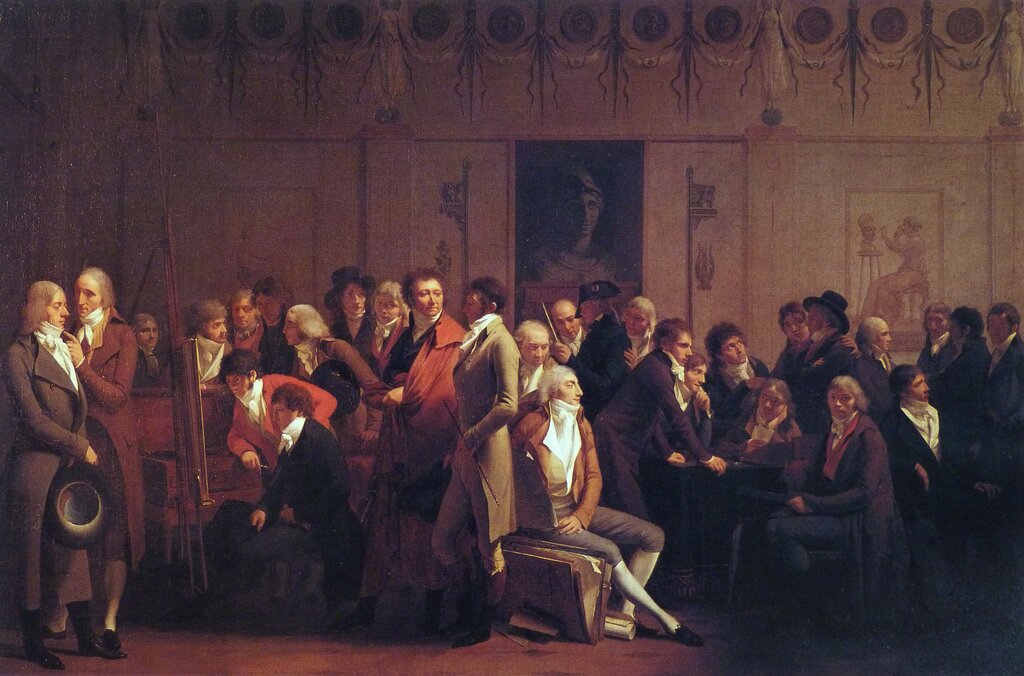
Before the 1840s, a painter’s canvas was the primary way to capture a person’s likeness. Artists held a monopoly on visual truth, but their truth was subjective. A portrait wasn’t just a record; it was an interpretation, often an idealization. The artist’s skill was in capturing not just a face, but a person’s status, character, and essence, smoothing over imperfections to present a heightened version of reality.
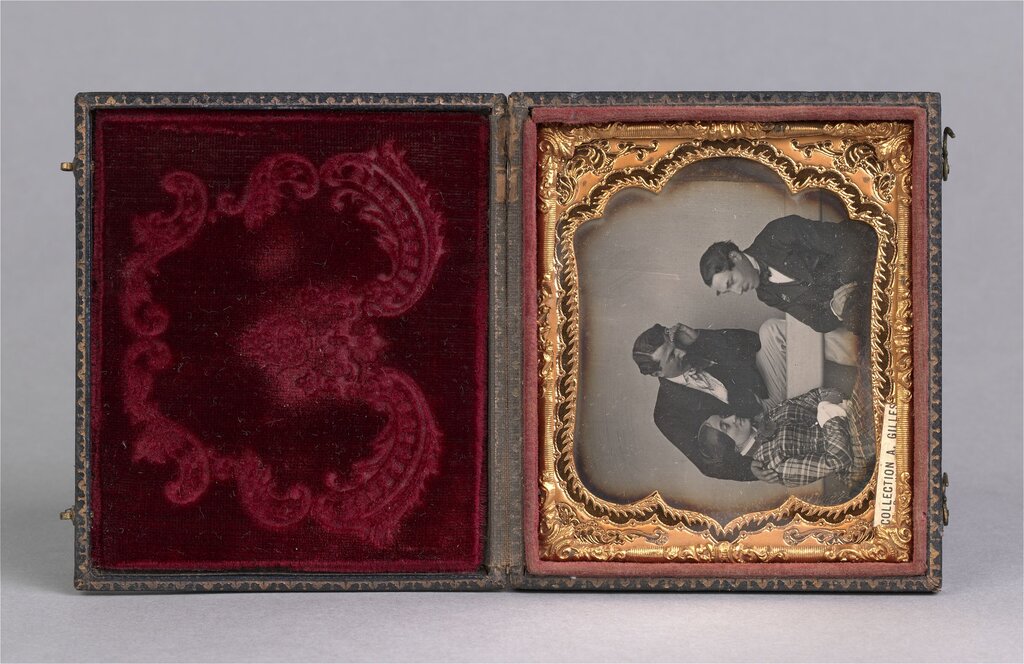
Then, a disruptive technology emerged: photography. The first commercially successful process, the daguerreotype, produced a startlingly detailed image on a polished silver plate. Unlike a painting, which was mediated by the artist’s hand and eye, the photograph seemed to be a direct, unmediated copy of the world. It wasn’t a representation of reality; it was a piece of it.
daguerreotype
noun
An early photographic process that produced a highly detailed, one-of-a-kind image on a silver-coated copper plate. As the first publicly available photographic method, it revolutionized portraiture.
This created a fundamental shift in how people understood images. The photograph possessed what philosophers call indexicality—it was a physical trace of the light that bounced off the subject. A footprint is an index of a foot; a photograph was an index of a person or a scene. This physical link to the real world gave the photograph an authority that painting, with its subjective brushstrokes, could never claim.
The Soul of the Machine
The art world was thrown into turmoil. French painter Paul Delaroche is famously (and perhaps apocryphally) said to have declared upon seeing a daguerreotype, “From today, painting is dead!” While painting didn’t die, its purpose was forced to evolve. If a machine could capture reality perfectly, what was the painter's role?
Critics like the poet Charles Baudelaire were openly hostile. He viewed photography as a purely industrial process, a servant to science and a threat to art. To him, art required imagination and interpretation—the very things photography seemed to lack. He scorned the public’s embrace of this new,
“...exact reproduction of nature... If photography is allowed to supplement art in some of its functions, it will soon have supplanted or corrupted it altogether.”
Baudelaire’s fear was that this mechanical medium would flatten art into a mindless pursuit of accuracy, killing the creative spirit. It was a debate about what constituted a legitimate image: the idealized truth of the artist or the literal truth of the machine.
A New Kind of Truth
While critics debated, the public voted with their wallets. Portraiture, once a luxury for the wealthy, was now accessible to the middle class. People flocked to photography studios to have their likeness captured with unflinching accuracy. This democratization of the portrait changed how people saw themselves and each other. It created a new kind of social truth, one based on verifiable, mechanical records rather than artistic flattery.
The invention of photography was a major stimulus for this new trend towards abstraction – for here was a “machine” that could accurately reproduce the visible world.
Freed from the burden of realistic depiction, painters began to explore new territory. If a camera could capture a perfect likeness, artists could focus on what it couldn't: emotion, sensation, and the subjective experience of light and color. This pressure helped spark movements like Impressionism, which valued the artist's unique perception over literal reality. The crisis of realism didn't kill painting; it liberated it.
Before the advent of photography, how was portrait painting described in the text?
The text states that a photograph has 'indexicality'. What is the best definition of this concept?
This 19th-century tension between painting and photography offers a powerful parallel to today's debates about Generative AI. Just as photography was once dismissed as a soulless machine, AI is now seen by some as a threat to the authenticity of photographic art. But history suggests that when a new technology redefines realism, it doesn't destroy the old medium—it forces it to innovate.