Evolution of the Riff and Heavy Metal Subgenres
Post-Blues Transition
The Blues Fades to Black
By the early 1970s, hard rock had already pushed the volume and attitude of its blues roots. Bands like Led Zeppelin and Deep Purple were masters of heavy, blues-based improvisation, with loose, swinging rhythms and solos built on familiar pentatonic scales. But beneath this surface, a different sound was starting to coalesce, something darker, heavier, and more rigid. This new music wasn't about feeling the blues; it was about confronting a bleaker reality.
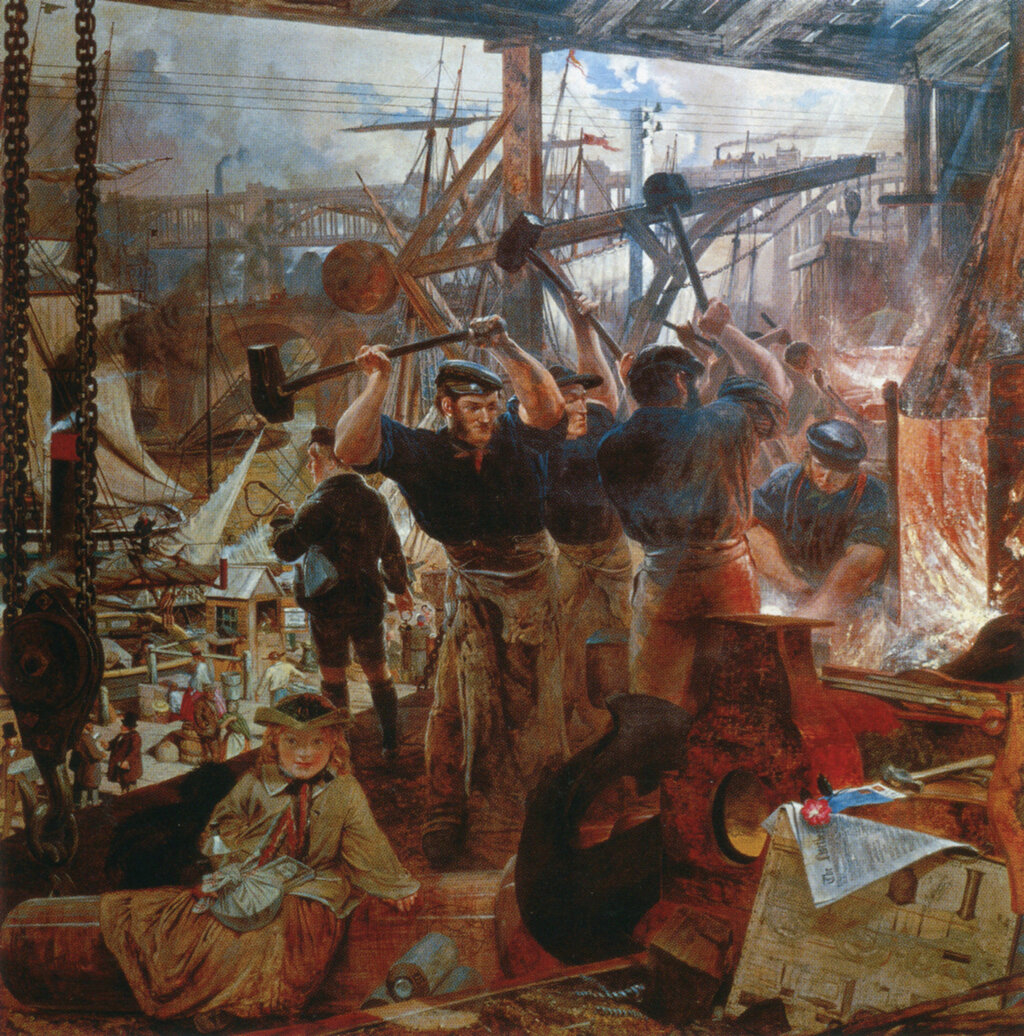
This transition found its epicenter in the industrial heartland of England, specifically Birmingham . This was a city of factories, smog, and economic decline. The relentless, mechanical noise of machinery and the feeling of hopelessness in post-industrial communities became the unintentional soundtrack for a new generation. Black Sabbath, arguably the first true heavy metal band, channeled this environment directly into their music. Their sound wasn't just loud; it was dense, oppressive, and stripped of the blues' characteristic swing.
The Devil's Interval
Musically, the biggest departure from the blues was the deliberate use of dissonance. While blues harmony has its own tensions, early metal bands embraced an interval that had been nicknamed diabolus in musica—the devil in music—during the Middle Ages: the . A tritone is an interval spanning three whole tones. It creates a uniquely unsettling and tense sound, a perfect sonic tool for crafting riffs that felt ominous and menacing. Black Sabbath's self-titled song, "Black Sabbath," opens with a riff built almost entirely around this interval.
A New Rhythmic Order
The other critical divorce from the blues was rhythmic. Blues and blues-rock rely heavily on a 'swing' or 'shuffle' feel, where pairs of eighth notes are played with a lazy, long-short feel. Heavy metal straightened this out. The 'straight-eight' feel—playing each eighth note with equal duration—creates a driving, machine-like pulse.
Bands like Judas Priest took this even further, popularizing the 'gallop' rhythm, a pattern of one eighth note followed by two sixteenths that mimics the sound of a horse's gallop. This tight, aggressive syncopation gave the music a frantic energy and precision that stood in stark contrast to the loose improvisations of 1960s rock. These innovations laid the groundwork for the New Wave of British Heavy Metal (NWOBHM), a movement in the late '70s and early '80s that would solidify metal's identity.
The roots of heavy metal can be traced back to the late 1960s when bands like Black Sabbath, Led Zeppelin, and Deep Purple began incorporating blues and rock influences into their music.
This combination of industrial themes, dissonant harmony, and rigid, powerful rhythms marked the true birth of heavy metal. It was a conscious move away from its blues ancestry toward a sound that was entirely its own: darker, faster, and heavier.
According to the text, the environment of which industrial city was a major influence on the sound of the first heavy metal bands?
What is the name of the dissonant musical interval, nicknamed 'the devil in music,' that was used by bands like Black Sabbath to create a menacing sound?