Evolution of the English Literary Canon
Epic Foundations
From Spoken Word to Written Epic
Before English was a language of books, it was a language of fire-lit halls and spoken verse. In Anglo-Saxon society, the poet, or scop, was a historian, entertainer, and cultural glue. They were the keepers of the tribe's stories, chanting tales of heroic deeds, ancient bloodlines, and brutal battles to the rhythm of a harp.
These weren't bedtime stories. They were a living history, a way to preserve the values of a society that prized courage, loyalty, and fame. The stories were oral, passed from one scop to another, changing slightly with each telling. This all changed when Christianity arrived in Britain. Monks, with their knowledge of Latin and the written word, began to record these pagan tales. The greatest surviving example of this fusion is Beowulf.
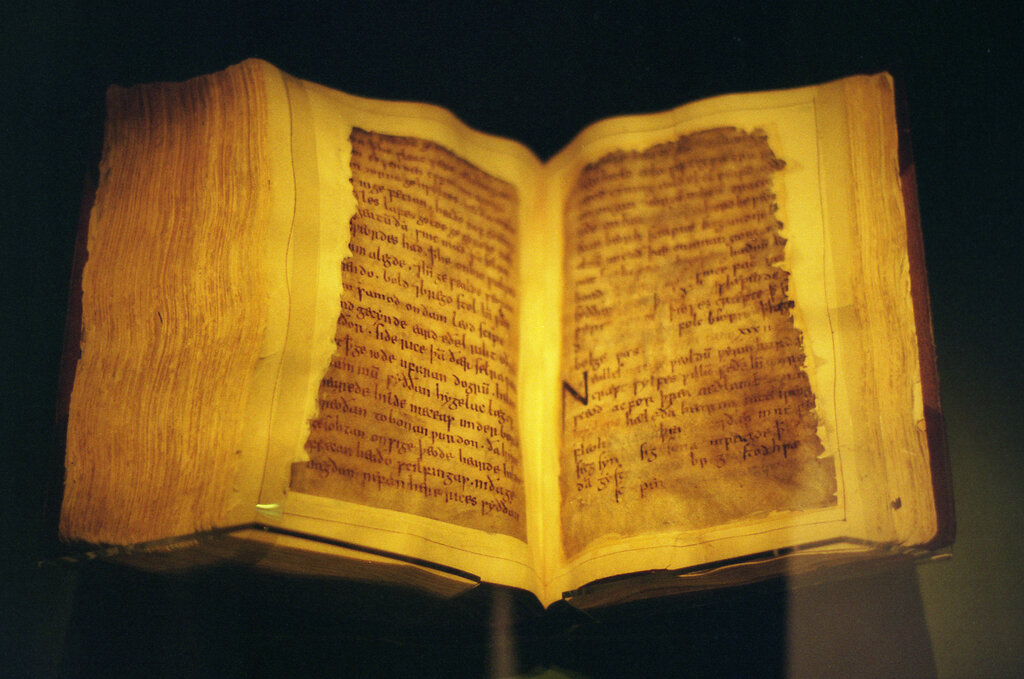
The greatest English poem, Beowulf is the first English epic.
This epic poem, about a hero who fights monsters to save a Danish kingdom, is a cornerstone of English literature. It's a snapshot of the Germanic heroic world, captured just as it was beginning to fade, preserved in ink on vellum by Christian scribes who saw value in the old stories, even if they didn't share the old beliefs.
The Hero's Code
At the heart of Beowulf and other heroic tales is a strict code of conduct known as Comitatus. This was the essential bond between a lord and his warriors, or thanes. It was a pact of mutual loyalty, a two-way street of obligation and reward.
The lord was expected to be generous, a "ring-giver" who rewarded his men with treasures from battle. In return, the thanes pledged absolute loyalty, promising to fight for their lord to the death. To abandon your lord in battle was the ultimate shame. This code wasn't just a military strategy; it was the bedrock of their social structure.
When the monks wrote these stories down, they layered a Christian worldview onto this pagan foundation. The result is a fascinating blend, a syncretism of old and new beliefs. Beowulf's incredible strength is described as a gift from God. The monster Grendel is not just a creature of the swamp; he is a descendant of the biblical Cain, banished by the Creator.
The scribes didn't erase the pagan elements. The story still revolves around fame, treasure, and a hero's might. But it's framed within a Christian universe where a single, all-powerful God ultimately controls human destiny, a concept that subtly reshaped the older pagan idea of , or fate.
A Tone of Sorrow
While epics like Beowulf celebrated heroic triumphs, much of the surviving Old English poetry is suffused with a deep sense of sadness. These poems, known as elegies, are meditations on loss, exile, and the fleeting nature of life. They reflect the harsh realities of the time: constant warfare, the fragility of community, and the cold North Sea.
Poems like The Wanderer and The Seafarer give voice to lonely figures cut off from their lords and kinsmen. The Wanderer, for example, dreams of the joy of the mead-hall, only to wake up to the desolation of a winter sea. He mourns the loss of his "gold-friend," his lord, and the collapse of the world he knew.
Where did the horse go? Where the rider? Where the giver of treasure? Where are the seats at the feast? Where are the joys in the hall?
This elegiac tone wasn't just personal melancholy. It was a reflection of a society in constant upheaval. The loss of a lord meant the loss of everything: home, identity, and security. The poems lament a vanished golden age, a time of stability and fellowship that now seems like a distant memory. This sense of decay and the transience of earthly glory is a powerful theme that runs through Old English literature, a somber counterpoint to its heroic ideals.
Let's test your knowledge of these foundational concepts.
In Anglo-Saxon society, what was the primary role of a 'scop'?
The epic poem Beowulf is a significant literary work because it showcases the fusion of pagan heroic traditions with a Christian worldview.
These early works set the stage for the entire English literary tradition, establishing themes of heroism, loss, and fate that would echo for centuries.