Evolution of the American State
Constitutional Frameworks
From Confederation to Constitution
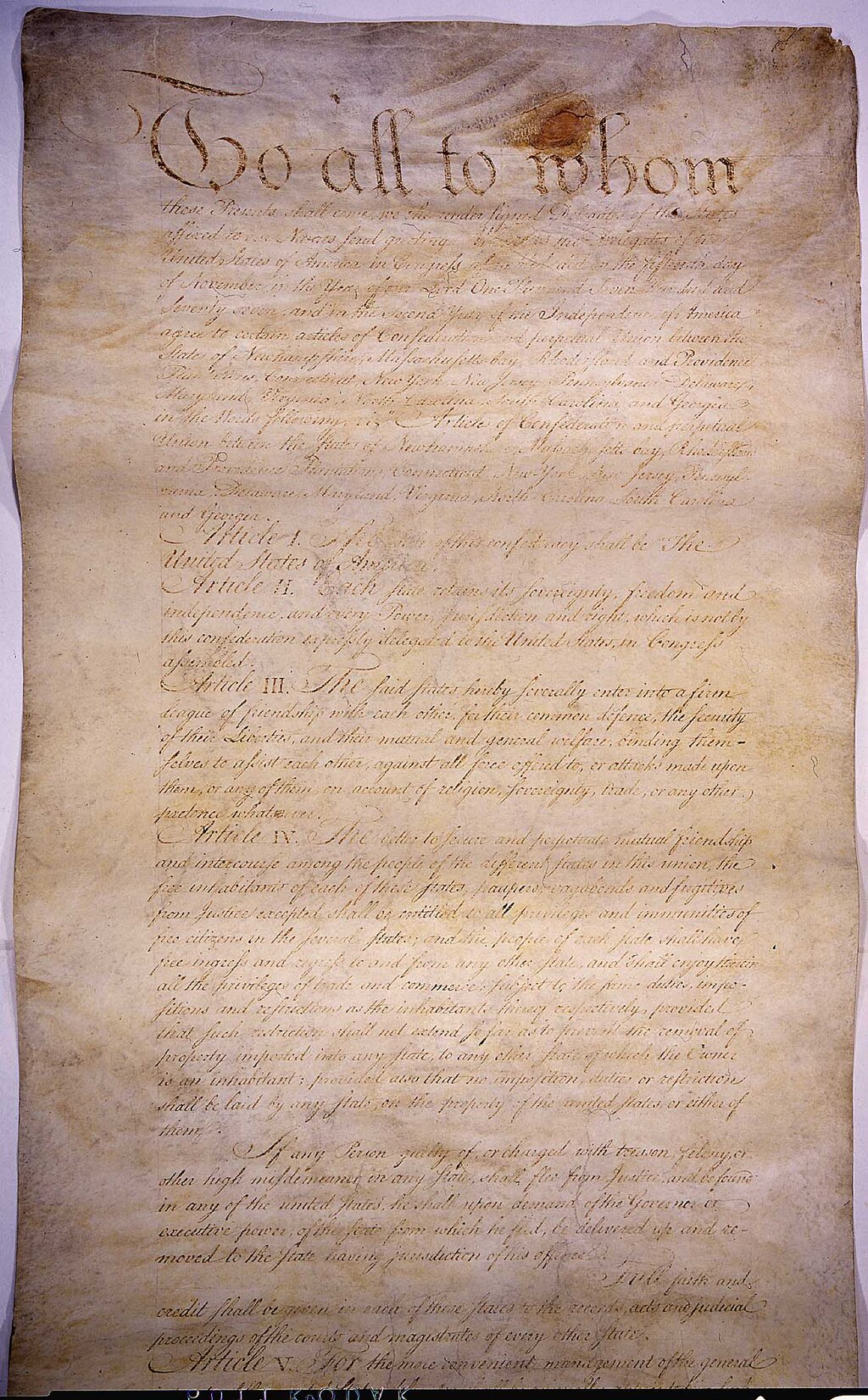
The Articles of Confederation, America's first attempt at a national government, proved too weak to manage the young country's problems. The central government couldn't effectively tax, regulate commerce, or raise an army. This weakness wasn't an accident; it was a design choice. Fresh from a war against a powerful king, the states were wary of creating another strong central authority.
The breaking point came with events like Shays' Rebellion, where debt-ridden farmers in Massachusetts rose up, and the national government was powerless to intervene. It became clear that the system needed more than a simple revision. The nation's economic and political elite saw the need for a government that could stabilize the economy, protect property rights, and command respect on the world stage.
This led to the Constitutional Convention of 1787. The goal wasn't just to tweak the Articles, but to build a new framework entirely. The central debate quickly formed around how much power a national government should have. This split the delegates into two main camps: the Federalists, who wanted a strong central government, and the Anti-Federalists, who feared it would trample on individual and state rights.
The Great Debate
The Federalists, led by figures like Alexander Hamilton and James Madison, argued that a robust national government was essential for the nation's survival. They laid out their arguments in a series of essays known as The Federalist Papers, contending that a central authority was necessary to manage foreign policy, national defense, and interstate commerce.
Anti-Federalists, including Patrick Henry and George Mason, countered that the proposed Constitution created a government that was too powerful and distant from the people. They worried it would favor the wealthy elite and lacked specific protections for individual liberties. Their core fear was that the presidency would become a monarchy and that the states would be absorbed into a single, massive government.
| Concern | Federalists | Anti-Federalists |
|---|---|---|
| Central Power | A strong central government is necessary for national unity and stability. | A strong central government threatens state sovereignty and individual liberty. |
| Bill of Rights | Unnecessary, as the Constitution already limits government power. | Essential to protect citizens from government overreach. |
| The Presidency | A strong executive is needed for decisive action. | The presidency could easily become a monarchy. |
| Representation | A large republic can better control the effects of faction. | Only small republics can protect rights; the proposed system is too remote. |
This debate wasn't just about abstract principles. It was about designing a machine of government that could function effectively without becoming tyrannical. The Federalists believed the key was not just to limit power, but to divide it. This led to the core mechanisms of the new system: federalism and the separation of powers.
Federalism divides power between the national government and state governments. The separation of powers divides the national government's authority into legislative, executive, and judicial branches. Each branch was given tools to "check" the power of the others, creating a system of tension designed to prevent any one part from becoming dominant. This internal architecture was Madison's answer to the problem of factionalism—the tendency of groups to pursue their own interests at the expense of the common good.
The Compromises on Power and People
Creating this new government required navigating deep divisions between the states. The Great Compromise solved a battle between large and small states over representation in Congress. It created a bicameral legislature: the Senate, with equal representation for all states, and the House of Representatives, with representation based on population.
But the question of population led to the Constitution's most toxic and enduring compromise. Southern states wanted to count enslaved people to increase their power in the House, while Northern states objected. The result was the , which counted each enslaved person as three-fifths of a person for both representation and taxation purposes. This decision embedded slavery into the nation's legal framework, granting disproportionate power to slaveholding states and setting the stage for future conflict.
The compromises at the convention created a government that was both durable and deeply conflicted. It solved the immediate crisis of the Articles of Confederation but institutionalized the practice of slavery, a contradiction that would later tear the nation apart.
The final document was a product of these intense debates and necessary trade-offs. To secure ratification, the Federalists ultimately agreed to the Anti-Federalists' primary demand: the addition of a Bill of Rights to protect individual liberties. This fusion of a strong, structured federal government with explicit limitations on its power became the foundation of American governance.
What was the primary reason for the weakness of the central government under the Articles of Confederation?
Shays' Rebellion was a significant event because it...