Evolution of European Masterpieces
Renaissance Technical Evolutions
Crafting a New Reality
High Renaissance artists weren't just painting what they saw; they were constructing idealized worlds on flat surfaces. This required more than just a good eye. It demanded a sophisticated understanding of mathematics and optics to create a convincing illusion of three-dimensional space. Building on the principles of linear perspective developed a century earlier, artists like Raphael designed compositions that were both visually stunning and intellectually rigorous.
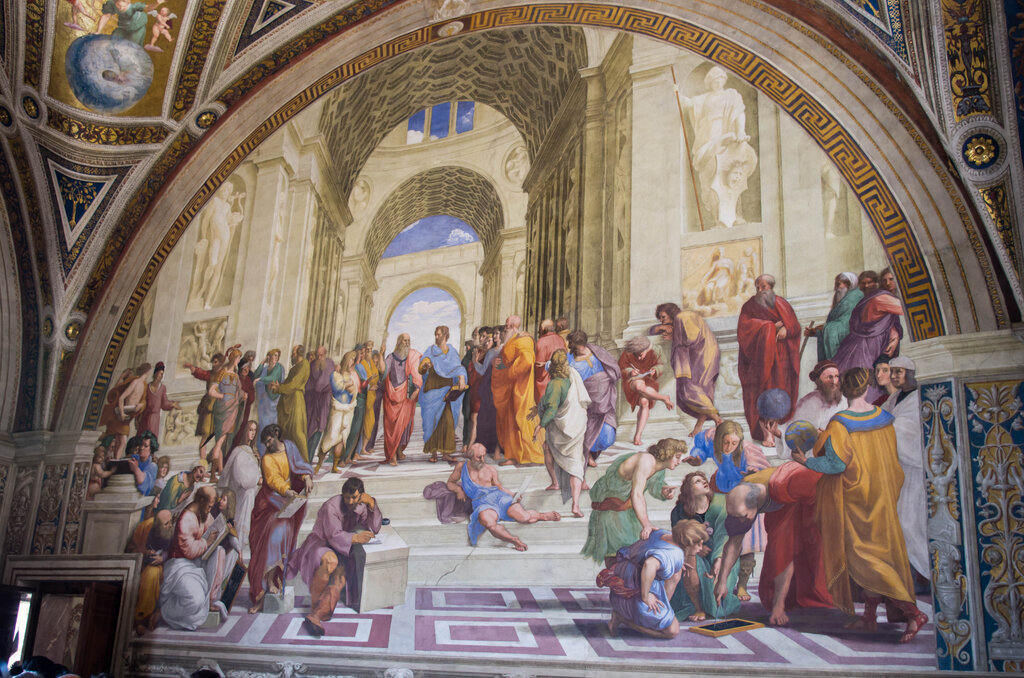
In "The School of Athens," the architecture isn't just a backdrop; it's a philosophical statement. The receding coffered barrel vault and clean geometric floor tiles create a perfect, logical space for the gathering of the greatest minds of antiquity. Every figure is placed with precision, and the composition guides the viewer’s eye directly to the central figures of Plato and Aristotle. This use of linear perspective wasn't just a trick to create depth. It was a way to impose order and harmony on the world, reflecting the Humanist belief in reason and human potential.
The Drama of Light
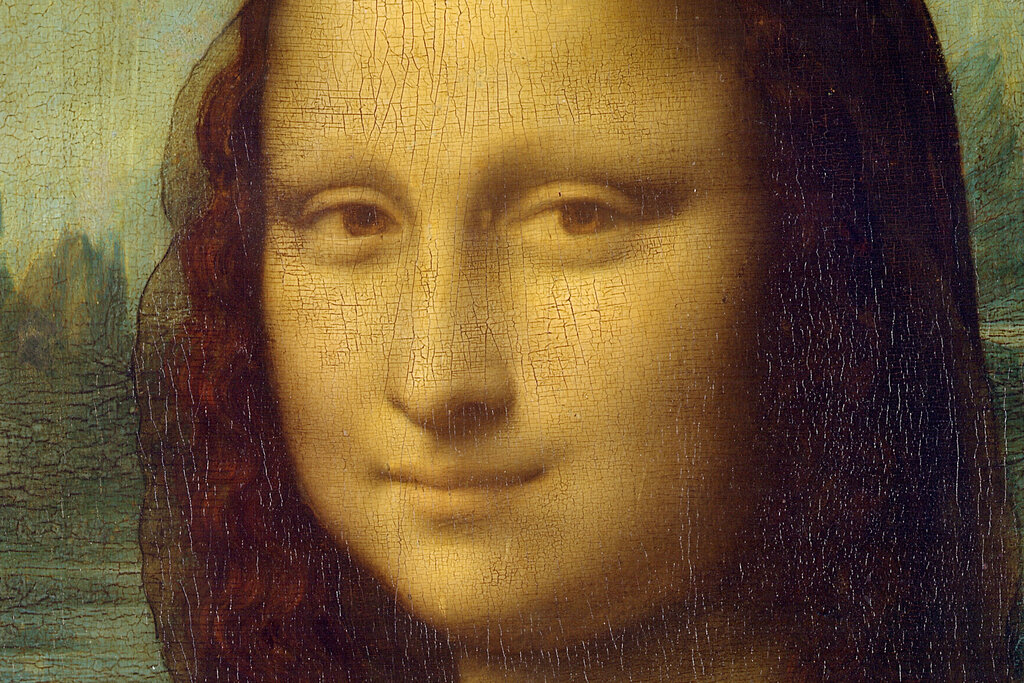
Once space was defined, artists faced another challenge: how to make figures within that space feel solid and real. The answer lay in the manipulation of light and shadow. Two competing approaches emerged, defining the aesthetic of the era: and . These weren't just techniques; they were different philosophies about how to represent the world.
Chiaroscuro carves forms out of darkness with sharp contrasts, creating drama and solidity. Sfumato dissolves edges into atmosphere, creating mystery and softness.
Michelangelo was a master of sculptural form, and his approach to painting reflected this. In his frescoes, he used sharp transitions between light and shadow to define every muscle and fold of drapery. His figures have a hard, tangible quality, as if they are carved from marble. They are heroic, powerful, and utterly clear.
Leonardo da Vinci took the opposite approach. He famously argued that light and shadow should blend "without lines or borders, in the manner of smoke." In paintings like the Mona Lisa, edges are blurred, and contours disappear into a soft haze. This creates a sense of atmosphere and psychological depth, making the subject feel more alive and mysterious. The trade-off is clear: Michelangelo’s anatomical precision gives way to Leonardo’s atmospheric realism.
A New Medium for a New Age
The preferred medium of Florence and Rome was fresco—painting directly onto wet plaster. Fresco is durable and creates a matte finish that integrates perfectly with architecture, but it's also demanding. Artists had to work quickly before the plaster dried, making subtle blending and revisions nearly impossible.
A revolution was happening in Venice, where the damp climate was unsuitable for large-scale fresco. Venetian artists, like Titian, embraced oil painting on canvas. This new medium was a game-changer. Oils dry slowly, giving artists ample time to blend colors, create subtle glazes, and build up rich textures. The flexibility of oil paint allowed for a new focus on color, light, and surface in a way fresco never could.
| Technique | Primary Location | Key Advantage | Defining Characteristic |
|---|---|---|---|
| Fresco | Florence, Rome | Architectural integration | Fast-drying, matte finish |
| Oil on Canvas | Venice | Blending and texture | Slow-drying, luminous glazes |
This technical shift wasn't just practical; it was ideological. The crisp, defined lines of Florentine disegno (drawing or design) gave way to Venetian colorito (coloring). Art in Florence, exemplified by Michelangelo, was about intellectual structure and sculptural form. Art in Venice was about capturing the sensuous, light-reflecting surfaces of the world. This move toward oil on canvas set the standard for Western painting for the next 400 years.
Ready to test your knowledge of these revolutionary techniques?
In High Renaissance painting, what was the primary philosophical purpose of using linear perspective, as exemplified in Raphael's "The School of Athens"?
An artist who wants to create a figure that feels solid, powerful, and almost carved from marble, with sharp transitions between light and shadow, would be using the technique of ________.