Evolution of Early Jazz
Syncopation and Ragtime
From March to Ragtime
In the late 19th century, the most popular music in America was the march. Composers like John Philip Sousa created stirring, rhythmically straightforward pieces that were easy to follow. These marches were built in sections, or strains, often following a pattern like AABBACCDD. Each section introduced a new melody, creating a structured but varied listening experience. This multi-strain form provided the architectural blueprint for a new, revolutionary style: Ragtime.
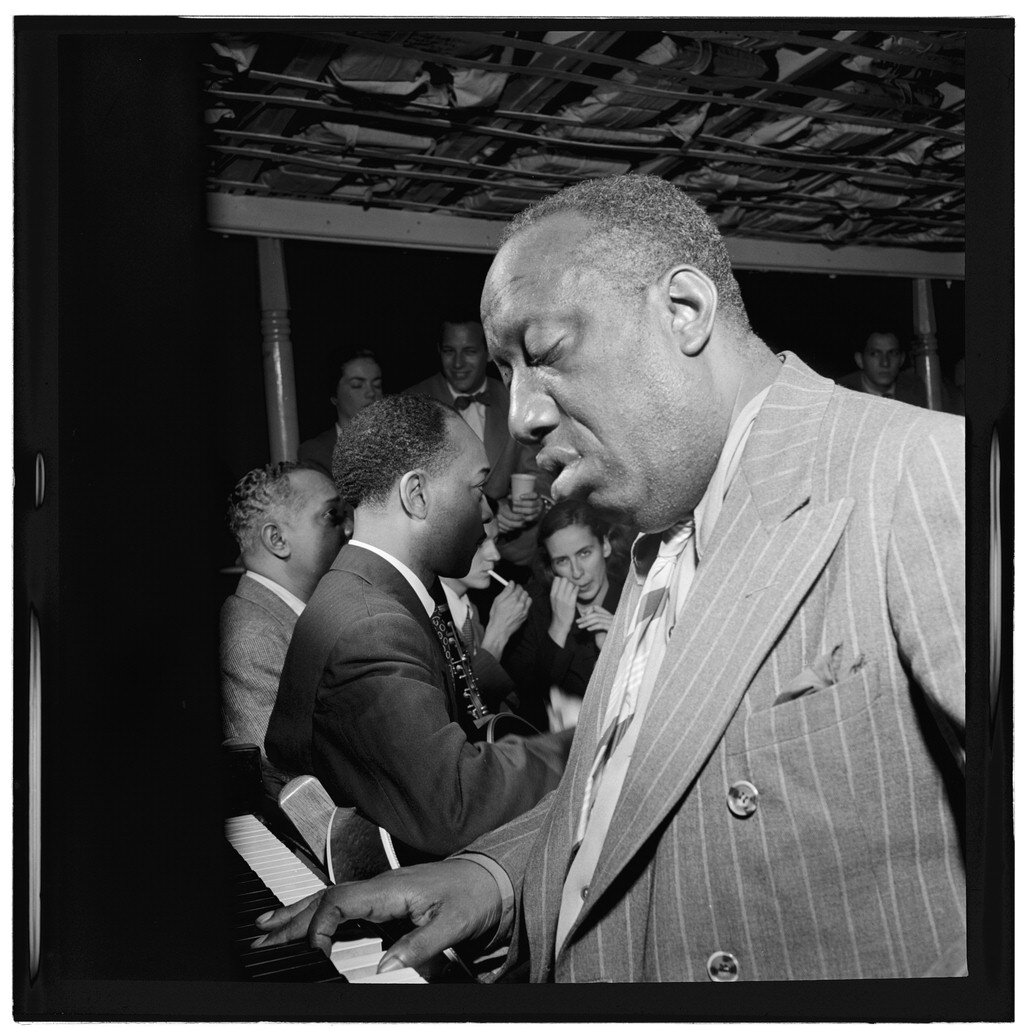
Early ragtime composers didn't just invent a new structure; they borrowed a successful one and injected it with a radical new rhythmic idea. They kept the steady, two-beat "oom-pah" bass line in the pianist's left hand, which was the rhythmic engine of the march. But with the right hand, they played melodies that seemed to push and pull against this steady pulse. This was syncopation.
Syncopation is the art of placing rhythmic stress on weak beats or off-beats, creating a feeling of surprise and forward motion.
Instead of the melody landing squarely on the beat, notes would arrive just before or after, creating a "ragged" feel. This tension between the steady left hand and the syncopated right hand was the electrifying core of ragtime music. It made people want to move in a way that marches never could.
The King of Ragtime
No one did more to formalize and popularize this new music than (1868-1917). Joplin was a classically trained composer who saw ragtime not as a fleeting novelty but as a serious American art form. He published his compositions as detailed sheet music, famously including the warning, "Do not play this piece fast. It is never right to play 'Ragtime' fast."
Joplin insisted on precision. He wanted his pieces played exactly as written, preserving the delicate balance between the march-like bass and the syncopated treble. His compositions, like "Maple Leaf Rag" and "The Entertainer," became national sensations, and their complex, technically demanding piano parts set a high bar for performers.
The structure of pieces, as perfected by Joplin and his contemporaries, typically followed the multi-strain march form. A common pattern was AABBACCDD, where each letter represents a 16-bar section. The C section often modulated to a new key, adding harmonic interest before returning to the original key for the final strains. This formal, notated approach allowed ragtime to be distributed and learned across the country, solidifying its style.
Notation Meets Improvisation
While Scott Joplin was championing ragtime as a composer's art, a different approach was brewing in the dance halls and bars of cities like and St. Louis. Here, the music was part of a vibrant oral tradition. Pianists learned tunes by ear, not just from sheet music. They were performers first, and their goal was to keep the dance floor full.
This performance-focused environment led musicians to take liberties with the written score. They would add their own flourishes, embellish melodies, and, most importantly, alter the rhythm. Instead of the stiff, precise eighth notes found in published rags, they began to play with a looser, more lilting feel. This rhythmic interpretation is what we now call "swing."
It was a trade-off. What was lost in compositional purity was gained in rhythmic excitement and personal expression. This shift from strict notation to improvisational interpretation marked the crucial transition from ragtime to proto-jazz. The structure was still there, but the feel was becoming something entirely new.
What popular 19th-century musical form provided the structural blueprint, such as the AABBACCDD pattern, for early ragtime?
The "ragged" feel of ragtime comes from a rhythmic technique called syncopation. How is this effect typically created in piano ragtime?
Ragtime served as the essential bridge from the structured marches of the 19th century to the improvisational jazz of the 20th, proving that sometimes, the most exciting music happens when you play against the beat.