Evolution of Combat Systems and Martial Sciences
Striking Mechanical Comparative
Power From the Ground Up
Every powerful strike begins with the floor. The force you generate travels from your feet, through your legs and hips, up your torso, and finally out through your limb. This sequence is the —a series of interconnected body segments that work together to create maximum velocity and impact. How a martial art harnesses this chain defines its character.
Boxing, for instance, is a masterclass in rotational power. When a boxer throws a cross, the force originates from the back foot pushing off the ground. This initiates a powerful hip rotation, which then whips the torso and shoulder around, catapulting the fist forward. It's a corkscrew motion, compact and explosive, designed for generating punching power in tight spaces.
Karate, in contrast, often emphasizes linear power. A traditional karate punch (tsuki) often involves driving forward in a straight line, with the hips snapping at the very last moment. The power comes from a rapid, explosive advance, transferring the body's entire forward momentum into the target. This “blitz” approach aims to cover distance quickly and deliver a decisive blow.
This difference in power generation dictates how fighters move, defend, and attack. A boxer's grounded, rotational style is perfect for slipping and weaving around punches, while a karateka's linear movements are built for in-and-out blitzes.
Kicks, Guards, and Stances
The mechanics of kicking also reveal deep stylistic differences. The Muay Thai roundhouse is famous for its devastating power, often compared to swinging a baseball bat. The practitioner pivots on the supporting leg and turns the hip over completely, swinging their entire leg and shin into the target as a single, solid unit. There is minimal bending at the knee during the impact phase; the power comes from the full rotation of the body.
For example, our data indicates that the typical Karate and Taekwondo snap-like kick is based heavily on rapid knee extension, while Muay Thai uses a technique that places greater emphasise on COM movements to develop high impact forces.
This commitment to rotational power necessitates a specific stance and guard. A Muay Thai fighter's weight is often distributed to allow for quick lifting of a leg to 'check' (block) an incoming low kick. Their guard, the , reflects a different set of priorities than a boxer's. With arms extended further out, it helps control distance, parry kicks, and initiate the clinch, where devastating knee and elbow strikes come into play.
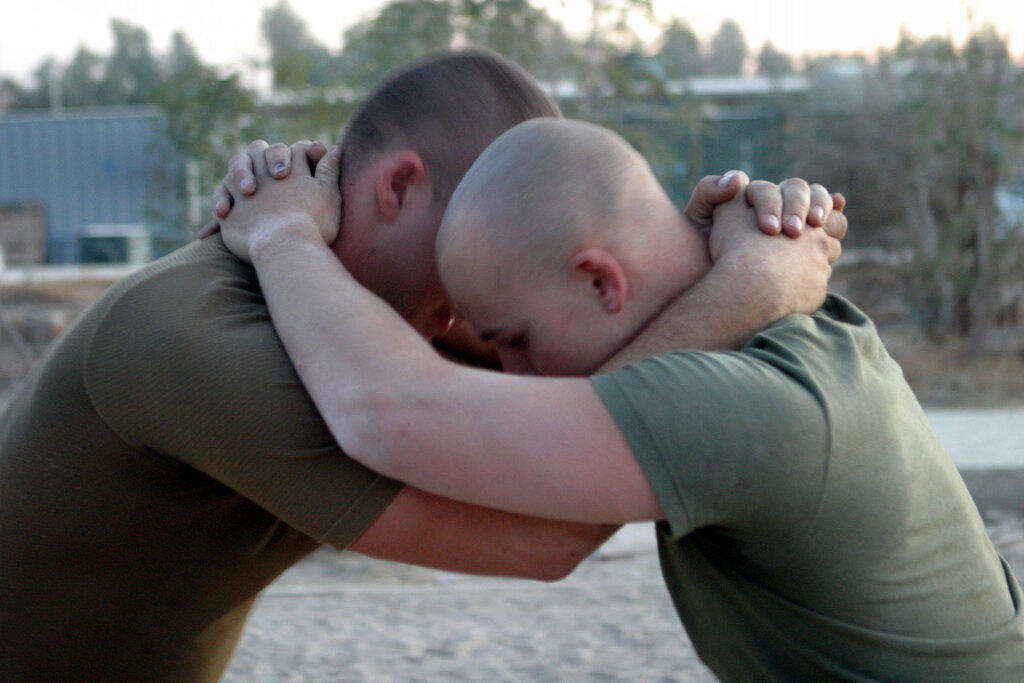
A boxer's high, tight guard, in contrast, is designed purely to defend against punches. With elbows tucked in and hands protecting the chin and temples, it creates a shell that's difficult to penetrate with hooks and uppercuts. The stance is balanced for quick head movement and slipping punches, not for blocking powerful leg kicks. Each defensive posture is a direct answer to the most likely form of attack in that style.
Rhythm and Combination
Some styles are not purely linear or rotational but are hybrids that blend elements. is a prime example. It was developed by combining the powerful low kicks of Japanese Kyokushin Karate with the sophisticated hand combinations of Western boxing.
The result is a relentless, pressure-fighting style. Dutch kickboxers are known for their rhythmic, forward-marching footwork and their seamless blending of multi-punch combinations that end with a bone-jarring low kick. This approach focuses on breaking an opponent down with attritional damage.
This rhythmic, circular movement for setting up combinations is very different from the explosive, single-strike focus of a Karate blitz. The Karateka seeks to end the fight with one perfect technique (Ikken Hissatsu), while the Dutch Kickboxer aims to overwhelm with volume and pressure.
| Style | Power Generation | Primary Guard | Defensive Focus |
|---|---|---|---|
| Boxing | Rotational (Hips/Torso) | High & Tight | Slipping Punches |
| Muay Thai | Rotational (Full Body) | Long Guard | Checking Kicks, Clinch |
| Karate | Linear (Forward Drive) | Variable (Contextual) | Maintaining Distance, Blitz |
| Dutch Kickboxing | Hybrid (Boxing Hands, Kicking Legs) | High & Tight | Pressure & Combination Defense |
Let's review these mechanical concepts.
Now, test your understanding of how these styles compare.
What is the primary function of the kinetic chain in martial arts?
Which statement best contrasts the power generation in a boxing cross versus a traditional karate punch (tsuki)?
Understanding these mechanical foundations is key to appreciating the strategy behind each strike. Every stance, guard, and movement is a calculated trade-off, optimized for a specific system of attack and defense.