Evolution of Code and Computation
Machine Era Transitions
From Physical Wires to Stored Ideas
Early computers like the ENIAC were marvels of engineering, but programming them was a grueling, physical task. There was no keyboard or screen in the modern sense. To give the machine instructions, programmers had to manually plug and unplug thick cables on massive patch panels, essentially rewiring the computer for each new problem.
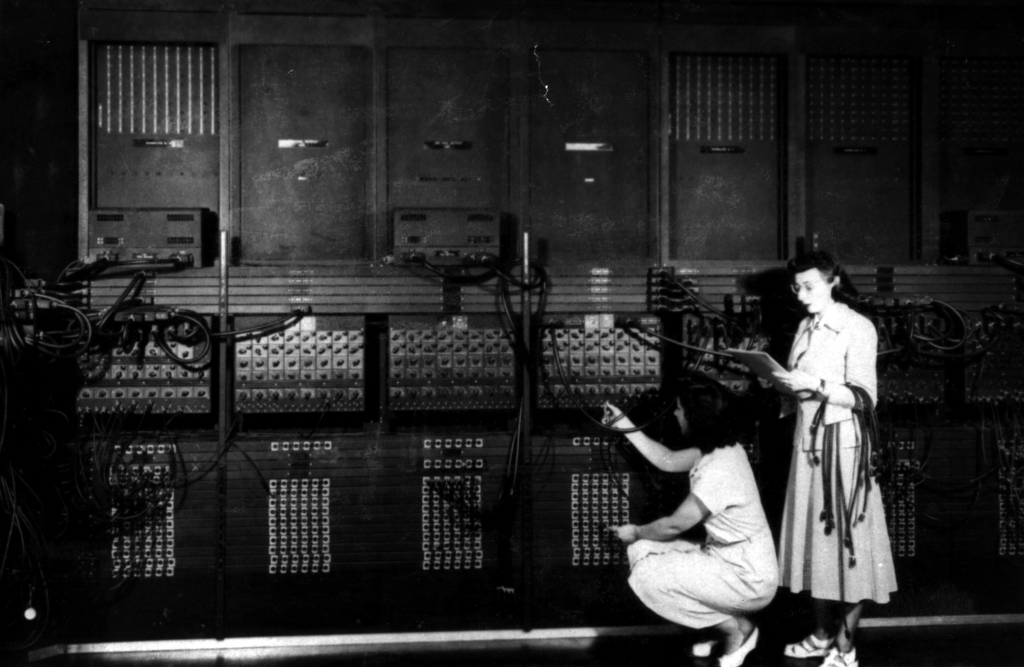
The program wasn't a file; it was the physical configuration of the circuits. Instructions and data lived in separate worlds. The Harvard Mark I, while different, faced a similar limitation. It read its instructions from a punched paper tape, but the data it worked on was stored separately in electromechanical registers. In both cases, the machine's logic for a given task was hardwired or fed in through a distinct physical medium. This separation made computation slow and inflexible. A revolutionary idea was needed to turn these calculators into the versatile machines we know today.
A New Architecture
The breakthrough came in the form of the stored-program concept, most famously detailed by mathematician John von Neumann. The core idea was simple but profound: what if instructions could be stored in the same memory as the data they manipulate? This concept is the heart of the Von Neumann architecture.
Instead of being part of the machine's physical wiring, a program could be treated as data itself—a sequence of numbers that could be loaded, changed, and stored just like any other information.
This architecture unifies the computer's structure. It envisions a central processing unit (CPU) connected to a single memory space. This memory holds both the program instructions and the data. The CPU fetches an instruction from memory, executes it (which might involve fetching data from memory), and then fetches the next instruction in sequence.
This design was transformative. It meant that loading a new program was no longer a matter of rewiring a room-sized machine but of simply loading a different set of numbers into its memory.
In a widely circulated paper, mathematician John von Neumann outlines the architecture of a stored-program computer, including electronic storage of programming information and data -- which eliminates the need for more clumsy methods of programming such as plugboards, punched cards and paper.
Managing the Memory
Having a unified memory space for code and data introduced a new challenge: organization. Early computers had no operating system to manage memory for them. Programmers were given direct access to the machine's memory, which was just a long list of numbered locations, or addresses.
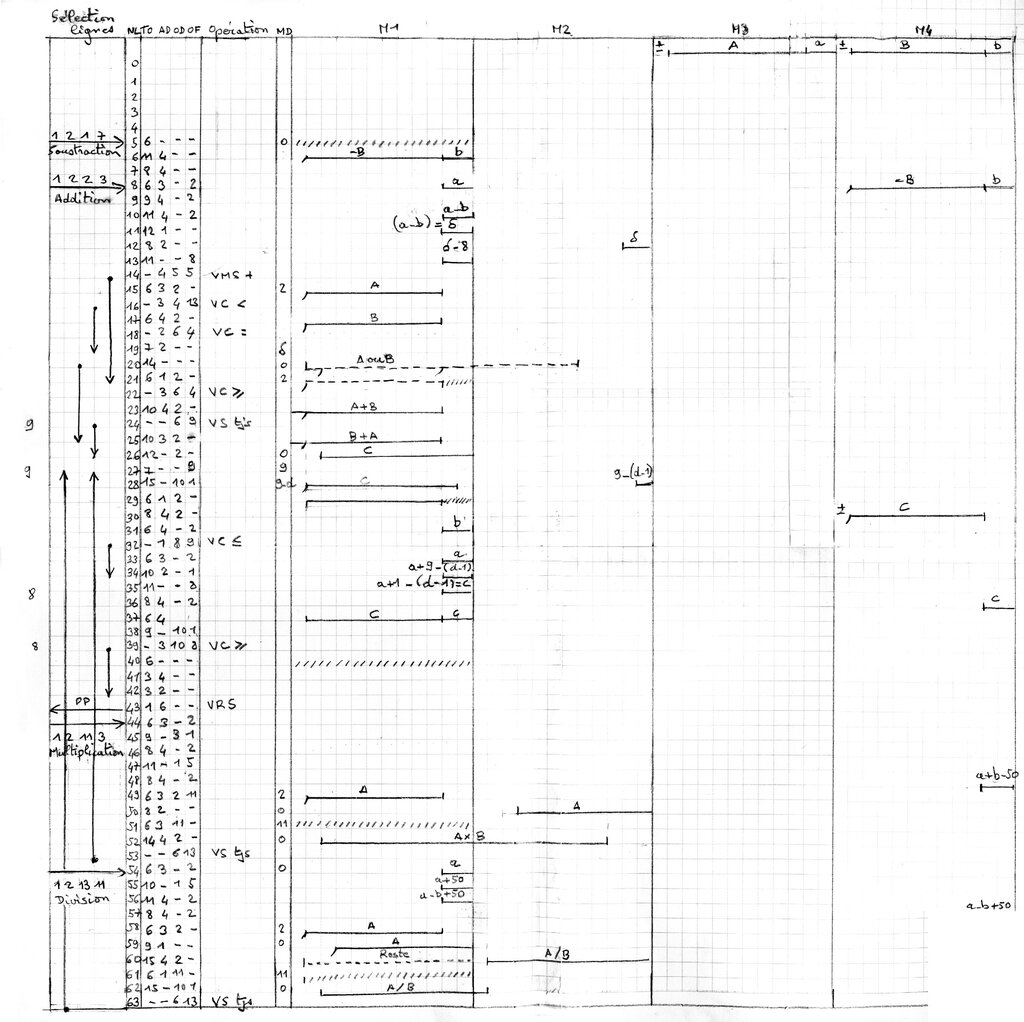
Imagine memory as a series of mailboxes, each with a unique address. The programmer had to decide which mailboxes would hold instructions and which would hold data. They had to manually keep track of every address. If you needed to store a customer's age, you'd pick an address, say 104, and write your code to always look for the age at that specific location. If the program was changed and needed more space for instructions, the programmer had to manually recalculate the addresses for all the data to make sure nothing was accidentally overwritten. A single miscalculation could cause the program to crash or produce garbage results.
This manual memory management was tedious and error-prone. It was like being both the architect and the construction worker for every single program, placing every brick by hand. This difficulty paved the way for the next major abstraction in computing: the operating system, which would eventually take over the complex task of managing memory for the programmer.
How were early computers like the ENIAC primarily programmed?
What was the fundamental limitation of pre-Von Neumann machines like the Harvard Mark I?