Evolution of Architectural Styles
Ancient Foundations
From Shelter to Statement
For most of human history, building meant one thing: finding a way to keep the rain off your head. A cave worked well. So did a simple hut. But as societies grew, so did their ambitions. They needed more than just shelter; they wanted to build temples for their gods, tombs for their kings, and monuments to their power. This shift required a new way of thinking about construction.
The earliest and most straightforward solution is a system called construction. It's so simple you've probably built one yourself without knowing it. You take two vertical pieces (the posts) and lay a horizontal piece (the lintel) across the top. This creates an opening, a doorway, or a window. Every time you build a door frame, you're using this ancient technique. It's the absolute backbone of early architecture.
Egypt and the Pursuit of Permanence
Ancient Egyptian culture was deeply focused on the afterlife. Their greatest architectural achievements weren't for the living, but for the dead. The pyramids, giant tombs for their pharaohs, were built to last for eternity. This obsession with permanence dictated their building style: massive, solid, and incredibly stable.
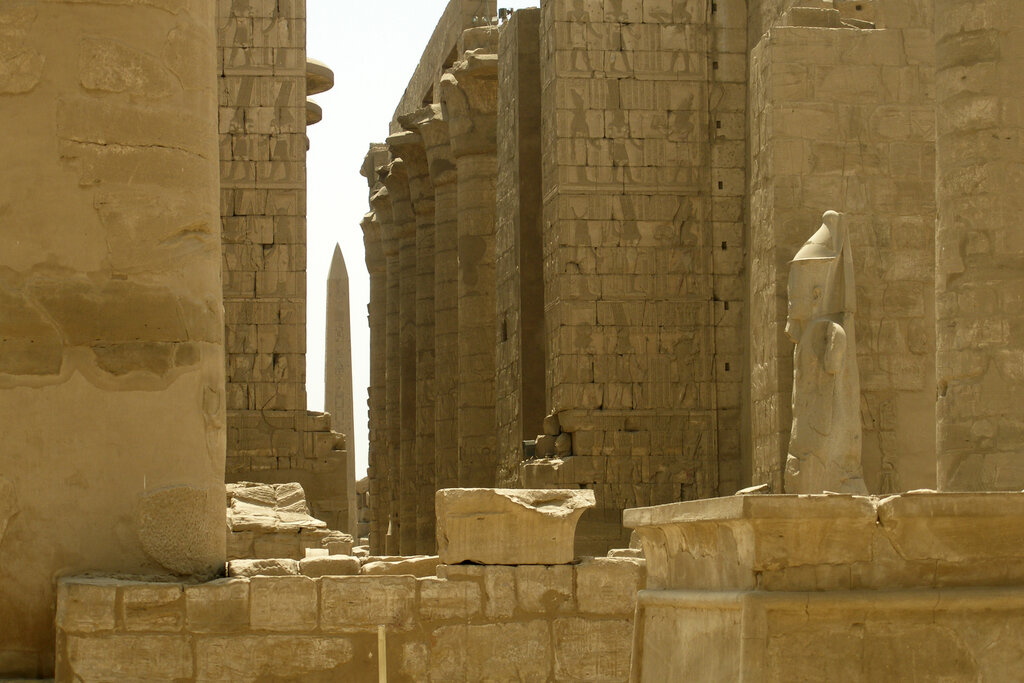
Egyptian temples were vast forests of columns. They used the post and lintel system, but on a superhuman scale. The columns were packed closely together because stone lintels are heavy and can't span a wide gap without cracking under their own weight. This created imposing, awe-inspiring halls, but the indoor spaces felt dense and crowded, not open and airy.
Greece and the Architectural Alphabet
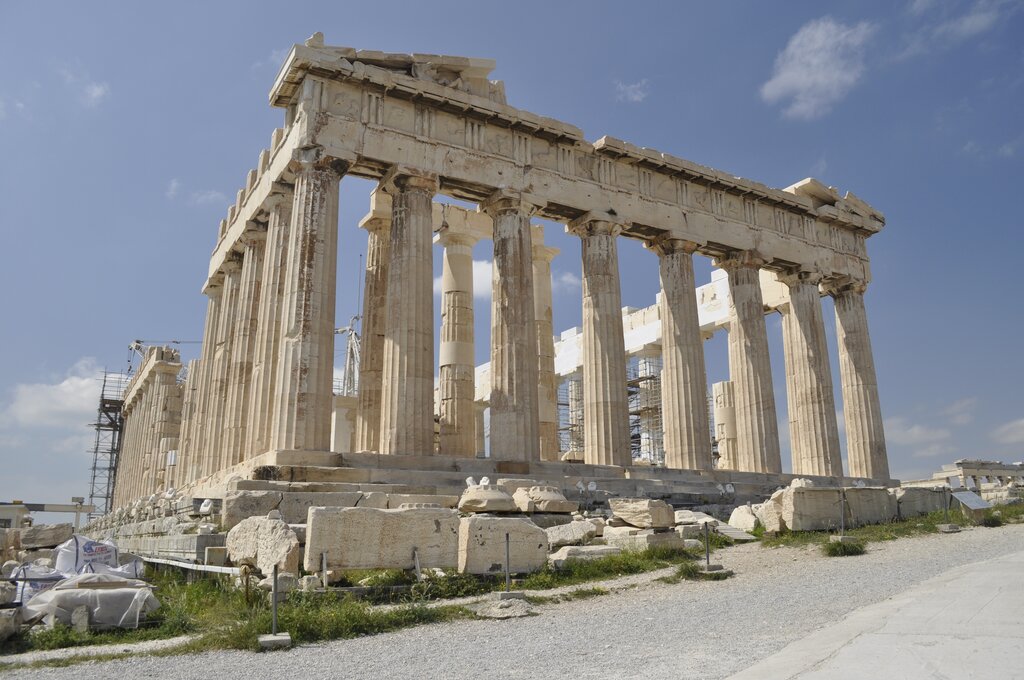
The ancient Greeks inherited the post and lintel system but refined it into an art form. For them, a temple wasn't just a structure; it was a perfectly balanced sculpture dedicated to a god. They developed a set of strict design rules known as the Classical Orders. These 'Orders' are essentially style guides for columns and the structures they support.
There are three main Greek orders, each with its own distinct personality.
The Greeks used these Orders to build their temples with mathematical precision. The horizontal beam supported by the columns is called the entablature, and at the end of the building, the gabled roof creates a triangular space called the , which was often filled with elaborate sculptures telling the stories of gods and heroes. The Parthenon in Athens is the most famous example of this system, a masterpiece of Doric design that has influenced architects for centuries.
Rome and the Engineering Revolution
The Romans were master engineers. While they admired and borrowed the Greek Orders, they weren't satisfied with the limitations of post and lintel construction. They introduced two revolutionary innovations that changed architecture forever: concrete and the true arch.
was a remarkable invention. It was cheaper and more flexible than carving massive stone blocks, and could be moulded into any shape. It was also incredibly strong and durable, thanks to a special ingredient, volcanic ash.
Their second big idea, the arch, solved the problem of spanning wide spaces. Unlike a flat lintel, which puts all its weight straight down, an arch redirects the force outwards and down through its sides. This meant you could build bigger openings with less material, leading to vast, open interior spaces that the Greeks and Egyptians could only dream of.
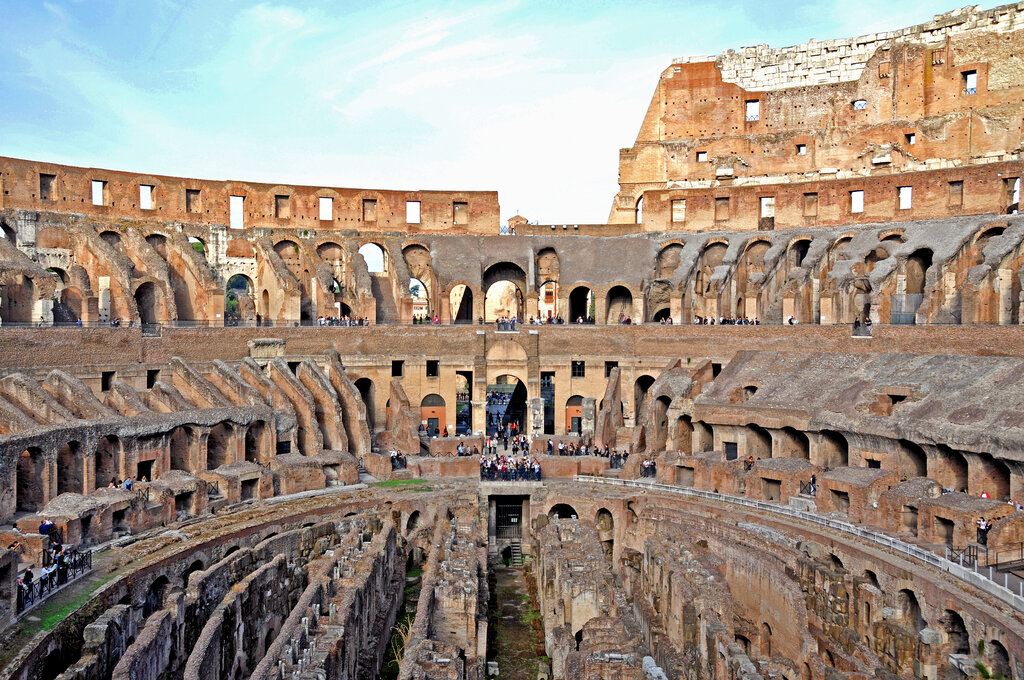
Putting these two innovations together allowed the Romans to build on a scale never before seen. The Colosseum used arches stacked on top of each other to create a massive stadium for 50,000 people. And by rotating an arch 360 degrees, they created the dome.
The greatest Roman dome is the Pantheon in Rome. Its magnificent coffered concrete ceiling spans over 43 metres, an architectural feat that remained unmatched for more than a thousand years. At its very peak is a large circular opening, the oculus, which is open to the sky.
These foundational principles from Egypt, Greece, and Rome, from the simple post and lintel to the complex dome, became the basic visual and structural alphabet that architects would use, adapt, and rebel against for the next two millennia.
What is the name for the simple construction system where two vertical posts support a horizontal beam across the top?
Why were the massive columns in ancient Egyptian temples often placed very close together?
Now that you understand the cornerstones of Western architecture, you're ready to see how these ideas evolved.