Evolution of 19th Century European Art
Neoclassical Political Power
Art as Statecraft
After the chaos of the French Revolution, France needed a new visual language. The monarchy was gone, and with it, the opulent Rococo style associated with its excess. The nation craved something serious, structured, and virtuous. They found it in the ancient world.
Neoclassicism looked back to the perceived purity and republican ideals of Rome and Greece. Its clean lines, simple compositions, and somber colors felt like a direct rebuke to the frivolous art of the fallen aristocracy. It was the style of reason and revolution. But as the political tides turned, this same style was skillfully adapted to serve a new master: an emperor.
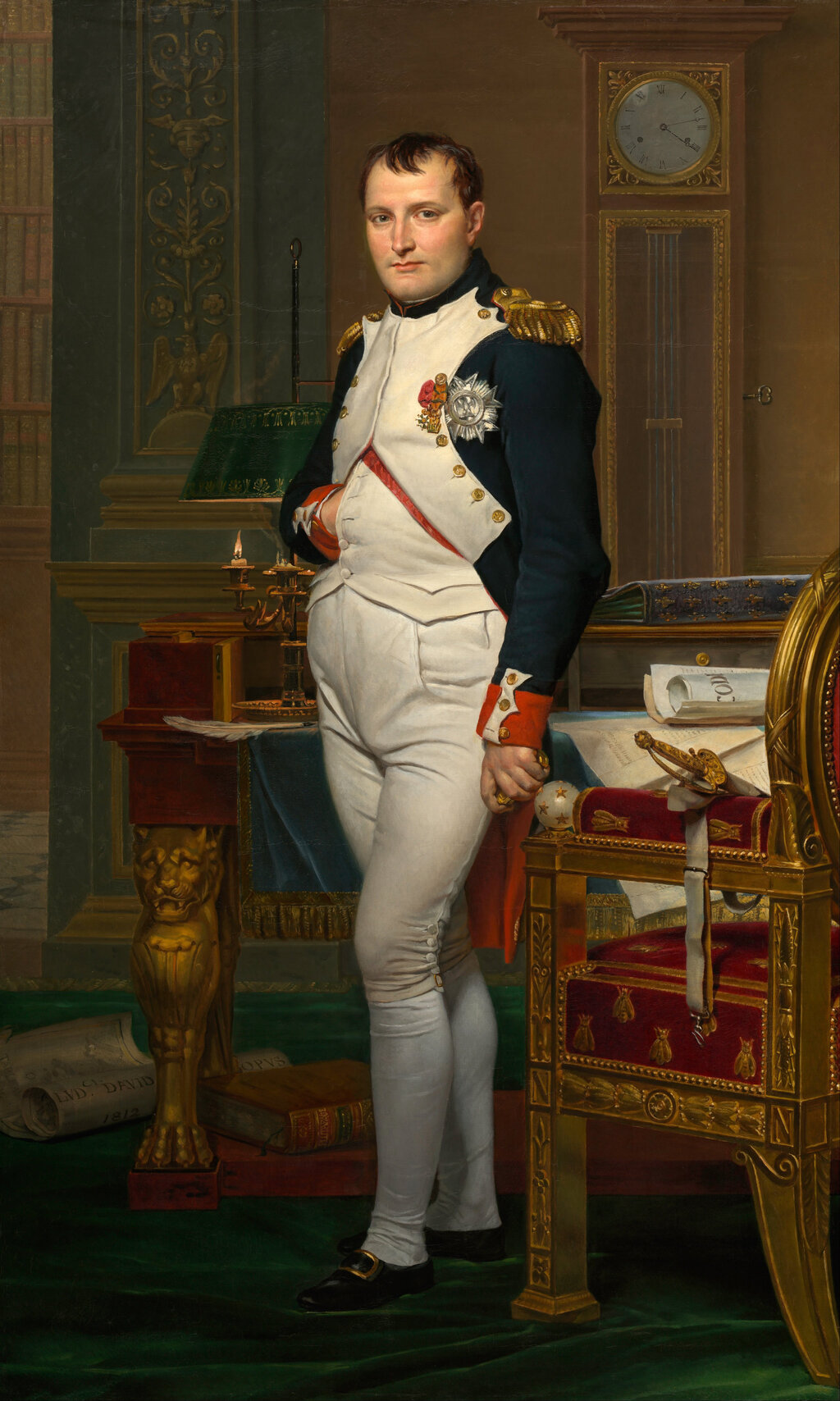
Napoleon Bonaparte understood the power of an image. He needed to legitimize his rule, transitioning from a revolutionary general to an absolute sovereign. He found his perfect propagandist in , a painter who had been a fervent supporter of the Revolution but seamlessly pivoted to become the First Painter of the Empire.
David used the Neoclassical style, or what became known as the 'Grand Manner,' to cast Napoleon not as a king, but as a heroic, modern Roman emperor. His portraits are exercises in political messaging. Napoleon isn't just sitting for a picture; he is depicted as a tireless legislator, a brilliant military strategist, or a magnanimous ruler. Every detail, from the papers on his desk to the way he holds his hand, was calculated to build a legend.
In Napoleonic art, classical allusions were not just decorative. They were a direct line connecting Napoleon's new empire to the glory and authority of ancient Rome.
The Academy's Rules
This artistic vision was enforced by the powerful French Academy. The was the ultimate arbiter of taste and the gatekeeper of artistic success. It established a rigid hierarchy of genres, a system that ranked the importance of different types of paintings.
At the very top was History Painting. These were large, dramatic canvases depicting scenes from the Bible, mythology, or classical history. They were considered the highest form of art because they dealt with grand themes and were meant to convey a moral lesson, or what was known as moral didacticism. This made them the perfect vehicle for state-sponsored propaganda.
| Rank | Genre | Description | Purpose |
|---|---|---|---|
| 1 | History Painting | Scenes from mythology, religion, or ancient history. | To instruct and moralize. |
| 2 | Portraiture | Depictions of important individuals. | To capture status and character. |
| 3 | Genre Painting | Scenes of everyday life. | To depict common humanity. |
| 4 | Landscape | Paintings of the natural world. | To capture scenery and mood. |
| 5 | Still Life | Arrangements of inanimate objects. | To display technical skill. |
Below history painting were portraiture, scenes of everyday life (genre painting), landscape, and finally, still life. An artist's reputation and financial success depended on their ability to master the highest genres. For David and his contemporaries, this meant painting grand historical narratives that subtly or overtly glorified the current regime.
Digging Up the Past
The fascination with the classical world wasn't just philosophical. It was fueled by sensational archaeological discoveries. The mid-18th-century excavations of , Roman cities perfectly preserved by the eruption of Mount Vesuvius, electrified Europe. For the first time, people could see exactly how the Romans lived, what their homes looked like, and what art they had on their walls.
This direct connection to the past provided a wealth of authentic source material for Neoclassical artists. They began to obsess over archaeological accuracy in their depictions of clothing, furniture, and architecture. This quest for authenticity lent a sense of truth and seriousness to their work. When David painted a scene from Roman history, he wanted his audience to feel they were looking through a window into the past, absorbing its virtues by osmosis.
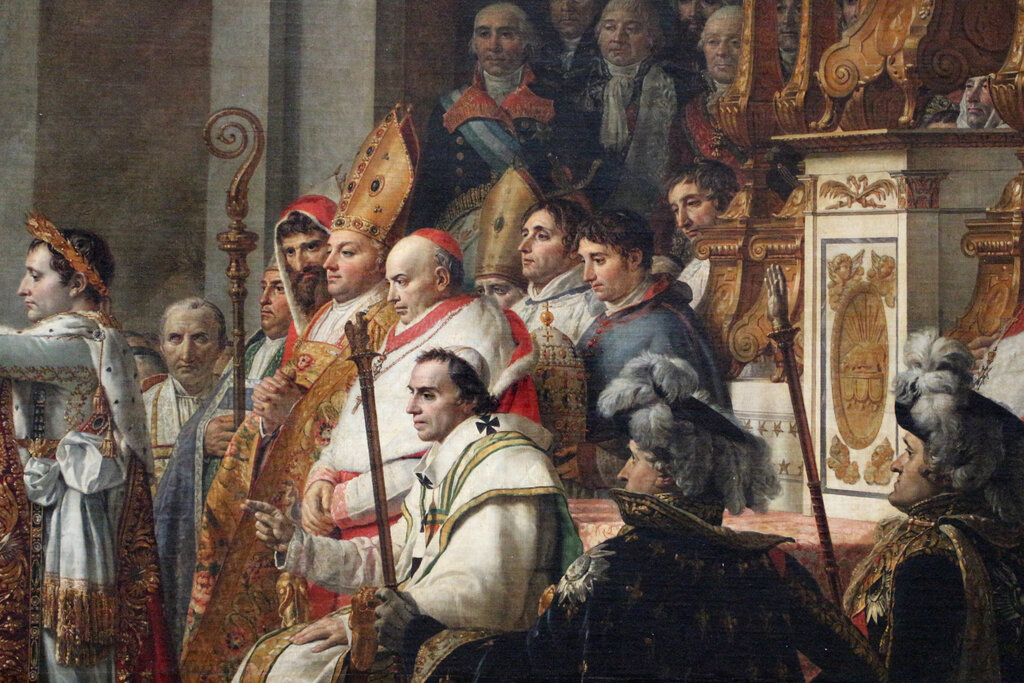
Ultimately, Neoclassicism was the perfect style for an age of revolution and empire. Its themes of civic duty, sacrifice, and reason could be used to justify a rebellion against a king or the crowning of an emperor. By mastering its visual language, Jacques-Louis David and Napoleon created a powerful alliance, transforming paint and canvas into instruments of state power. This established a 'high art' status quo, a blend of technical perfection and political messaging, that future generations of artists would feel compelled to tear down.
What artistic style, associated with the excess of the old monarchy, did Neoclassicism primarily react against?
According to the Académie des Beaux-Arts's hierarchy of genres, which type of painting was considered the highest form of art?