Evolution and Strategy of Martial Arts
Combat Style Classification
Striking vs. Grappling
Beyond the color of a belt or the name of a dojo, martial arts can be broken down into two fundamental approaches: striking and grappling. Think of it as a split between impact and control. Striking arts, like Muay Thai or boxing, focus on delivering forceful blows from a distance. The goal is to transfer kinetic energy into an opponent using fists, feet, elbows, and knees.
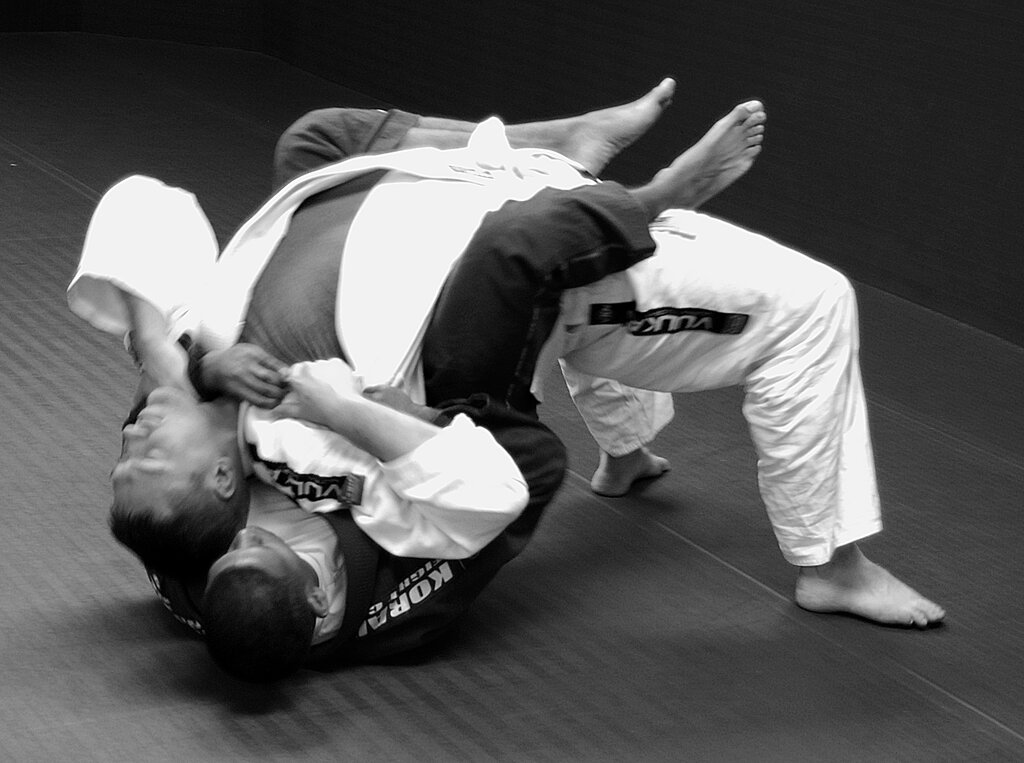
Grappling arts, such as Brazilian Jiu-Jitsu (BJJ) and wrestling, are about closing that distance. They revolve around controlling an opponent's body through holds, throws, and joint locks. Instead of impact, the goal is to use leverage and positioning to neutralize threats and force a submission.
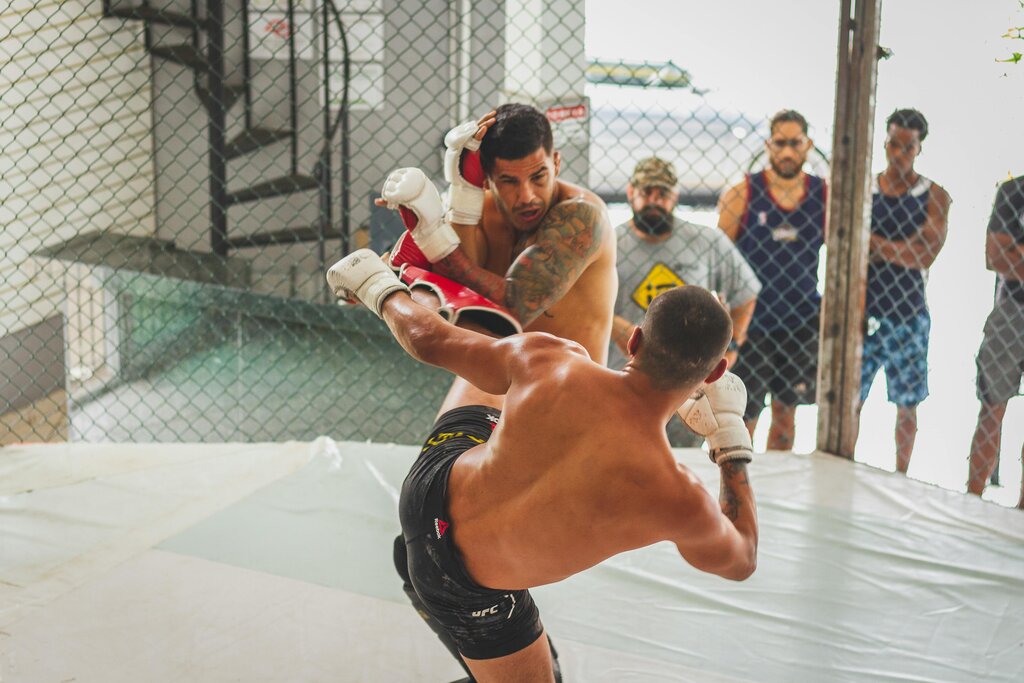
Modern martial-arts training includes a blend of striking, grappling, and ground-fighting techniques.
The Physics of Fighting
A powerful strike isn't just about arm strength; it's a full-body event. Strikers master kinetic chains to generate force. A punch starts from the ground, with the feet pushing off the floor. That energy travels up through the legs, hips, and torso, rotating and accelerating until it's finally released through the fist. Arts like Muay Thai are called the "art of eight limbs" because they train fighters to use their fists, elbows, knees, and shins as weapons at the end of this chain.
Grappling, in contrast, is a game of applied physics. A grappler's primary objective is to disrupt and control their opponent's . By using their own body as a system of levers and fulcrums, a smaller, weaker person can manipulate a larger opponent. An armbar, for example, isn't about overpowering the arm; it's about using a joint (like the hip or elbow) as a fulcrum to apply breaking pressure with minimal effort. This focus on mechanical advantage is why BJJ is often called "the gentle art."
Managing the Distance
The effectiveness of any style is dictated by distance. Combat can be broken down into four primary ranges, and every martial art specializes in one or more of them.
A pure striker wants to stay in the kicking and punching ranges, using footwork to maintain separation. Their strategy is to dart in, deliver damage, and get out. A grappler's entire game plan is to survive those outer ranges, close the distance to the clinch, and bring the fight to the ground, where striking is largely neutralized and their grappling techniques dominate.
Control the distance, and you control the fight. This principle dictates the strategic clash between different martial arts styles.
| Tactic | Striking Arts | Grappling Arts |
|---|---|---|
| Primary Goal | Deliver kinetic impact | Establish physical control |
| Optimal Range | Kicking & Punching | Clinch & Ground |
| Key Principles | Timing, power, footwork | Leverage, position, pressure |
| Common Weakness | Vulnerable in clinches | Difficulty closing distance |
The Rise of Hybrid Systems
So which is better, striking or grappling? The modern answer is: both. The rise of Mixed Martial Arts (MMA) proved that a specialist in one area is often vulnerable in another. A world-class kickboxer could be easily defeated by a wrestler who could take them to the ground. Likewise, a BJJ expert might never get to use their skills if they can't get past a boxer's jab and footwork.
This led to the development of hybrid systems. Modern fighters cross-train extensively, blending disciplines to become well-rounded. They learn wrestling for takedowns and defense, Muay Thai for clinch fighting and striking, and BJJ for ground control and submissions. This integration allows them to adapt their strategy, whether that means using linear footwork to keep a grappler at bay or using circular movement to cut off a striker's escape routes. The strategic trade-offs remain, but the modern fighter aims to be comfortable no matter where the fight goes.
Understanding these core mechanics of striking, grappling, distance, and leverage is the key to analyzing any fight, from a local tournament to a world championship.