Evolution and Application of Global Martial Arts
Cultural Evolution of Combat
The Forge of Combat
Martial arts are not designed in a lab. They are forged in the crucible of culture, geography, and necessity. A fighting style is a direct answer to a question posed by its environment: What does it take to survive here? The sprawling battlefields of ancient Siam, the rough-and-tumble streets of early 20th-century Brazil, and the violent alleys of 1930s Europe each asked a different question. The answers became Muay Thai, Brazilian Jiu-Jitsu, and Krav Maga.
Each system's mechanics—its favored ranges, techniques, and philosophies—are a direct reflection of its history. By understanding the context in which these arts were born, we can understand why they are so different, yet so effective in their own right.
Muay Thai The Art of Eight Limbs
In the dense jungles and open plains of ancient Siam, now Thailand, warfare was a brutal, close-quarters affair. When a soldier’s spear broke or their sword was lost, they needed a fallback weapon: their own body. This necessity gave rise to —the ancestor of modern Muay Thai. It was a comprehensive battlefield art designed for survival.
Modern Muay Thai is famous for its use of eight points of contact: two fists, two elbows, two knees, and two shins. This “Art of Eight Limbs” is a direct legacy of its battlefield origins. Elbows and knees are devastating weapons in a clinch, a range where longer, looping strikes become ineffective. In environments like dense forests, a fighter doesn't always have room for a wide kick. A sharp knee or a slicing elbow, however, requires very little space to generate incredible power. This focus on powerful, linear, and close-range combat made it an ideal system for its environment.
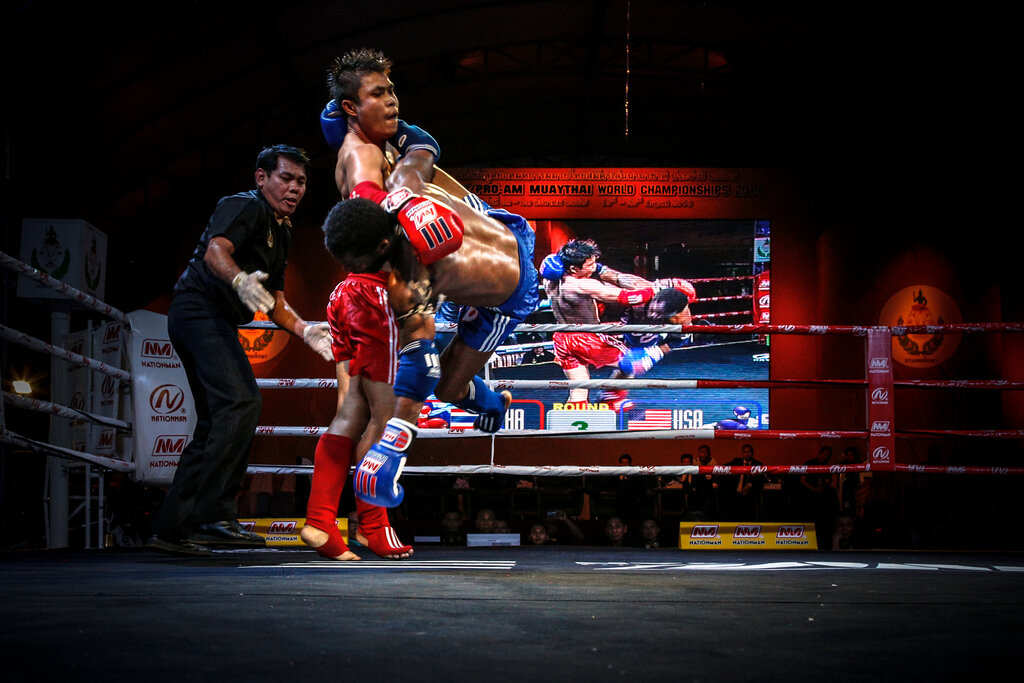
While Muay Thai perfected stand-up striking for its unique circumstances, a completely different set of pressures on another continent was shaping an art focused on what happens when the fight goes to the ground.
BJJ From Judo to Ground Dominance
In the early 1900s, a Japanese judo master named Mitsuyo Maeda traveled to Brazil. He taught his art to the sons of Gastão Gracie, a local politician. One of those sons, Hélio, was small and frail. He found it difficult to execute many of Judo's powerful throws against larger opponents. This physical limitation became the catalyst for a revolution in martial arts.
The systematically refined Judo's techniques, stripping away what didn't work for a smaller person and magnifying what did. They shifted the focus from the throw to the ground fight, a domain where leverage and technique could overcome brute strength and size. While Judo certainly has ground techniques (ne-waza), the Gracies elevated it to the art's primary focus. The result was Brazilian Jiu-Jitsu (BJJ), a system designed to control and submit an opponent on the ground, regardless of size disparity.
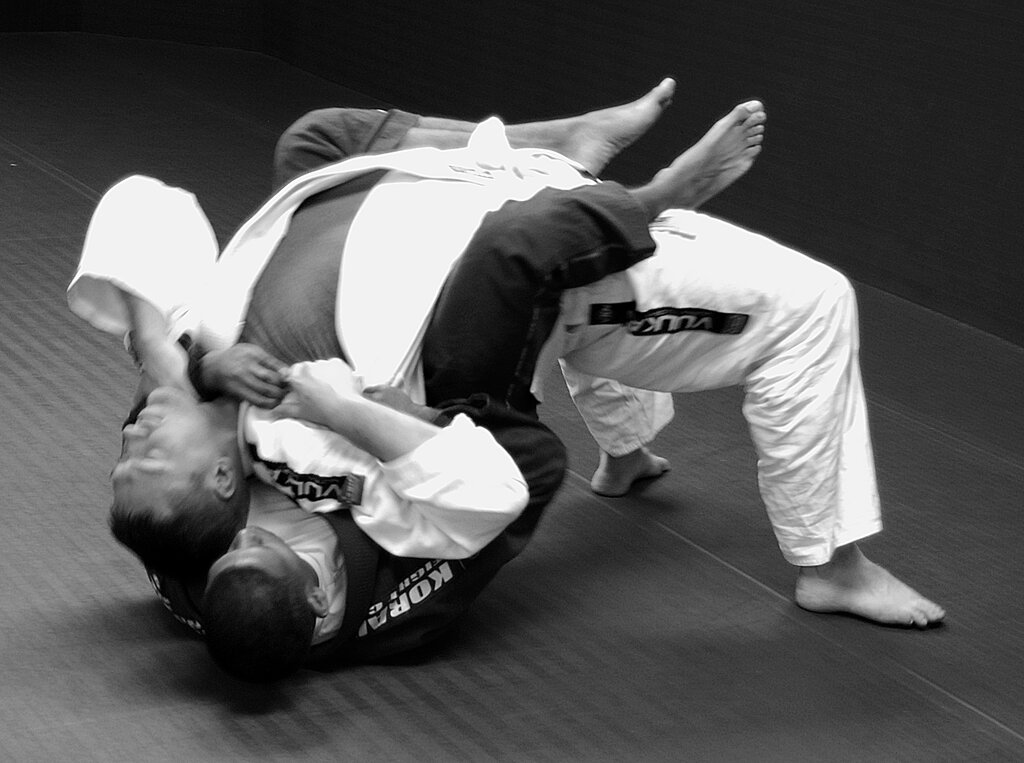
The cultural environment of Brazil, with its no-holds-barred challenge matches, provided the perfect laboratory. BJJ was pressure-tested not in theory, but in real fights, solidifying its reputation as a supremely practical grappling art. It wasn't about points or abstract philosophy; it was about surviving and winning.
Krav Maga Survival in Conflict
Krav Maga was not born in a dojo or a ring. It was born in the streets of 1930s Bratislava, Czechoslovakia, where Jewish communities faced escalating fascist violence. Its creator, , was an experienced boxer and wrestler who needed to develop a system for real-world survival against multiple, often armed, attackers.
There are no rules, competitions, or forms in Krav Maga. The philosophy is pure pragmatism: do whatever it takes to neutralize the threat and get home safely. This means simultaneous blocking and striking, attacking vulnerable targets like the eyes and groin, and training to deal with modern threats like knives and guns. The techniques are based on natural human reflexes, making them easier to learn and retain under extreme stress.
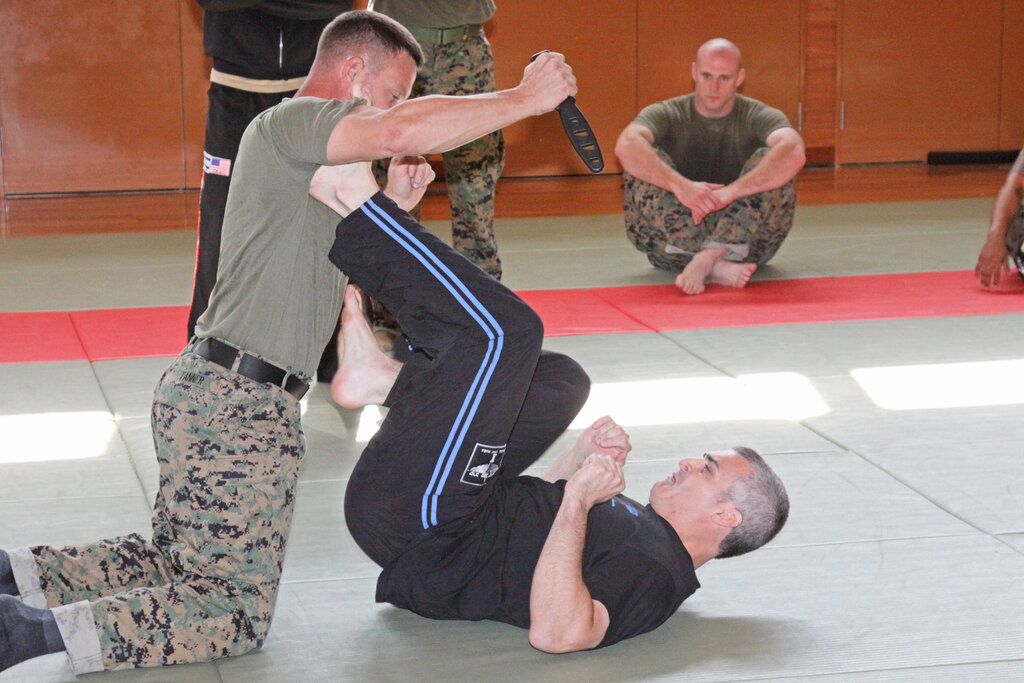
After the state of Israel was founded, Lichtenfeld became the Chief Instructor for Physical Fitness and Krav Maga at the Israeli Defense Forces (IDF). The system was further refined by the demands of military and counter-terrorism operations. Its entire structure is a response to the tactical necessities of urban conflict and self-preservation in a high-threat environment. It is a direct product of its violent, modern origins.
From the disciplined sport of Muay Thai to the ground-based chess of BJJ and the raw survival instinct of Krav Maga, each art tells the story of the culture and conflicts that shaped it. They are living history, written in the language of movement and survival.