Evidence Based Supplementation and Bioavailability
Pharmacokinetics and Bioavailability
The Journey, Not Just the Dose
Taking a supplement is just the first step. What happens next is a complex journey called pharmacokinetics, which determines how much of that nutrient actually becomes available for your body to use. This is the core concept of bioavailability: the fraction of a substance that reaches your bloodstream in its active form.
Simply put, it’s not what you ingest, but what your body can absorb and utilize.
Many supplements face a major hurdle right after absorption from the gut: a trip to the liver. This organ acts as a processing and detoxification center. During what's known as the First Pass Effect, the liver can metabolize and break down a significant portion of a substance before it ever reaches the rest of your body. This dramatically reduces the amount of the active compound available in your systemic circulation.
Navigating the Gut
Before a nutrient even gets to the liver, it has to navigate the challenging environment of your digestive system. The highly acidic gastric pH in the stomach can degrade some compounds, while the mucosal barrier of the intestine acts as a selective gatekeeper.
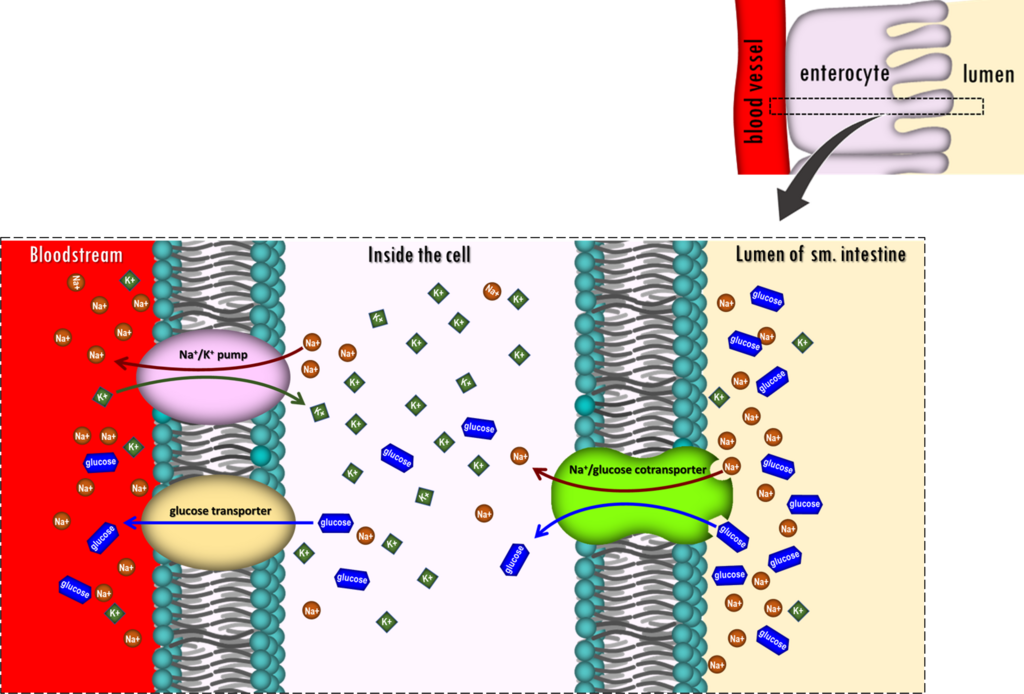
To cross this barrier, nutrients rely on specific transport mechanisms. Some, like certain sugars, use protein channels like GLUTs to move from the intestine into the cells lining it. Others are absorbed through passive diffusion. This transport system is highly regulated and can become saturated, meaning there's a limit to how much can be absorbed at one time, no matter how high the dose.
Form Determines Function
The chemical form of a nutrient is one of the biggest factors influencing its absorption. This is especially true for minerals. Many minerals are sold as simple salts, like magnesium oxide, but their ionic charge can make them difficult to absorb.
is a process that binds a mineral to an amino acid, neutralizing its charge and making it look more like food to the body. This allows it to be absorbed through more efficient amino acid transport pathways, bypassing the usual routes for minerals. The result is often significantly higher bioavailability.
| Mineral Form | Absorption Pathway | Bioavailability |
|---|---|---|
| Magnesium Oxide (Salt) | Osmosis / Water channel | Low (~4%) |
| Magnesium Glycinate (Chelated) | Amino Acid Transporters | High |
Another strategy to enhance bioavailability involves using 'prodrugs.' A is an inactive compound that the body converts into an active one after absorption. Benfotiamine is a classic example. It's a fat-soluble precursor to thiamine (Vitamin B1). Because it's lipid-soluble, it can easily pass through cell membranes in the intestine. Once inside the cells, it's converted into the active water-soluble thiamine, effectively bypassing the limited transport mechanisms for regular thiamine.
This concept also applies to vitamins like folate. Many supplements use folic acid, a synthetic form that the body must convert into the active form, methylfolate, through a multi-step process. People with certain genetic variations have difficulty making this conversion efficiently. Taking methylfolate directly bypasses this metabolic step, ensuring higher bioavailability of the active form.
Modern delivery systems also aim to sidestep these natural barriers. Liposomal delivery, for instance, encapsulates a nutrient within a tiny sphere of fat (a liposome). This fatty bubble protects the nutrient from degradation in the stomach and can merge with cell membranes to deliver its contents directly inside the cell, bypassing traditional transport channels entirely.
What is bioavailability?
The 'First Pass Effect' significantly reduces the bioavailability of some supplements because the substance is metabolized by the ______ before it reaches the rest of the body.
Understanding these principles allows you to look beyond the dosage on a label and evaluate how a supplement is truly designed to work with your body's complex systems.