Everyday Science Hacks
Introduction to Everyday Science
Science in Your Kitchen
Physics and chemistry aren't just subjects you study in a classroom. They are constantly at work all around you, especially in your home. Every time you cook a meal, clean a spill, or even just turn on a light, you're interacting with fundamental scientific principles.
Think about making your morning coffee. The water boils because of heat transfer, a core concept in physics. The coffee grounds dissolve in the hot water, a process governed by chemistry. This course is all about seeing these connections and using them to your advantage.
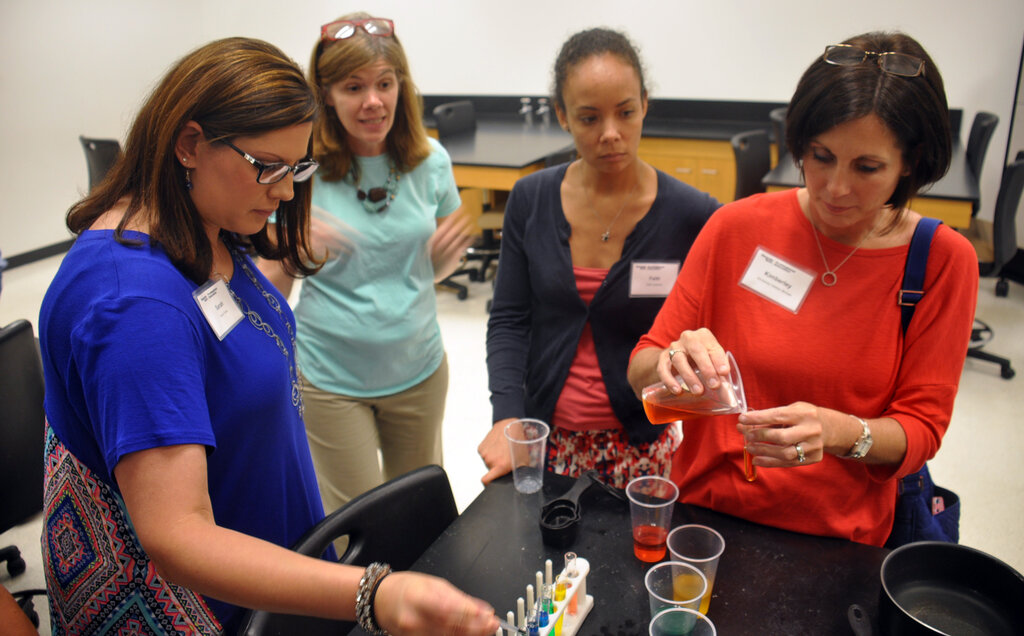
Let's start with physics. When you drop your keys, that's gravity. When your phone charges, that's electricity. And when you heat leftovers in the microwave, that's electromagnetic radiation at work. These forces and energy transfers are happening constantly, whether we notice them or not.
The simple act of cooking an egg involves physics. Heat moves from the hot pan to the cooler egg, changing its structure. That's thermodynamics in action, right on your stovetop.
Chemistry is just as present. Baking a cake involves a series of chemical reactions. Flour, sugar, and eggs transform into something entirely new. When you use soap to wash greasy hands, you're using chemistry to break down fats and oils so they can be washed away with water.
Your Scientific Toolkit
So, why does this matter? Because understanding the 'why' behind everyday events gives you a powerful toolkit for solving common problems. Instead of just following a recipe or instructions, you start to understand why they work. This knowledge lets you troubleshoot when things go wrong.
Why did your sauce curdle? Why won't a stain come out of your shirt? Why does metal rust? The answers lie in basic science. Knowing these principles helps you predict outcomes, fix issues, and make better decisions around the house.
| Common Problem | The Science at Play | A Scientific Fix |
|---|---|---|
| Stale, hard bread | Chemistry (Starch retrogradation) | Physics (Heat Transfer) - Gently reheat to re-gelatinize the starches. |
| A squeaky door hinge | Physics (Friction) | Chemistry (Lubrication) - Apply oil to reduce friction between metal surfaces. |
| Water spots on glass | Chemistry (Mineral Deposits) | Chemistry (Acid-Base Reaction) - Use vinegar (a mild acid) to dissolve the minerals. |
This course isn't about memorizing formulas. It's about developing a new way of seeing the world around you and using that insight to navigate everyday challenges more effectively.
Which of the following household activities is the best example of chemistry in action?
Heating leftovers in a microwave oven relies on which principle of physics?