Everyday Probability for Better Decisions
Introduction to Probability
What is Probability?
Every day, you navigate a world of uncertainty. Will it rain during your commute? Will your favorite team win the big game? Will the bus be on time? We can't know the future for sure, but we can try to measure how likely things are. This is the core idea of probability.
Probability
noun
A measure of the likelihood that a particular event will occur. It is expressed as a number between 0 and 1.
Think of probability as a scale from 0 to 1. An event with a probability of 0 is impossible, like rolling a 7 on a standard six-sided die. An event with a probability of 1 is absolutely certain, like the sun rising tomorrow. Most events fall somewhere in between.
A probability of 0.5 means an event has a 50/50 chance of happening. It's just as likely to occur as it is not to occur.
The Rules of the Game
To calculate the probability of a simple event, we use a straightforward formula. You just need to know two things: the number of ways the event you're interested in can happen (favorable outcomes) and the total number of things that could possibly happen (total outcomes).
Let’s use a standard six-sided die as an example. The total number of possible outcomes when you roll it is six. The die can land on 1, 2, 3, 4, 5, or 6.
What is the probability of rolling a 4? There is only one way for that to happen (a favorable outcome). So, the probability is $1/6$, or about 0.167.
What about rolling an even number? The favorable outcomes are 2, 4, and 6. That's three possibilities. The probability is $3/6$, which simplifies to $1/2$, or 0.5.
| Event | Favorable Outcomes | Total Outcomes | Probability |
|---|---|---|---|
| Rolling a 4 | 1 | 6 | 1/6 |
| Rolling an even number | 3 | 6 | 3/6 or 1/2 |
| Rolling a number > 2 | 4 | 6 | 4/6 or 2/3 |
| Rolling a 7 | 0 | 6 | 0/6 or 0 |
Another key principle is that the sum of the probabilities of all possible outcomes must equal 1. For our die, the probability of rolling a 1 is $1/6$, a 2 is $1/6$, and so on. If you add them all up, you get:
This makes sense. When you roll a die, it is certain (a probability of 1) that one of its six faces will come up.
Probability in the Real World
Probability isn't just for games of chance. It's a powerful tool for making decisions in complex situations.
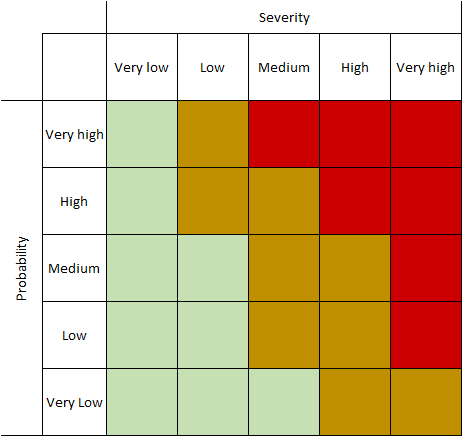
Weather Forecasting: When a meteorologist says there's a "30% chance of rain," they're expressing a probability. Based on historical data and current atmospheric conditions, they've determined that in 30 out of 100 similar situations, it has rained. This helps you decide whether to carry an umbrella.
Medicine: Doctors use probability to assess risks and benefits. A new drug might have a 90% probability of curing a disease, but also a 5% probability of causing a serious side effect. Understanding these likelihoods is crucial for both doctors and patients when choosing a treatment plan.
Finance: Investors and businesses constantly weigh probabilities. They analyze market data to estimate the probability of a stock's price going up or down. Insurance companies use probability to calculate premiums, balancing the likelihood of a customer filing a claim against the cost of that claim.
Incorporating probability into financial planning is a methodical approach to navigating the complexities of financial decision-making.
By quantifying uncertainty, probability gives us a logical framework for thinking about risk and making smarter, more informed choices in nearly every aspect of life.
Let's check your understanding of these core concepts.
If an event is described as having a probability of 1, what does this mean?
You roll a standard six-sided die. What is the probability of rolling a number greater than 4?
Understanding these fundamentals is the first step toward using probability to navigate the uncertainties of the world.